'Homecoming more important than liberation'

 Alderney Museum
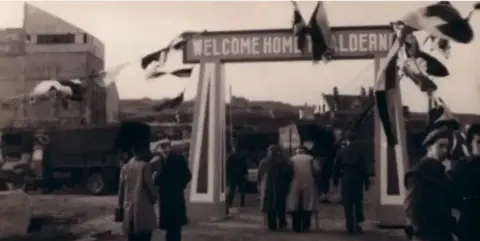
The return of islanders to Alderney following the German Occupation is more important to islanders than the liberation of the island says one local historian.
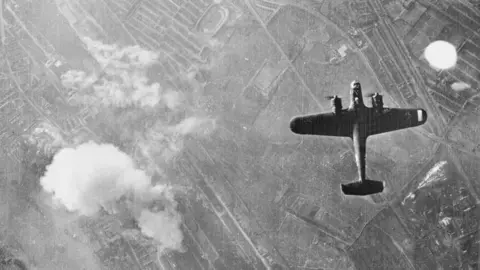
Almost all civilians were evacuated in 1940 ahead of the German Occupation - when the island was heavily fortified with forced worker camps built along with the only concentration camp on British soil.
The majority of islanders did not return until seven months after the liberation of the Channel Islands in May 1945.
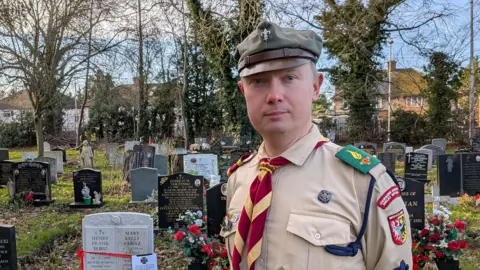
Local historian Colin Partridge said: "The Homecoming means much more to Alderney people than the actual liberation."
When the island was liberated there were only a handful of islanders living there and a garrison of about 3,000 German troops so there were no cheering crowds to greet the liberating troops as there were in Guernsey and Jersey.
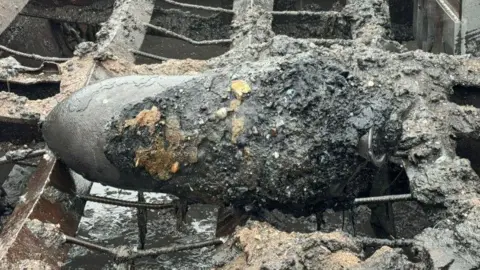
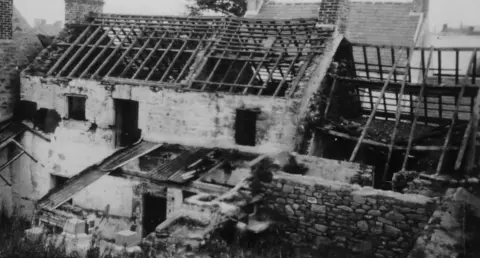
More than 30,000 mines had been planted by the occupying forces, plus there was military hardware left across the island and damage to properties meant many were uninhabitable.
"It wasn't just the addition of German fortifications and so on, but the fact that lots of damage had been done to the island," said Mr Partridge.
Following the liberation on 16 May a commission of inquiry was set up in London, which oversaw the rehabilitation of the island involving the Home Office, the Army and 500 German prisoners of war who had been kept on the island.
One member of the British forces was killed whilst supervising the lifting of mines by German troops, Sapper George Onions is buried in St Anne's churchyard.
 Alderney Museum
It was only towards the end November 1945 that sufficient progress had been made in the clearance of the mines and other military hardware and 300 houses had had basic repairs completed allowing the first islanders to return.
Ahead of their return, application forms were circulated to see if they wished to return after taking refuge across different parts of the UK for five years.
Those who had left did not know what had happened in the island or the details of what they would be returning to.
Mr Partridge said: "It's so important to make sure that we understand that this is real things that happened.
"It's not just words on paper, this is real events, true events that happened right here in the home of Alderney for so many people."
Most of the people who came back on the first ferry, which the manifest said was 106 for the trip on 15 December, were farming families aiming to try to re-establish their farms and the island.
Mr Partridge said: "Probably over sort of 300 or plus people returned to Alderney by the end of 1945 in the last few weeks. And then they came back in lesser numbers during 1946 and perhaps even 1947."
Follow BBC Guernsey on X and Facebook and Instagram. Send your story ideas to [email protected].