'We don't want to turn our place of worship into a fortress'

 Getty Images
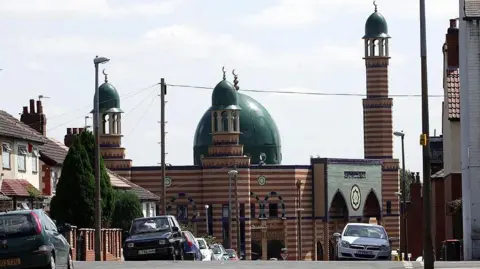
"We don't want to turn our places of worship into a fortress, and we don't want airport-style security, but we have to deal with things we didn't before," says Qari Asim, Imam at Makkah Masjid mosque in Leeds.
Following an incident at Manchester Central Mosque in Rusholme on 24 February, in which a man allegedly walked in carrying a weapon, imams across West Yorkshire say they are taking more precautions to protect worshippers.
Asim says extra security measures had been introduced following the incident.
"We've started locking the doors, and we have volunteers patrolling outside, but it's proving challenging because it's Ramadan and so many people are coming to the mosque," he says.
The mosque, which usually has an open-door policy, had to "think hard" about whether Wednesday's multi-faith Iftar could go ahead, he adds.
The event did go ahead, but increased security was in place.
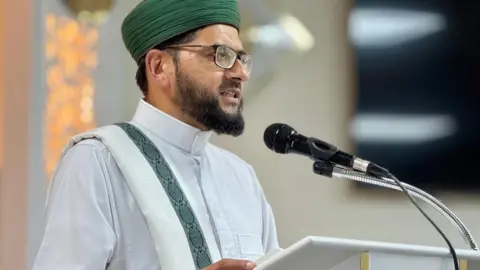 Qari Asim
The mosque has enlisted the help of volunteers, led by senior members of the community who have a background in security, to patrol.
Adam Jalil, a 21-year-old student from Leeds, has taken on the task of reassuring worshippers during evening prayers.
He says: "Given the recent tensions, I am concerned about the possibility of trouble from extremists or far-right individuals and want to do what I can to help prevent any incidents.
"Therefore, something needs to be done imminently to ensure the protection of Makkah Masjid and other places of worship."
Jalil is not the only person asking for action.
Imran Safdar, Independent councillor for the Crosland Moor and Netherton ward on Kirklees Council, raised his concerns at a meeting this week.
He called for heightened security at mosques and other places of worship, including synagogues.
He said he believed if clear communication took place between different communities, it would help change attitudes.
"My appeal to my fellow non-Muslim residents is simple, let's connect properly, human to human, with ordinary British Muslims who quietly serve our communities every single day," Safdar said.
"NHS staff working long shifts. The care workers looking after our elderly. The volunteers in the charity sector distributing food to struggling families of all faiths and none and supporting the homeless across West Yorkshire.
"If you don't yet understand us, walk alongside us. Serve alongside us. Break bread with us.
"You will find compassion, humour, shared values and the same hopes for our children's futures."
In October last year, Peacehaven mosque in Essex was targeted in an alleged arson attack and two people were charged with arson with intent to endanger life.
Government data found hate crime in the UK had reached an "unacceptable level", with Muslim and Jewish communities "more affected", while 45% of all religious hate crimes last year targeted Muslims.
Asim says it has "become normalised" for Muslims to feel threatened.
Salman Sayyid, professor of decolonial thought and rhetoric at the University of Leeds, says the fear Muslims across the UK feel is "real" and mosque attacks are not "hypothetical".
'People don't have confidence'
Worshippers at Makkah Masjid had been encouraged to become more environmentally friendly by walking to the mosque and to prayers during Ramadan.
But following the incident in Manchester they are being advised to drive.
West Yorkshire Police has offered to provide extra patrols at mosques, including Makkah Masjid, but worshippers say these are not visible enough.
A spokesperson for the force says: "We are aware that last week's incident in Manchester will have deeply affected our Muslim communities, particularly during Ramadan.
"Neighbourhood policing officers have been engaging with local mosques and speaking with Elders to discuss any concerns.
"Our mosques continue to receive specific patrols as places of worship and reassurance work with our communities will continue over the coming days."
At the end of last year, the government announced funding for security measures such as CCTV, fencing, intruder alarms, floodlights and extra staff at Jewish, Muslim and other faith sites.
Up to £40m has been pledged through the Protective Security for Mosques Scheme, which supports mosques, Muslim schools and community centres.
Up to £28.4m will be available through the Jewish Community Protective Security Grant, for measures at synagogues, Jewish schools and community centres.
Listen to highlights from West Yorkshire on BBC Sounds, catch up with the latest episode of Look North.
