'Acts of kindness are key during Ramadan'

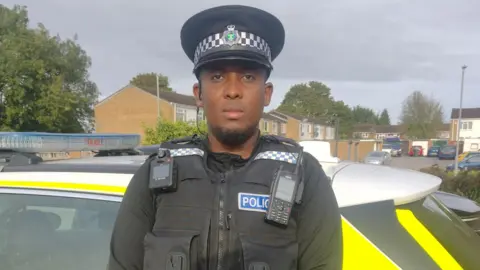 Abdullah Ahmed
Millions of Muslims are marking Ramadan, a period of abstinence, reflection and charitable acts.
Until 19 March, observers will fast from dawn until Iftar, the day's main meal at sunset.
We asked Muslims in the south of England for their thoughts on the holy month.
Improved football performances
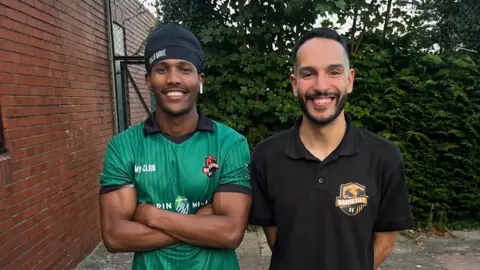 Youcef El-Barhdadi
Footballer Youcef El-Barhdadi helps to run Oxford Phoenix, a predominantly Muslim team.
He thinks he plays better during Ramadan.
"It's probably not the answer you're expecting," he says.
"People have commented about how my performance seems to improve.
"I think it might be just the feeling of focus. I feel kind of a bit more energy."
He says his team captain Jabir Abdalla also experiences "more energy and focus".
If there is any disadvantage to Ramadan, it comes when an away game makes it harder to organise a communal Iftar at sunset.
"Oftentimes during Ramadan, the planning side of it is more knackering than the playing!"
Patient policing
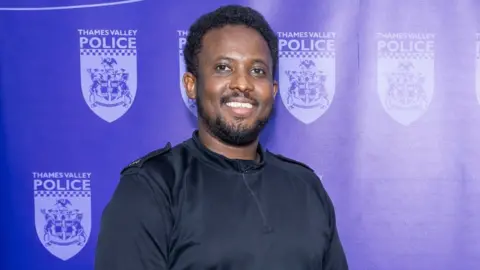 Thames Valley Police
PC Abdullah Ahmed starts his shift in Slough with water and a handful of dates.
By mid-afternoon, he expects to feel tired.
"I was a response officer a few years ago and it was challenging, really difficult.
"Now there's a massive difference.
"My sergeant is aware, my inspector is aware. They approach you, they ask you how you feel, if I want to change my shift."
PC Ahmed starts his day at 04:30 for Sahoor - the first meal - before fasting during work and later attending the mosque for Taraweeh - night prayers.
"It teaches you basically to build that patience and resilience, especially being a police officer.
"In terms of empathy and compassion, experiencing hunger increases awareness of those in need."
Feeding others in a restaurant
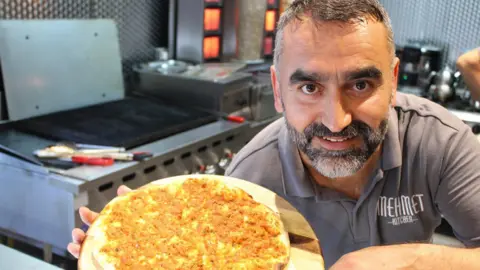 Mehmet Ulucan
Mehmet Ulucan, who is Kurdish, from eastern Turkey, says he only gets hungry when he watches a cookery programme on TV.
However, fasting while serving food is no hardship for the owner of Mehmet Kitchen in Portsmouth.
"The first three days of Ramadan can be difficult - I get a headache from smoking and drinking a lot of coffee.
"But you don't have time to feel hungry."
Mehmet, who has been serving free meals during Ramadan, says acts of kindness are key. He offers to help the BBC with any charitable projects.
"This is my community," he adds. "I've been here 26 years".
"I give away food. Students, homeless, sharing with the poorest - all the people struggling.
"When someone invites you, it gives you the good spirit."
Iftars for the needy
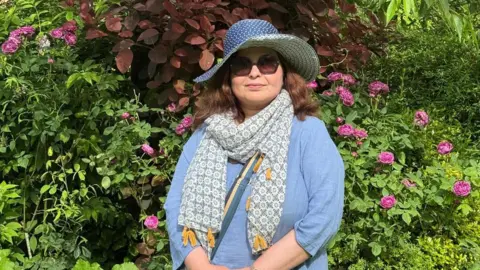 Saima Afzal
Dorchester Islamic Centre routinely offers Iftars for the needy, regardless of faith, according to trustee Saima Afzal.
She says Ramadan is about more than abstinence.
"Fasting teaches us patience, empathy."
"People reflect that if I feel this hunger, after one day of fasting and missing a meal, what about those who feel this every day?
"And how can I use what I have to ease someone else's hardship? So it turns empathy into action.
"It's about redistributing what we have - care, your wealth, empathy, kindness - to those most in need."
You can follow BBC Oxfordshire on Facebook, X, or Instagram.
