'I created a harness to keep my autistic son safe'

 BBC
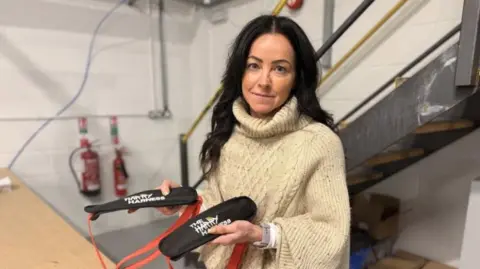
BBCA mother who feared for her autistic son's safety whenever she left the house was determined to create a device that meant he could live his life to the fullest.
Joanne, from Wigan, Greater Manchester, decided she wanted to build a harness that would provide support and reassurance for them both.
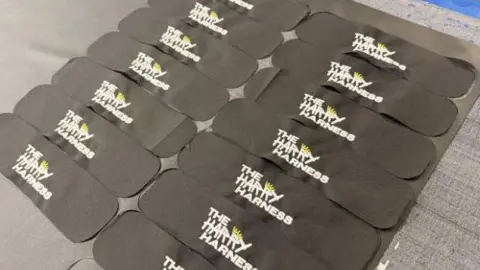
This led to the creation of the Harry Harness in August with the aim of helping neurodivergent children, adults and their families navigate their daily lives more easily and securely.
"I'm so passionate about it and I think because it came from a place of something that we needed to do and I needed to do it for Harry because I needed to make sure that his life is as full as possible," Joanne said.
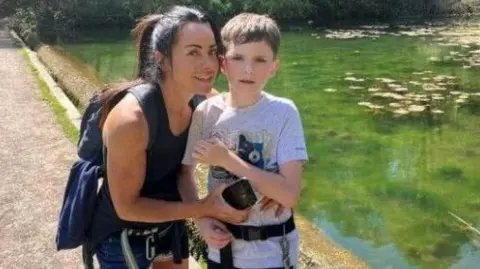
She said she was inspired to create the harness for the 13-year-old, who has autism and ADHD, due to the daily practical challenges they faced.
"He doesn't foresee danger, he doesn't understand danger," she said.
"It was hard, it was really, really hard to be able to get out and about safely with Harry and have any sort of enjoyment when you're out and about.
"It was always about necessity rather than wanting to go out."
 Family handout
She made the device using climbing harnesses and dog leads.
"And in principle, it worked," she said.
However, it was only after she posted about her creation on TikTok that she realised that others were in need of something similar - and interest sprialled.
"People were saying 'this is brilliant' and 'we need this'," she said.
"What about making it for other people?"
Joanne was soon introduced by a friend to the owner of a manufacturing company in Wigan which could bring her design to life.
The harness, which was created to give the user the ability to move about while still keeping them close by, was designed with no wrist straps, reins or hand-holding required.
It also features low-sensory fabrics while being lightweight and easy to carry.
Among those to benefit is Lucy Atherton, whose seven-year-old daughter has a rare genetic condition called Phelan-McDermid Syndrome.
"I couldn't do things that people can do unless I had somebody with me, so I couldn't go to do the food shopping, just daily things like that," she said.
"It really has changed our lives.
"It means we can go out together as a family and have a nice time.
"It does just make every day a little bit easier, which is massive when you've got a disabled child."
Catherine Smethurst, whose 14-year-old son has autism and ADHD, said the device had a knock-on effect on her mental and physical health.
"I got to the point where we were practically getting reclusive," she said.
"We didn't do any hobbies, we didn't really go on many walks. We now have a hobby, I get to take him boating twice a week.
"I've got the confidence that I know he can't just run into the water."
Listen to the best of BBC Radio Manchester on Sounds and follow BBC Manchester on Facebook, X, and Instagram. You can also send story ideas via Whatsapp to 0808 100 2230.
