Mental health hub opens in high-risk area

 BBC
BBCA mental health and wellbeing hub is opening in a county where suicide rates are among the highest in England.
More than 300 people died by suspected suicide in Cumbria between 2020 and 2023, with the highest rate in the former borough of Copeland.
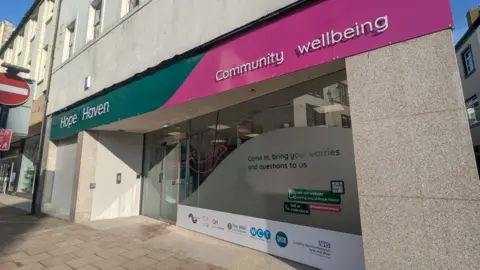
Hope Haven in Whitehaven is one of six pilot wellbeing centres across the country, dedicated to tackling poor mental health before it escalates to a crisis point or where hospital treatment is needed.
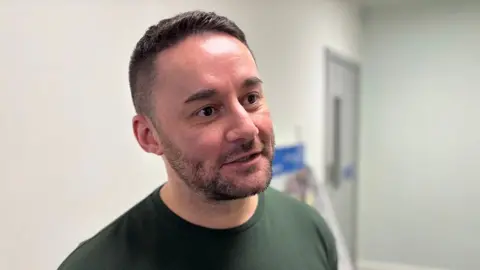
David Storm, associate director of the Cumbria, Northumberland, Tyne and Wear NHS Foundation Trust, called the hub a "completely radical" way of addressing mental health problems.
In 2023, the rate of suicide in Cumbria was 16.3 per 100,000 people, up from 15.5 in 2021. In 2022, the England rate was 10.6 per 100,000.
Cumberland Council said data showed every area of the county has a higher rate of suicide than the collective England rate, except South Lakeland.
Hope Haven will open daily throughout the week until midnight, and at the weekends, offering one-to-one support including remote help via phone or online, as well as group activities, in an open space in central Whitehaven.

There are also four flats nearby for anyone who is struggling and needs overnight accommodation.
Referrals are not required and anyone over the age of 18 can walk in and ask for support.
"I think this will make a huge difference," said Storm.
"We know the difficulties that exist, in west Cumbria in particular, and this is a completely radical and new way of approaching mental health."

The service had been operating temporarily in the Senhouse Centre before it moved into the former bank premises.
Annette Murray-Hamilton is among the 150 people who received support at the hub in its former location.
She described how her mental health was affected when she became the victim of theft and how the service had helped.
"I'm stronger than I was," said the Cleator Moor resident.
"Initially, I wouldn't have said anything, but now there's a buzz, I want to move on."
Some of the staff at the hub have been through struggles of their own and are now working as "peer supporters".
Clinical lead Liam Edmondson said: "I've experienced my own mental health difficulties, and I think that really helps break down barriers.
"Once you share what you've been through, people naturally open up.
"The more you give, the more you get back," he said. "It's yielding good results."
Last year, the Yewdale ward - for people needing in-patient mental health care - at West Cumberland Hospital was closed.
Although the new project is not connected to Yewdale, Storm said the hub was providing essential support and reducing patient footfall elsewhere.
"What we've already seen with Hope Haven is that we've reduced the number of, particularly informal, admissions to any mental health hospital," he said.
If you have been affected by any of the issues in this report, support and help is available at BBC Action Line.
