Mother hails 'incredible legacy' of child cancer plan

 Sophie's Legacy
A mother has called the first-ever recognition of children and young people in the government's national cancer plan "an incredible legacy" for her late daughter.
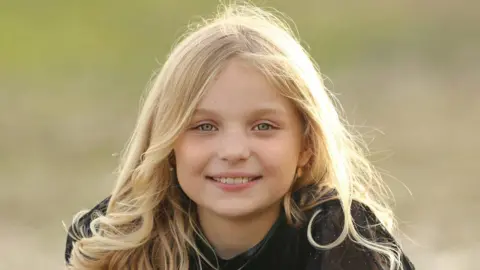
Sophie Fairall, from Stubbington, Hampshire, died aged 10 in September 2021, just one year after she was diagnosed with a rare form of tissue cancer.
Since then her mother Charlotte has teamed up with other parents, who have lobbied for experts and politicians to do more on the diagnosis and treatment of childhood cancers.
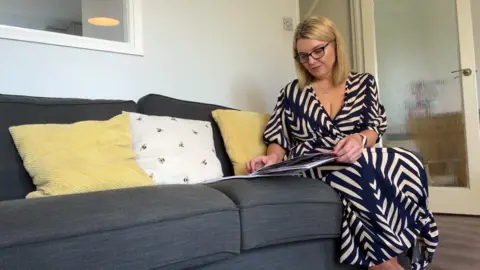
"I'm just so pleased that we potentially now could change lives in the future for other families going through this," Charlotte said.
The National Cancer Plan for England includes a commitment to prioritise research into cancers affecting children and young people over the next three years.
It also sets out measures to speed up diagnosis, and promises support for families in hospital - including help with travel costs, better food, improved play facilities and increased psychological support.
Charlotte said after four-and-a-half years of campaigning she had a mixture of emotions.
"There's an element of sadness as well really," she said.
"This doesn't bring Sophie back but what it does do is make sure that it actually impacts other people.
"We couldn't save Sophie but we can now go on to save others, and what an incredible legacy."
Her local MP Caroline Dinenage, co-chair of the Children and Young People's Cancer Taskforce, has supported Charlotte and her family on their push for change.
"It has been an enormous privilege to learn, work and battle alongside Charlotte over the last four years," she said.
She said she was "absolutely horrified" that stories of late diagnosis like Sophie's "tended to be the norm rather than the exception".
She added: "Our chapter of the National Cancer Plan is testament to her courage and her determination that Sophie's death should be a catalyst to meaningfully change the way we detect, treat and care for other children and young people with cancer."
You can follow BBC Hampshire & Isle of Wight on Facebook, X (Twitter), or Instagram.
