My fight to get miscarriage cradle kits in every hospital

 BBC
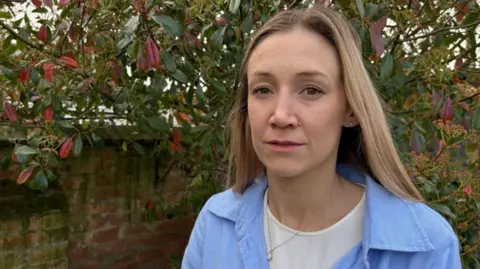
BBCAfter her third miscarriage in 2024, Laura Corcoran was left feeling "angry" and "devastated".
The 34-year-old said she was left searching for items in her house to avoid losing her baby's remains, as she had been given nothing to collect them in.
The former engineer has used this anger - as well as determination not to let what happened to her happen to anyone else - to create a "miscarriage collection cradle".
Laura is now in talks with the government about a potential wider rollout of the device, and the Department of Health and Social Care has confirmed it is working with her to explore the idea.
Laura, from Retford in Nottinghamshire, said: "I don't want someone else going through what I went through.
"It was devastating. Absolutely devastating. And I was angry that it had happened to me.
"It was only when I started reading online, reading the stats, reading comments from other women, that I realised it's happening all over the UK and it's happening all over the world.
"Women aren't being given appropriate healthcare and they're left to manage by themselves.
"A lot of women have spoken to me about their own stories - they've all said how much this kit would have helped."
'Nothing fit for purpose'
Laura explained she had gone to hospital in February 2024 for a scan, and was told there was no heartbeat.
She said she had wanted a miscarriage with medical help in Bassetlaw Hospital, where she was a patient, but was told there were no slots for several weeks so she would have to go home and wait.
Two weeks later she began to bleed.
She said she asked to come into the hospital again, but was again told there was no space.
"I was told... just try as best as you can," she said. "There was nothing fit for purpose.
"I felt like I didn't matter, and my baby didn't matter."
NHS guidelines state that if a person has had three or more miscarriages in a row, further tests are often used "to check for any underlying cause".
Laura said she wanted to collect the remains to help with these tests, and also because she did not want the child she had been expecting "flushed down the toilet".
As she was at home, she said she had to use a kitchen sieve to collect the remains, and then store them in a takeaway tub in the fridge to bring to the hospital three days later, as she was told the hospital unit was out of hours.
"It was really important to me, emotionally and practically, to collect baby," she said.
"For me when I first got those two blue lines, that's a whole life, and you start imagining this entire life built around these two lines.
"So to then have the end of that journey be flushed down the toilet is really traumatising, it's really hard to reconcile with."
She said she was impressed by the individual staff, but was "failed" by the system.
In response to Laura's case, Lois Mellor, director of midwifery at Doncaster and Bassetlaw Teaching Hospitals NHS Foundation Trust - which runs Bassetlaw Hospital - said staff followed national guidance and "work hard to provide compassionate, supportive and respectful care".
She added: "We continue to review how we can best support women's choices around dignity, remembrance and care at what is an incredibly difficult time."
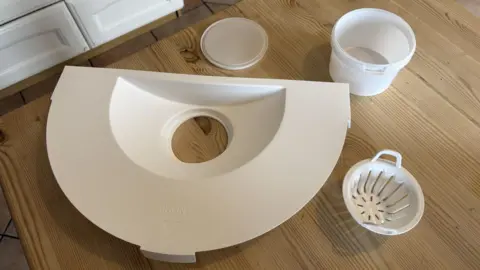
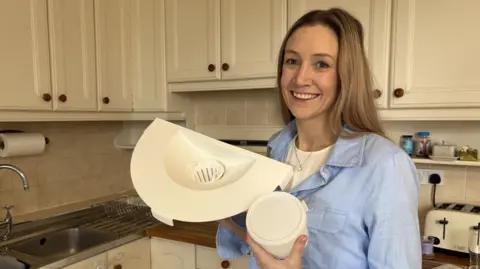
Her experience prompted Laura to come up with her device, which can be taken home and put over a toilet as needed.
It helps collect and store the pregnancy remains, allowing users to then choose what to do with them, including commemoration or testing.
She has set up the company the Dignity Care Network to provide them.
She said it was already available in 23 hospitals after launching nine months ago, with more keen but limited by a lack of funds.
Laura said she has met government officials to discuss a nationwide rollout.
Every year in the UK, according to government statistics, an estimated 250,000 pregnancies end through miscarriage.
A 2023 independent review for the government into pregnancy loss heard "many women who had miscarried at home... were advised to retrieve their baby's remains from the toilet and... had been advised to store their baby's remains in a Tupperware container in their fridge at home until their local early pregnancy loss unit was open, which was often for multiple days".
It said this was "disturbing", and recommended developing and providing better equipment to help collect and store remains.
A spokesperson for the Department of Health and Social Care confirmed the department and NHS England are working with Laura to "explore the next steps... and possibilities for any potential wider rollout".
They added: "Losing a baby is heartbreaking and making sure women receive compassionate care is a priority."
Dr Jyotsna Vohra, director of research, programmes and impact at Tommy's - a pregnancy and baby charity - said: "Miscarrying with no way to retrieve what they have lost... can lead to feelings of immense and lasting guilt.
"Anything that allows women an easier way to collect a miscarriage helps give families more choice about how they mark and remember their loss - for example, with a ceremony or garden burial.
"Importantly, it also provides options, opening the way for testing to learn what may have caused the miscarriage, if that's something bereaved parents want to explore."
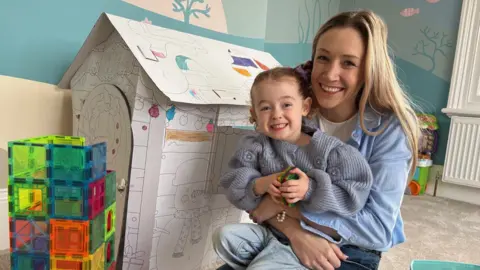
Laura and her husband Ronan, 33, now have a three-year-old daughter Cora.
She said this was part of the reason she was pushing so hard for this to be available nationwide.
"If my daughter were to ever go through that, I'd want to do anything in my power to stop it," she said.
"It's the same with my friends, people in my community.
"When I first got the bit of feedback from someone who had used it in a hospital, I went running down the garden to my husband saying, 'it's helped, it's helped', which is an incredible feeling.
"It really matters that people don't face those challenges that I've faced."
- Details of support with miscarriage are available on the BBC Action Line
Follow BBC Nottingham on Facebook, on X, or on Instagram. Send your story ideas to eastmidsnews@bbc.co.uk or via WhatsApp on 0808 100 2210.
