'Being a Cockney means having community spirit'

 Handout
As the Modern Cockney Festival enters its third year, people in south east England with a Cockney connection reflect on what it means to them.
Throughout March, the month-long event organised by Grow Social Capital and the Bengali East End Heritage, includes a series of exhibitions and online forums which talk about the rich heritage of Cockney culture and identity.
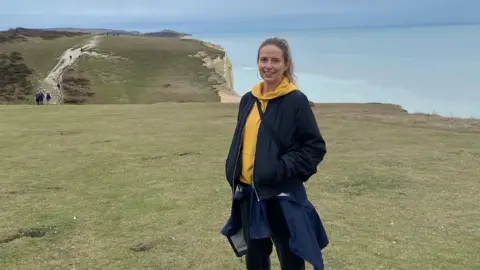
Laura Burch, who lives in Hastings in East Sussex, and whose parents have Cockney roots, said she attended the festival events as she was keen to learn more about her heritage and history.
The first recorded usage of the word Cockney dates back as far as 1362, and used to be said only to apply to those born within earshot of the bells of Mary-le-Bow Church in Cheapside in the City of London.
Andy Green and Saif Osmani, who are behind the Modern Cockney Festival, say they believe the Cockney identity is still thriving but has evolved.
Green says, rather than being born near any particular church, the main qualification for cockneydom is being a "non-posh" person with a London heritage.
'Helping others'
Burch said: "I don't have a typical Cockney accent, but I came from a working class background.
"I want to reconnect with my Cockney roots. I believe the working class has been unfairly shunned, they are the backbone of this country," she said.
She added her parents have always been hard-working, resilient and instilled a strong sense of Cockney values in her.
"Being a Cockney means having a strong community spirit, looking after family and friends and helping others," she said.
 Handout
Simon Dalgarno, who lives on the Isle of Sheppey, says even though he moved to Kent when he was 11-years-old, he still feels a strong connection to his Cockney roots.
"I love pie and mash, and I still use rhythming slang, which sometimes confuses my friends," the 50-year-old IT support worker said.
"I remember I used to eat fish and chips with my nan and granddad every Friday, but I am not too keen on jellied eels.
"To me, being a Cockney means community, togetherness and solidarity."
Denise Knight, whose grandmother was born within the sounds of the Bow Bells and was also a suffragette, moved to Kent in 1982.
"My grandmother had always taught us to help family, and to help others," she said.
Knight said her grandmother embodied the "true spirit of a Cockney", describing her as "strong, independent and resourceful".
She says she continues to live by her grandmother's values.
"I've been told by some locals in Kent that I'd never be accepted.
"I've never tried to fit in, because I am proud of my heritage," she added.
Green says some people are "dismissive of their Cockney identity" due to its associations with low social status.
"Yet a Cockney identity connects with values of being resilient and resourcefulness, an irreverent and stoic wit, and an amazing heritage and back story to be proud of," he added.
Follow BBC Kent on Facebook, on X, and on Instagram. Send your story ideas to southeasttoday@bbc.co.uk or WhatsApp us on 08081 002250.
