How Andrew's arrest brought global glare to quiet town

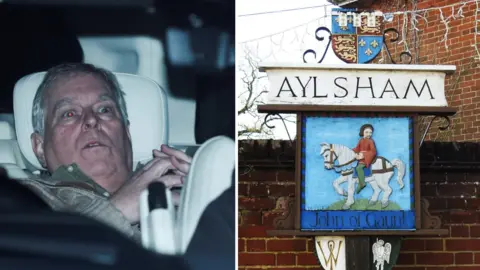 Reuters/Adrian S Pye/Geograph
Aylsham is a quiet, rural market town, 13 miles (21km) from Norwich, known for its tearooms and churches and being home to the steam trains of the Bure Valley Railway – qualities that feel quintessentially Norfolk.
From a tourism point of view, the Aylsham Show is its biggest annual event, attracting about 15,000 people.
On Thursday, though, Aylsham played a part in a global media storm.
Eleven hours after Andrew Mountbatten-Windsor was arrested at his home on the Sandringham Estate, he was photographed slumped in the back of a Range Rover leaving Aylsham Police Investigation Centre (PIC).
Just a few miles away sits Blickling Hall, long woven into royal history: Anne Boleyn, arrested and executed in 1536, is believed to have been born there.
With Andrew's arrest, Norfolk unexpectedly became the backdrop to another rare moment of royal scandal - the first arrest of a senior royal since Charles I nearly 380 years ago.
Where in Aylsham was Andrew taken?
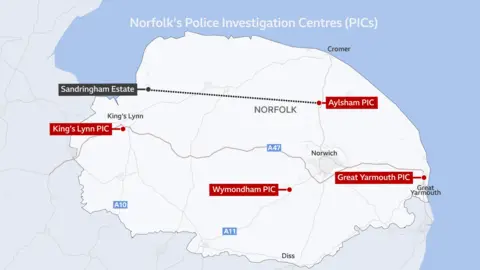
Across Norfolk there are four PICs and upon his arrest, Andrew was driven 37 miles (60km) to Aylsham PIC rather than the centre nine miles (14km) away from Sandringham in King's Lynn.
Simon Nicholls, a retired defence solicitor who has represented high-profile clients including supermodel Naomi Campbell and boxer Herbie Hide, said the former prince would not have received any special treatment or privileges.
"Custody sergeants and support staff are very professional and everyone will have been dealt with in exactly the same way," he said.
"I suspect whoever had been arrested would have been placed in a cell – the same as anyone else – whether they were a prince or a pauper."
New custody suites at Aylsham PIC were opened by Norfolk Police in 2011.
What would have happened inside the PIC?
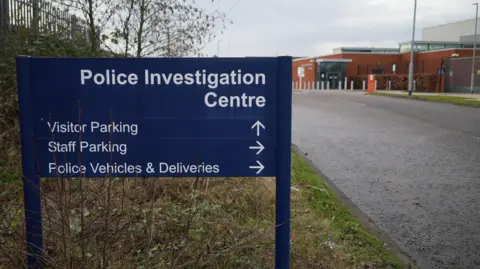 Shaun Whitmore/BBC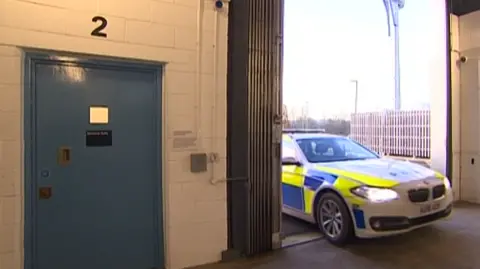
While he remains eighth in line to the throne unless Parliament changes the law, Andrew's arrest and detention were handled under the same Police and Criminal Evidence (PACE) Act custody rules that apply to any detainee.
While it is not known exactly what the former Duke of York's day looked like, BBC Look East's film from 2017 showing standard procedures gives a good idea.
Upon arrival, a custody sergeant would verify the suspect's identity and assess their physical and mental wellness.
He would have had his rights read to him before his mugshot, fingerprints and DNA were taken.
He could choose to seek advice from the 24/7 duty solicitor while waiting for a criminal lawyer and would have been taken to a cell with a toilet and bedding.
What we know for sure is that he left Aylsham after 19:00 GMT on Thursday before returning to his home on the Sandringham Estate.
Thames Valley Police said a man in his 60s had been released under investigation and searches in Norfolk had concluded.
'That's going to go around the world, mate'
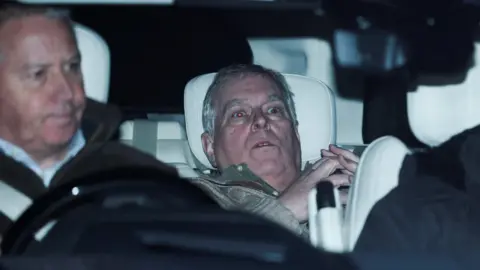 Phil Noble/REUTERS
BBC journalist Matt Precey spent five hours outside Aylsham PIC on Thursday, where it was rumoured Andrew had been taken into custody. Here, he describes the moments leading up to the taking of the photograph now seen worldwide:
I went to Saddlebow, which is just outside King's Lynn, and nothing was really happening.
So I drove over to Aylsham. I got there at about 13:00 GMT, and again it was really, really, quiet - not much going on. There was only one other member of the media when I arrived. We just waited for hours - it was cold and wet - and I spent a lot of time in the car staring at the two entrances into the complex.
It got to 17:00 GMT and we lost the light. By this point Reuters had arrived. I was contemplating going home - I'd been there for nearly five hours - but decided to give it a bit longer. I was hungry, so I went to Aylsham and got a bag of chips.
About five minutes after I ate the chips, this Range Rover, followed by another car, suddenly turned up, so I noted the registration and alerted colleagues. It was a big, imposing black vehicle - the kind you see the Royals driving around in.
We started filming the small convoy trying to get into the police station, but they had a problem. They couldn't get into the PIC. Someone at the gate was fruitlessly typing in a code and it wouldn't open.
We waited for them to come out and didn't know how long they'd be. Within five minutes a large garage door lifted and behind it were the two vehicles; the one at the front was the big black Range Rover.
The iconic image we've all seen of Andrew in the back - that wasn't luck. That was Reuters photographer Phil Noble knowing exactly what he wanted, adjusting his camera and going for the shot.
The convoy went past us and Phil checked his camera. I was next to him, and, suddenly, this amazing image popped up. I said: "That's going to go around the world, mate."
I alerted the newsdesk that this amazing photograph was on its way and within five minutes it was on the BBC News website – it was quite extraordinary.
Follow Norfolk news on BBC Sounds, Facebook, Instagram and X.
