I'm a doctor but will never be able to pay off my ever-growing student debt

 JACK TAGG
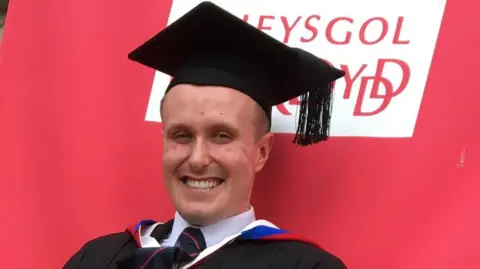
A doctor worries he will never be able to pay off his student loan debt - with the high interest rate already having added more than £25,000 to it.
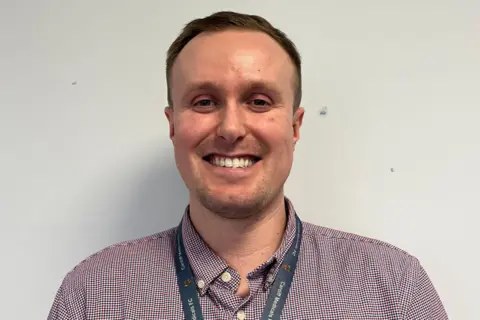
Dr Jack Tagg, who is now 30, left university having borrowed £55,000 to complete his studies, but now owes £80,000.
He believes the situation is having a "huge impact on the wellbeing" of graduates, having accumulated £14,000 of interest before even finishing his studies.
A spokesperson for the UK government said it "inherited" the student loan system and was "committed to supporting the aspiration of anyone who can and wants to attend higher education".
Tagg, originally from Yorkshire, is eligible to pay interest of up to 6.2% - depending on his earnings - on the loan which was taken out with Student Finance England.
He estimates in this tax year alone, he has accumulated an extra £3,000 of debt, but only paid off half of that.
Interest is calculated differently depending on when and where you took the loan out which UK chancellor Rachel Reeves called a "fair and reasonable" system, after backlash for freezing the threshold in England.
But Tagg said "It wasn't something that was at the forefront of my mind" when he started a five-year course at Cardiff University when he was 18.
"Like most 18-year-olds, I saw university as furthering your education, a chance to better yourself," he said.
"I was aware that the university fees had increased at the time, and I think they'd gone from £3,000 to £9,000 there, so I did know I was going to be borrowing significantly more.
"What I wasn't prepared for, because I didn't have a crystal ball, was how that would spiral, I'd accumulated another £14,000 worth of interest before I'd even finished my studies."
 Jack Tagg
He said while people may associate his job with being high-earning, it takes a long time to get to that point and in the meantime interest is growing.
"Obviously that impacts on things like saving for a house and other purchases you might expect to make in the next few years," he added.
While the debt gets written off after 30 years, Tagg will have to keep paying until then and is worried it will put people off from the profession.
"It's pretty daunting at the minute and I can only see it getting worse before it gets better to be honest," he said.
"Hopefully the English and the Welsh governments can work together to do something about that for all graduates."
 Getty Images
How much interest will I pay on my student loan?
The loan starts accruing interest immediately.
For students in England, the interest rate is normally set at the retail price index (RPI) measure of inflation.
It is currently 4.3%, for anyone who started university in 2023 or later.
For those who started between September 2012 and July 2023, it is between 3.2% and 6.2%, based on the level of earnings which starts at under £28,470 and rises to £51,245 and above.
In Wales, the interest paid can vary between 3.2% and 6.2%, depending on earnings, and Scotland and Northern Ireland it is 4.3%.
The loan covers tuition fees to universities plus maintenance loans for living expenses while studying.
Repayments are taken automatically from wages when people earn over a certain amount.
The threshold varies across the nations from £25,000 in England, £28,470 in Wales to £32,745 in Scotland, and former generally repay 9% of their wages above this.
In England, chancellor Rachel Reeves announced in November a threshold freeze meaning some graduates will start paying their student loans back at £29,385 from April 2027.
First Minister Eluned Morgan has ruled out freezing the threshold for Welsh graduates.
Loans are written off after a period of time which varies from 25 to 40 years across the UK.

Libbie Thomas, 20, from Maesteg, Bridgend county, is in her second year studying law and estimates her loan debt is more than £30,000.
She said the debt has currently entered her mind, while some of her friends label it "a failure".
"I think my school did try to push the idea of finances out of your mind because being from a valley, being from a rural, small area, they like to make you think you are more than what you're trapped in I suppose," she added.
"Sometimes people call us stupid for coming to further our education because they know they are not going to be in debt, they've gone straight from school into earning."
Her course mate Robbie Wells, 20, has a bit of support from family but said it is concerning that many people will go on to never be able to pay back their loans.
"The system itself is just not working for anyone at the minute," he said.

Marcie Niland-Sinyard, 19, studies social sciences at Cardiff University, and while media stories about interest rates worry her, she is unsure how much she will actually pay back.
"I'm from a low income background so I have maximum student finance, so what that means for the future, god knows how much I'll be paying," she added.
A spokesperson for the Welsh government said: "Wales has the most generous student maintenance package anywhere in the UK, and our unique and progressive student finance system has the highest levels of non-repayable grant support provided to those most in need.
"We are currently seeking views through our call for evidence on the future of tertiary education in Wales, including the sustainability of student finance."
The Welsh Conservatives' education spokesperson Natasha Asghar said: "At a time when apprenticeship opportunities are lacking and meaningful employment is harder to find, making education more expensive simply puts another barrier in their way."
Welsh Liberal Democrats' leader Jane Dodds said: "Higher education is a public good that benefits the whole economy, and the funding system should reflect that, supporting aspiration, not holding it back."
A spokesperson for Reform UK Wales said: "Far too many young people end up saddled with student debt when we need more people filling skills gaps in our industries."
Plaid Cymru spokesperson for education Cefin Campbell said: "It is extraordinary that our student finance system, rather than supporting our students, is instead punishing them. It is clear that we need a system-wide rethink."
Wales' Green Party Deputy Leader Phil Davies said: "Wales Green Party believes access to education is a public good that should be protected as a right rather than a privilege. In the long term Wales needs to abolish tuition fees for students and forgive existing loans."
A UK government spokesperson said it inherited the student loan system.
They added: "Since we were elected, we have been committed to supporting the aspiration of anyone who can and wants to attend higher education, including by reintroducing targeted maintenance grants to support the prime minister's target of two thirds of young people taking a gold standard apprenticeship, higher training or heading to university by the age of 25.
"This is all alongside our ongoing support for working people starting off in life, as we build 1.5m new homes, expanding government-funded childcare, introducing free breakfast clubs and freezing rail fares."
Additional reporting by Gareth Pennant and Angharad Thomas.
