'Deep time' geological trail planned for Highland village

 Getty Images
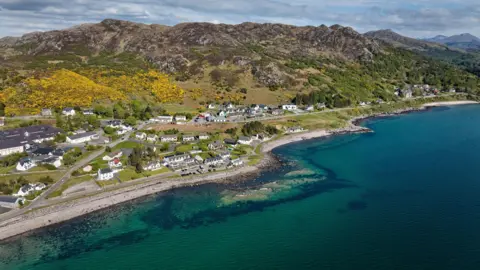
A coastal trail exploring the history of some of western Europe's oldest rocks has been proposed for a Wester Ross village.
Gairloch's geology includes Lewisian gneiss and Torridonian sandstone, rocks that were formed millions of years ago.
Gairloch Museum plans to build the new route to the village's Carn Dearg Youth Hostel.
Roy Macintyre, one of those leading the project, said the trail would celebrate "deep time", the geological history of Earth over billions of years.
Mr Macintyre said: "Gairloch is a favourite haunt for geologists.
"In Gairloch, Lewisian gneiss and its various associated rocks are mostly exposed on the surface so it's easy to interpret them."
He said the trail's length in kilometres - 4.5km - was also significant.
"The age of the solar system is generally accepted to be 4.0 to 4.5 billion years," he said.
The route would have 18 markers representing different geological periods, such as the Triassic and Jurassic.
The proposals have been put to Highland Council and the new trail could potentially be open next year.
 Getty Images
Lewisian gneiss are colourful, banded rocks named after the Isle of Lewis in the Western Isles.
They were formed in a process that involved the rocks' minerals being heated and squeezed deep below the Earth's surface.
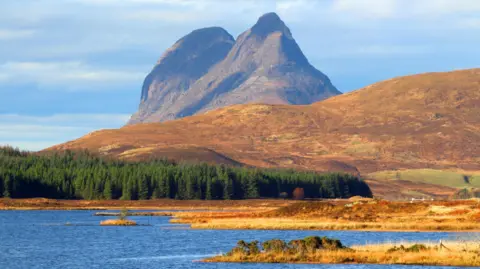
Many of the striking mountains in the north west Highlands are formed of Torridonian sandstone - including Quinag, Suilven and Liathach.
