Display shows how James Bond would really operate

 Imperial War Museum North.
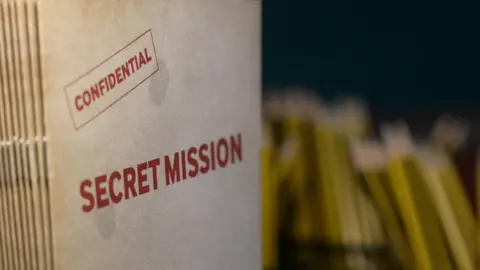
The covert world of spies and the kit they have used is being revealed as part of a new exhibition at the Imperial War Museum North.
Spies, Lies and Deception lifts the lid on clandestine operations in two world wars and the Cold War.
The museum in Trafford said it was inviting visitors to "explore how daring plots of deception have changed the course of conflict, how spies have been exposed and the costs of being both the deceiver and the deceived".
Curator Amanda Mason said the gadgets used by spies have been fertile ground for movies such as the James Bond franchise.
"Obviously it's been explored through films and through fiction and famous novels," she said.
"It's just been such a ripe subject for creativity and maybe that's why we're also then interested to find out the real stories behind the fiction because actually sometimes the real stories are even more amazing than the fiction."
 Anna Jameson/BBC
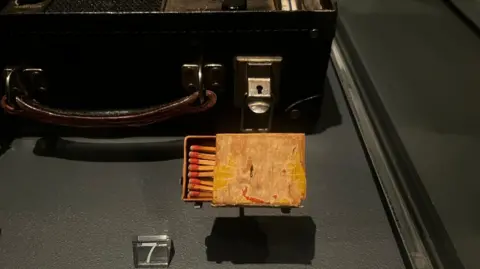
Ms Mason highlighted one exhibit as particularly interesting - a box of matches adapted for secret writing.
"The tip of one of the matches had a particular chemical on it which has invisible ink," she said.
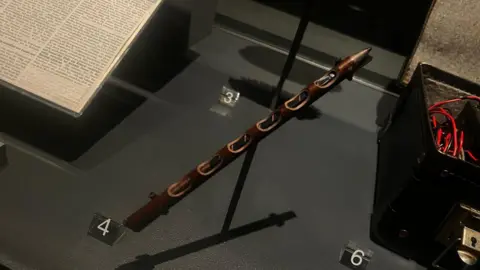
Another gadget on display, she added, was a pencil that conceals a hidden blade.
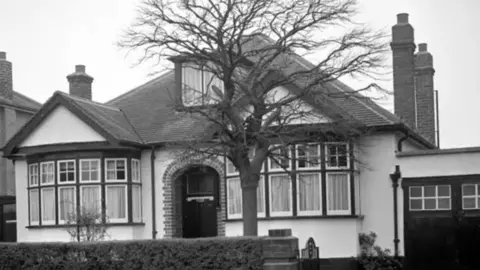
The exhibition also tells the story of the Portland spy ring run from Peter and Helen Kroger's suburban bungalow in Ruislip, north west London, which was the communications hub for a Soviet spy ring in 1961.
Ms Mason said there was a reproduction of an original plan from the case files as well as all the items that were concealed in the house which were the "paraphernalia that you'd expect spies would be using".
 Anna Jameson/BBC
The exhibition also recounts the role of subterfuge for the D-day Allied landings in Normandy in 1944 where the allies sought to trick the Nazis about when and where the landings would happen.
One example of the many layers of deception was the fake parachutists - called Ruperts - which were dropped at night en masse from aircraft shortly before D-day to give the impression an army was landing in a particular place.
"It was really critical in its success because they needed to make sure that there weren't massed armies waiting for the Allies when they landed," said Ms Mason.
Spies, Lies and Deception runs until August.
 PA Media
Listen to the best of BBC Radio Manchester on Sounds and follow BBC Manchester on Facebook, X, and Instagram. You can also send story ideas via Whatsapp to 0808 100 2230.
