'We are happy and hopeful for the future of Venezuela'

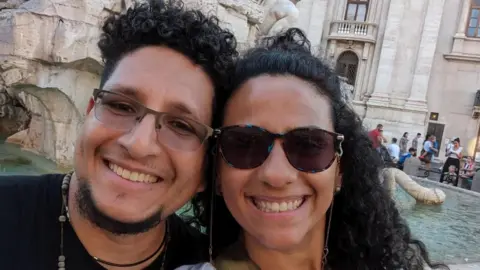 Adolfo Marquez
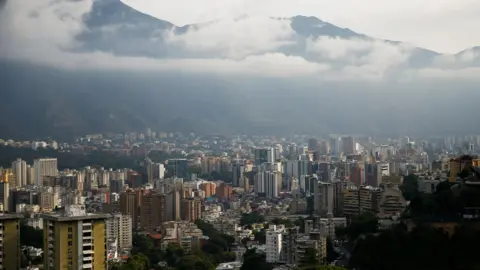
Just over a week ago, millions of expatriate Venezuelans around the world woke up to the news that the country's president, Nicolas Maduro, had been seized by US forces in a dramatic operation.
It was an after-dark military mission which lasted just over two hours and took the world by complete surprise, and for many it has changed everything.
About eight million Venezuelans have moved away from their home country since 2015 amid an ongoing economic and political crisis there.
Some of them now living in Greater Manchester told the BBC what it was like watching from afar - and how they feel about the future.
Adolfo Marquez, 36, who is originally from Caracas, had to leave because he was a criminal barrister who had a legal case against Maduro and feared for his safety.
He has lived in Salford since 2016, settling here with his wife and going on to have two daughters.
'We can see a light'
He said he brought his father over to join the family "just to keep him alive", as he had been forced to "spend days without eating proper food".
"That is what people in Venezuela are suffering," he added.
Adolfo said when he heard the news of Maduro's extraction he went on an "emotional rollercoaster".
"We've been waiting for this moment for so long and it's finally happening – so I felt shock at first, then scared for the people still living there," he said.
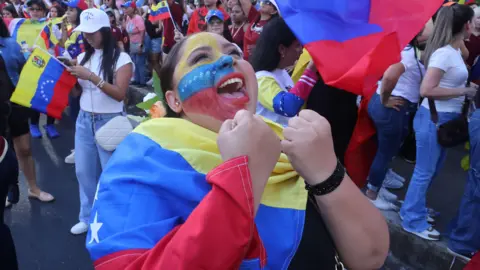 Gabriel Rodriguez/EPA/Shutterstock
In the last few days, Adolfo said his friends in Venezuela had messaged him saying there had been an increase in people being stopped in the street by police and phones being examined to find out if they supported the US operation.
If any evidence is found the choice is to pay a huge ransom or go to jail, he said.
But "change is happening", he said, referring to the release of detainees considered political prisoners, one of whom was his friend's dad.
US President Donald Trump has said his administration would be "taking oil" from Venezuela, which has the world's largest proven reserves, but he also promised to rebuild the country "in a profitable way".
Adolfo said: "We understand Trump wants oil - but it's a price we're willing to pay so not a single Venezuelan is killed or starving again.
"We can see a light - before it was just darkness."
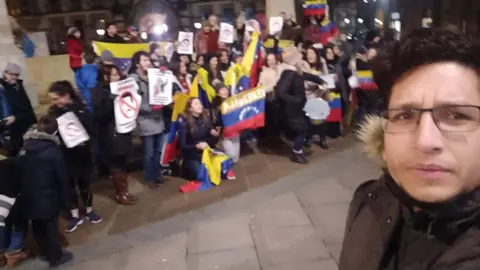 Adolfo Marquez
Adolfo said he finally felt hope that one day he could return to his home country and take his daughters to see where he grew up.
"It feels sad, a part of you is missing," he said.
"We talk about Venezuela, we buy books, tell stories, but it is hard to explain to the kids we can't go because it is dangerous."
'I feel happy but this is just the beginning'
Helena Diez, 55, is from the Venezuelan Andes and now lives in Salford.
She said Venezuelans were living in poverty, with little food and electricity being cut off for hours a day.
"It is not a way of life. It is stressful 24/7," she said.
A basic basket of food for a family per month is about £375, she said, with salaries of £120 per month if you get bonuses.
"It is impossible to live like that. I know people who have died from not having enough to eat or not being able to get medicine," she added.
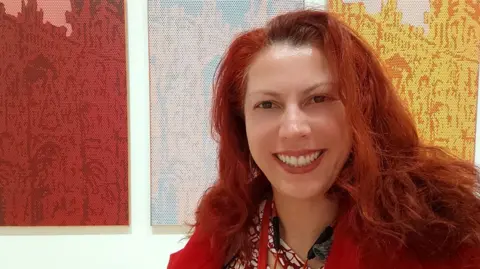 Helena Diez
The huge Venezuelan diaspora around the world tried to help their families back home, she said, sending aid and speaking to MPs, but "international support is really needed".
In the UK, Helena, who is a scientist, said she felt "free, but also safe, just feeling safe is a big deal" and she could now imagine a future like this in Venezuela.
"We feel relief, we feel happy, but we are conscious this is just the beginning," she said.
"This is the small light, the small possibility.
"If they take Maduro out and do nothing, nothing will change.
"But over the last week it feels like things are going well, but it will be a process to dismantle the grab of power of the country.
"It will take time."
'It was one of the happiest moments of my life'
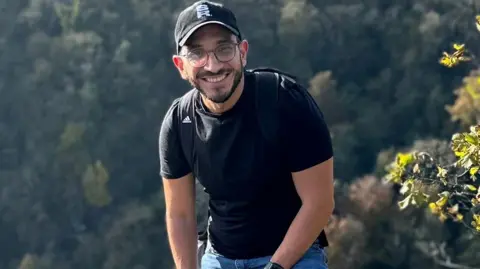
Roger Munoz, who lives in Castlefield with his boyfriend and two dogs, works as a mechanical engineer after moving to Manchester in 2015.
He said he left Venezuela because of the "repressive government" which would "take fingerprints" when you bought milk and bread, with rations on how much you could buy and you could not take part in protests.
He said he and his family, who are from a small town, El Guayabo in the Yaracuy region, lived in "constant fear" because "you could go to jail for what you think".
 Roger Munoz
"My dad died because the hospital didn't have antibiotics," he added.
Roger said he had not been back to Venezuela for 11 years and he missed his family.
When he heard of Maduro being being taken to the US he said he felt relief, adding: "It was one of the most happiest moments of my life.
"It gives you hope. There is hope I could go home and feel safe."
 Reuters
"I've not seen any Venezuelan that is not happy about it," Roger said.
But demonstrations have been held around the world against the US military action, with some suggesting it was an "act of aggression".
The Stop The War Coalition, CND and Solidarity with Venezuela groups held a protest in Manchester and London, holding up placards reading: "Hands off Venezuela" and condemning what it called a "war crime".
Roger said: "I don't want another country to control my country, we want to be free" but he said he felt some demonstrators were using the situation to fit their own anti-Trump agenda.
"The UN found there had been crimes against humanity in Venezuela, but they didn't say anything then," he added.
Adolfo agreed: "We are open to changes. We had an election, we won, but it never happened.
"This is not the ideal scenario we had in mind – but it is what we have, and we are hopeful for the future."
Listen to the best of BBC Radio Manchester on Sounds and follow BBC Manchester on Facebook, X, and Instagram. You can also send story ideas via Whatsapp to 0808 100 2230.
