How floodplain could be restored to wildlife haven

 The Ruby Cube
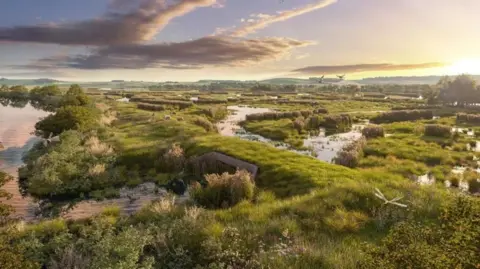
A stretch of the River Severn could be restored as a wildlife haven over the next 20 years.
The Eelscapes project would allow endangered European eels and other vulnerable wildlife to thrive again in the Severn Vale in Gloucestershire.
Local conservation charities have developed plans for the 1,300 hectares of floodplain wetlands between Tewkesbury and Gloucester.
Now the charities are negotiating with the government to get funding approved, which would allow the restoration over a 20-year period.
Eelscapes is one of 22 pilot projects across the country to have received funding to draw up plans from the Department of Environment, Farming and Rural Affairs (Defra).
Over the past two years, the Gloucestershire Wildlife Trust (GWT) and Wildfowl and Wetlands Trust have been developing the vision with the Environment Agency, land managers and local communities.
Ben Spencer, Eelscapes stakeholder advisor at GWT, said: "Our proposals aim to support local land managers by creating conditions that help the land absorb and hold water more naturally."
 The Ruby Cube
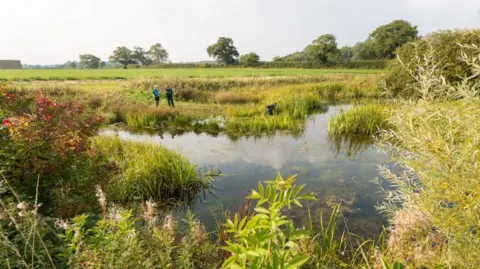
The combination of spring and summer drainage and flooding in the autumn and winter has made conditions in the River Severn valley more extreme.
The land being either very wet or very dry makes life increasingly challenging for farmers and wildlife.
Eelscapes has carried out surveys across the area to study a variety of wildlife, including rare wetland plant true fox-sedge, European eel and also water vole, otter, bats, waterbirds and insects.
"What we want to do is also make sure that there's a much better connection between people around the Severn Vale and the the river and wetlands for the health and wellbeing benefits," Spencer said.
He added that negotiations with Defra about long-term funding were "encouraging", and he urged members of the public to come and see the plans.
The GWT is hosting a public event on 27 January at Ashleworth Memorial Hall.
Follow BBC Gloucestershire on Facebook, X and Instagram. Send your story ideas to us on email or via WhatsApp on 0800 313 4630.
