Fears for future of church organs amid neglect

 BBC
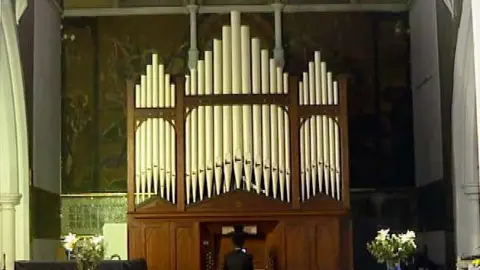
BBCMore than 400 of the UK's church pipe organs are being junked or falling silent due to neglect every year.
The organ preservation charity Pipe Up has carried out a survey and says five pipe organs each week are going to landfill.
Another four a week are ceasing to be played because of a lack of maintenance.
"A cultural catastrophe is staring Britain in the face: the imminent loss of its pipe organs," a spokesperson said.
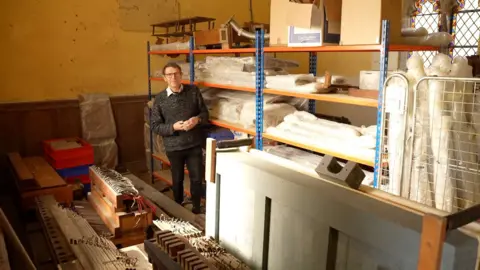
George Allan, the chairman of Pipe Up, has a store of homeless organs in a redundant church in Spernall in Warwickshire, near Redditch. He said many were being thrown out needlessly.
"A full organ rebuild of a moderately sized instrument will cost more than £300,000 but we can often get nearly playable organs back into use… for less than £1,000," he said.
Many organs, he added, could be saved with just a couple of days of specialist attention.
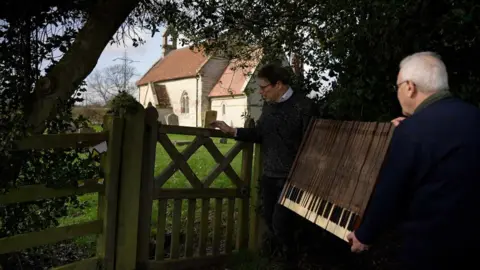
His most recent rescue organ came from Bowburn in County Durham and, while he has hopes that a new home can be found in the UK, he thinks it will, like many before, end up being shipped abroad.
"We've had some interest from Latvia or possibly the Philippines," he said.
"The Philippines?" I asked.
"Yes. There's a Catholic priest there who seems to be populating the whole country with redundant British and American organs."
One hope is alternative or unusual homes.
"We've managed to install one at London Bridge Station and we are always looking out for other unconventional places to put organs," Allan said.
"Nightclubs, bus stations, any sort of public places."
Another organ from County Durham was moved to a Seventh Day Adventist church in Homerton in east London.
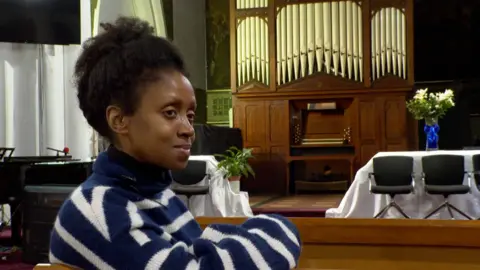
Fiona Pacquette, who runs the East London School of Music, now has 11 organ students learning to play.
"When people walk in they just go 'wow, look at that.'", she said.
"Forget about everything else. It's right in front of them and they just want to have a look to see what makes it work….if someone's playing it, it draws attention.
"There's been a number of times when people have heard it from outside and they just want to come in and see where the sound is coming from. It's creating a new community."
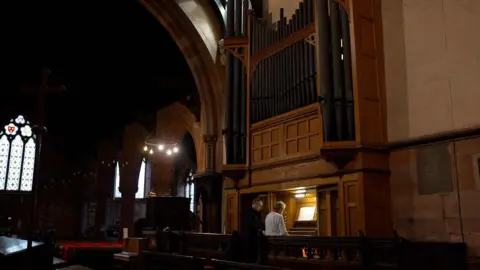
In St Leonard's in Bridgnorth in Shropshire, one of the county's biggest organs is in dire need of rescue.
One of its three keyboards had been disabled, the stops on the left play a constant droning F note when pulled out and, while it may appear huge, half of it had, according to its custodian, Stephen Lomas, been removed.
"It's half the size it was. It was amputated and half it it was shipped off…and a few years later it basically went to the tip," he added.
"The organ was by J.W. Walker, a famous organ builder and it was [originally] certainly cathedral size."
Adding to the problems is the decline in organ expertise in the UK.
In March 2025, the Heritage Crafts Association added organ building and maintenance to its list of endangered crafts.
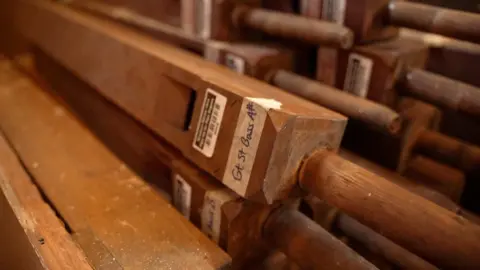
Back in George Allan's organ orphanage, there is hope something might be done.
"In 1915 there were around 40 000 pipe organs in the UK; more than half have already gone," he said.
"We think there are about 15,000 organs in total left in Britain. Only half of those are playable and only half of them are in regular use. All the others are silent for one reason or another.
"If this trend continues by 2070, Britain will have no pipe organs left, outside cathedrals, Oxbridge colleges, a few concert halls and some well-supported churches.
"We hope to lead a sort of crusade. We can't do much about church closures, but what we can do is we can revive the motivation to keep organs working."
Follow BBC Coventry & Warwickshire on BBC Sounds, Facebook, X and Instagram.
