'Our houses are going to go next - it's unjust'

 Shaun Whitmore/BBC
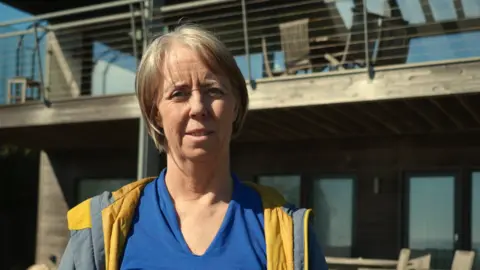
A villager who spearheaded a campaign for new sea defences to combat coastal erosion has been told her home will not be protected by them.
Thorpeness in Suffolk was battered by the elements through the winter. Eleven properties were torn down before they toppled into the sea.
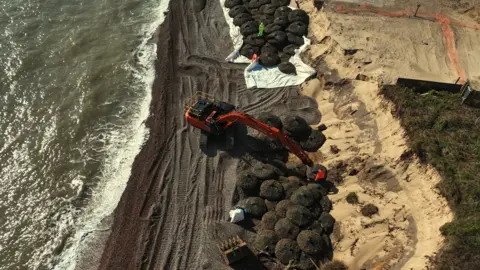
Earlier this month, temporary bags of rocks, paid for by residents, were dropped on the shore and East Suffolk Council said it would spend £300,000 on further protection.
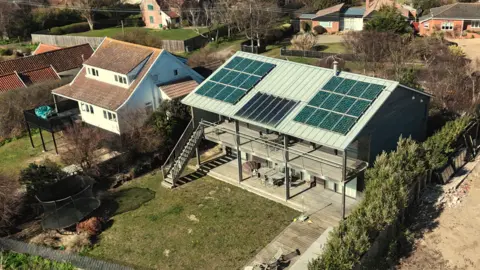
But those additional blockades will not cover the home of Sophie Marple, who was at the forefront of the community's calls for action. A council spokesman said the level of erosion had been an "extraordinary event".
"We are completely at risk and it's quite shocking because we still exist," said Marple, whose neighbour's house also will not be covered.
"We're still here but they are unprepared to put any of those rock bags in front of us.
"The reality is, we all face the same erosion risk and it's now actually an empty plot of land they're putting these bags in front of, yet we are the most vulnerable right now.
"We are the two houses that are going to go next, and they just feel it's okay to hang us out to dry, to wash their hands of us.
"It's incredibly unjust," she said.
 Shaun Whitmore/BBC
The new temporary sea defences at the holiday hotspot cost residents about £270,000 – money they still actually need to fundraise.
The council initially said it would not spend money to shore up the coastline before deciding to install bags to cover up to 24 properties on Old Homes Road.
It came after it was announced in January the government was awarding £18m of funding to help communities facing erosion in Suffolk, Norfolk and the East Riding of Yorkshire.
"They keep telling us they're doing their best, well, I'm standing in a completely decimated road," added Marple.
"I've got a wasteland in front of me and if this is the best East Suffolk Council can do, well, God help Thorpeness.
"You live with this hope day in, day out that you are not going to have to demolish your beautiful home and that it's not too late, but it probably is."
 Shaun Whitmore/BBC
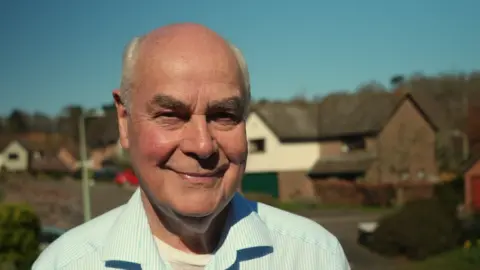
Mark Packard, the council's cabinet member for planning and coastal management, said putting rocks in front of the last two homes "would cost more money".
"We don't think there's any rationale for putting more rocks in front of the two houses that are remaining," he told the BBC.
"We hope they'll stay, but if the cliffs start eroding some more, they have been warned that they may have to leave.
"The reason for the rocks is to protect a lot of houses that are behind those rocks, we want to make sure that they're safe."
 Shaun Whitmore/BBC
Packard, who said the bags could work for up to three years, added that residents "must remember" the level of erosion faced by the village was an "extraordinary event".
"Nobody wants to lose their home, of course they don't, but we have talked to them all the way along," he said.
"Obviously, if they feel let down, I'm sorry about that.
"But we haven't left them alone - this is an extraordinary event and we're trying to cope with it the best we can."
Follow Suffolk news on BBC Sounds, Facebook, Instagram and X.
