Stroke victim to take on London Marathon

 Paul Metham
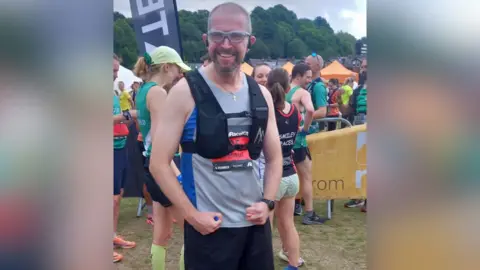
A runner who had to learn how to walk again after having a major stroke four years ago is set to take on the 2026 London Marathon.
Paul Metham, 41, had to have a portion of his skull removed to relieve pressure on his brain - and in 2021 doctors told him he was "minutes from death".
The father-of-two from Sheffield said the marathon will be the longest distance he has ever run and he will complete the challenge to raise funds for the Stroke Association.
"This is going to be the pinnacle of my recovery," he said.
 Paul Metham
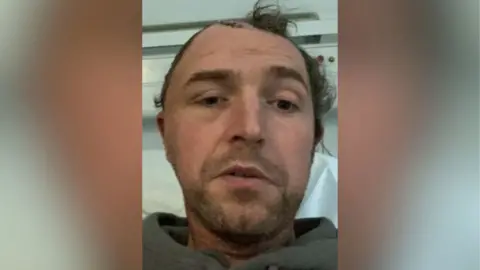
Mr Metham had the stroke shortly after tearing his carotid artery - the main artery carrying oxygenated blood to the brain - while out running.
As the tear was healing, part of the blood clot broke away and created a blockage in his brain, which caused him to lose his vision.
He was living in Manchester at the time and received emergency treatment at Salford Royal Hospital.
"I was in utter disbelief, I was a fit bloke running 10ks and half-marathons, so for a doctor to tell me I'd had a stroke at 37 was unbelievable - panic set in.
"I wasn't in any way religious, but I've got a very distinct memory of praying at the time."
He said that when he was discharged from hospital, he could only walk with a stick and thought he would never run again.
"I said to a nurse in the hospital that my running days were over and she said she wouldn't be so sure.
"A friend of mine said I could either wallow in self-pity and say my life's over, or fight as hard as I could to get back to normality - I have young children, I didn't have an option."
 Paul Metham
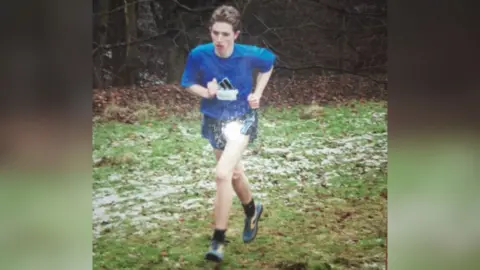
Mr Metham said he had gradually regained his running abilities and completed a half-marathon within two years of surviving the stroke - but this will be his first time completing a full marathon.
He added he had since converted to Christianity and returned to Sheffield, where he grew up.
Although he recovered, he now suffers from epilepsy and seizures, and has struggled with anxiety and depression.
"But it's been alleviated by my running," he said.
"Some people say it's counterintuitive because running put me here and I still do it, but if I wasn't as fit as I was, I wouldn't have survived and recovered as I did.
"Running saved my life at the end of the day."
Listen to highlights from South Yorkshire on BBC Sounds or catch up with the latest episode of Look North.
