Earlier call to fire service 'may have saved' mum

 Contributed
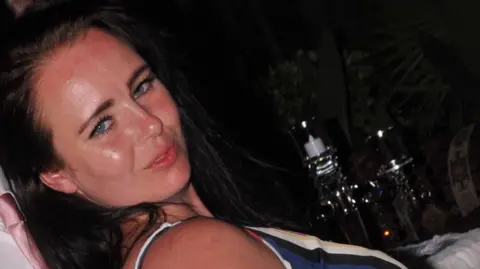
A mother who drowned after becoming trapped in sea defence rocks could have survived had the fire service been called sooner, a coroner said.
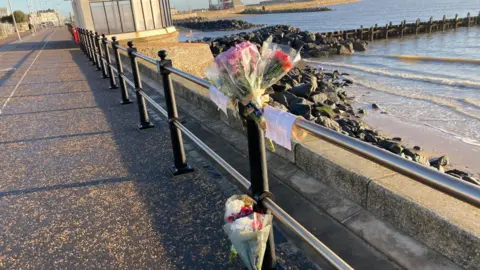
Saffron Cole-Nottage, 32, slipped and fell headfirst on to rocks near The Esplanade in Lowestoft, Suffolk, on 2 February 2025.
An inquest heard how the emergency services responded to the incident, with the first emergency call handled by East of England Ambulance Service Trust (EEAST).
Darren Stewart, Suffolk area coroner, said: "Had the Suffolk Fire and Rescue Service been immediately alerted, it is possible that Saffron would have been extracted from the rocks sooner and survived. However, it is not probable that she would have done so."
Suffolk Coroner's Court heard that Cole-Nottage had been drinking before the incident, and a post-mortem report found levels of alcohol in her system would have "significantly impaired her cognitive abilities".
The level of alcohol in her blood was above the legal drink-drive limit and "above levels associated with drunkenness", the report said.
A statement was read to the court from Cole-Nottage's partner, Michael Wheeler, who said she had come home after going for a meal earlier in the day.
He did not believe she was drunk and said she was not slurring her words when she set off on the walk.
'Extraordinary message'
The inquest heard two men had tried to pull Cole-Nottage out from the rocks by her legs, which were the only part of her body visible.
The court was read a statement from a girl, who said her phone was used to call an ambulance.
It said Cole-Nottage had been "shouting and screaming" and water had eventually submerged her head.
The girl said she was "angry" that the ambulance had not come sooner.
The inquest heard the emergency call handler told members of the public to not try to rescue Cole-Nottage.
The coroner said this was "an extraordinary message to pass on regarding someone who had just been communicated to be trapped and at risk of drowning".
Stewart said: "This advice appears to have been as a result of slavish adherence to guidance."
 Luke Deal/BBC
The inquest heard the incident was initially triaged by a 999 call handler as entrapment, and that the fire service was only called when Cole-Nottage became unresponsive.
She was removed by firefighters about 40 minutes after the fall.
Christopher Strutt, a call handler team leader at the ambulance service, told the inquest that, had he taken the call, he would have said the fire service was required from the start.
When asked why it had not been called once it was established Cole-Nottage was trapped and in water, he replied: "I don't have an answer for that."
The coroner said none of the witnesses that the inquest heard from could recall training of call handling staff or paramedics since the incident.
Stewart said it took firefighters "less than half a minute" to free Cole-Nottage once they arrived.
In a narrative conclusion, the coroner said Cole-Nottage "died from drowning which has come about due to accidental circumstances".
He said he had no concerns about the response from the fire service, the coastguard or the police.
But he said he would write to the chief executive of EEAST and the head of NHS England with a series of concerns, including the time taken by the ambulance service to identify the incident was a rescue, and to pass that information to the fire service.
In a statement issues after the hearing, Wheeler said: "Saff was truly one of a kind, bubbly, fun, and full of life. She had the rare ability to light up any room, lifting the spirits of those around her.
"It has been a long and difficult 15 months to get here. We have finally got some closure and an understanding of what actually happened to Saff that night.
"Hopefully the emergency services have listened to the coroner and, going forward, no other family has to go through what we went through."
 Steve Hubbard/BBC
Neill Moloney, EEAST's chief executive officer, said: "We accept the coroner's findings and note the decision to issue a Prevention of Future Deaths report.
"We are deeply sorry Saffron didn't receive the care she deserved, and we offer our sincere apologies to her family for the distress caused by this tragic incident.
"The inquest has identified important areas where our response can and must improve, particularly in how incidents are assessed, prioritised and escalated in their early stages.
"We are carefully considering the coroner's observations and have already begun work to strengthen our call handling and clinical triage processes, as well as our coordination with partner emergency services."
Do you have a story suggestion for Suffolk? Contact us below.
Follow Suffolk news on BBC Sounds, Facebook, Instagram and X.
