Cold war bunker redevelopment takes step forward

 BBC
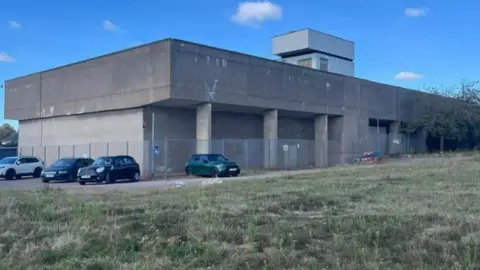
BBCPlans to redevelop a 1950s Cold War bunker and build a new housing development around the site have taken a step forward.
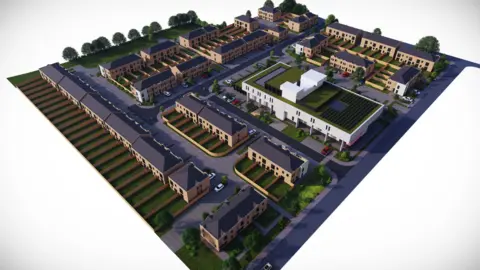
The application for 104 affordable homes around the Grade II-listed Nottingham War Rooms in Chalfont Drive, Beechdale, was approved last November.
The bunker itself would house a space for youth charity Base 51 as well as a community health and leisure facility, conferencing facilities, and space for food and drink outlets.
Developers have now completed the purchase of the site and work is set to begin, with the first new homes expected to be built by April 2027.
 Hamilton Russell
The bunker, known locally as The Kremlin, was one of 16 war rooms designed nationally in the early 1950s in order to provide protected government accommodation during a nuclear attack.
It was designed to accommodate more residents from nuclear fallout rather than the blast itself.
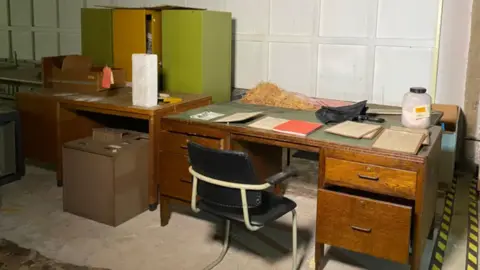
The site was decommissioned and repurposed as a storage facility for the Ministry of Agriculture, Fisheries and Food before it closed its doors in the 1990s.
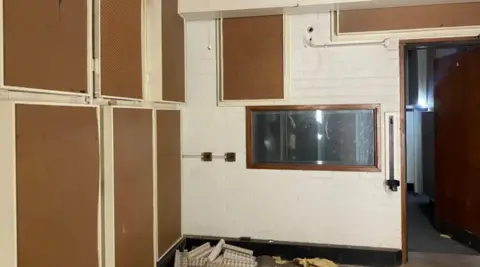
The bunker spans three floors and features a former BBC studio designed to deliver news broadcasts at the time.
Developer Hamilton Russell Harperwood, of Langcroft Group, completed the purchase of the site from the government's housing regeneration agency, Homes England, the Local Democracy Reporting Service said.
The group said the acquisition took its vision for the restoration of the heritage asset a step forward, which it added had been more than 10 years in the making.
As part of the redevelopment of the bunker, a number of heritage zones will be retained, including the Lamson tube system, which was used to send messages using compressed air.
A 1960s plant room, the original kitchen and canteen, and the BBC broadcasting studio will be kept and refurbished in line with its original appearance.
One restaurant will be based on the ground floor, and another will be located on the roof and feature a roof terrace.
The media studio on the second floor would be used for radio, podcasting, film, and recording purposes.
The housing plans for the development include six one-bedroom properties, 60 two-bedroom homes and 38 three-bedroom dwellings.
The residential land has been sub-sold to East Midlands Housing Group, which will deliver the affordable homes.
Craig Cameron, of Langcroft Group, said: "We're extremely pleased to have completed the acquisition of the Nottingham War Rooms and the sub-sale for 104 affordable homes.
"This is just the beginning - the War Rooms are entering an exciting new chapter."
Listen to BBC Radio Nottingham on Sounds and follow BBC Nottingham on Facebook, on X, or on Instagram. Send your story ideas to eastmidsnews@bbc.co.uk or via WhatsApp on 0808 100 2210.
