The Concorde spy who sold secrets to Russia

 Getty Images
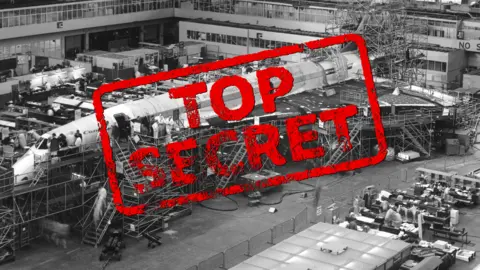
Concorde is fondly remembered as a symbol of international co-operation. But back in the 1960s, its top-secret designs became part of the Cold War race to see who could be the first to build a supersonic airliner.
Espionage was rife, as Russia hoped to steal Concorde's designs, and one former engineer says he now feels "vindicated" over his suspicions of a former colleague who claimed to be working for the Russians.
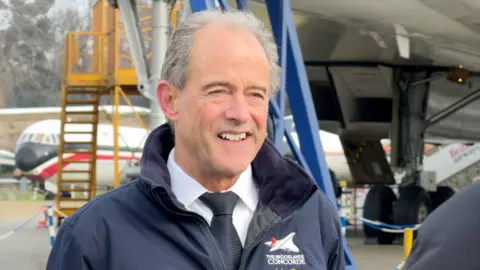
"He was the guy who stood out," said former British Aircraft Company employee Richard Harris.
"There was just that feeling the man was all over everywhere.
"I find it very distasteful, very distasteful."
He is speaking about a man called James (Jimmy) Doyle, who in 1971 said he had sold secrets to the KGB.
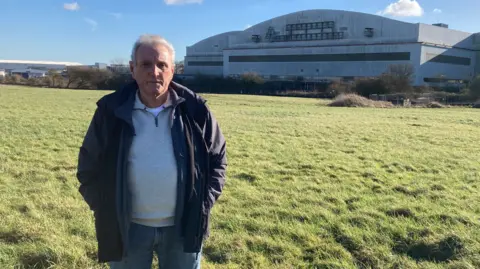
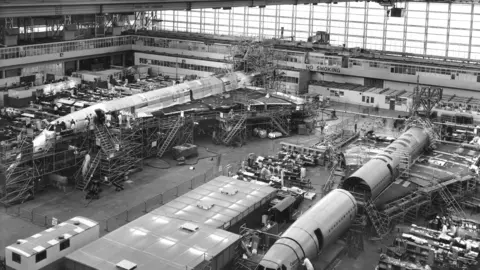
Mr Harris was involved with the Concorde project from its early days at the Brabazan hangar in Filton, near Bristol, where some of the greatest technical minds of the time were working.
At the same time, the Russians were trying to build their own supersonic passenger jet - the Tupolev Tu-144.
In the 1960s, the Concorde project needed a lot of subcontractors in different departments, including the design office and on the shop floor, particularly the electrical installations.
It meant they had "a high number of aircraft electricians come in" and also some independent companies, to get the wiring harnesses on Concorde installed.
Mr Doyle was among them.
"He seemed to be everywhere. He was just an aircraft electrician, but he was very often not on his workstation. He seemed to spend more time than most 'pursuing queries', as he use to put it," Mr Harris said.
"The things that I remember particularly, was that he had a very heavy accent.
"We had our suspicions but they were never proven, and life moved on."
More than 50 years on and Mr Harris has now seen a television interview, recorded in 1971, in which Mr Doyle claimed he sold secrets to the Russians.
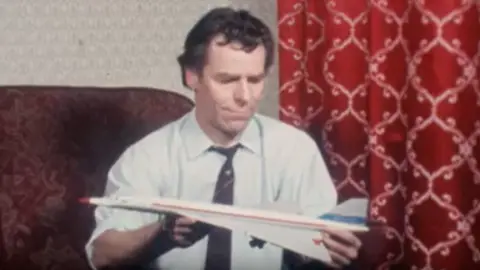
Shown the footage by the BBC, Mr Harris said the man giving the interview was definitely the man they worked with in the 1960s.
"Yep, Jimmy Doyle. If I'd been an artist I would have actually been able to [draw him]. He looks a little bit more sophisticated in that picture. Yeah, he's the guy that stood out," he said.
Mr Harris said he now feels "vindicated" in his suspicions of Mr Doyle, although he never reported him at the time.
"I've grown far more cynical as I've got older. I think I would probably call somebody out [now]," he said.
In the interview, Mr Doyle said he had been approached by a friend doing legitimate work for the Soviet trade delegation who asked him if he knew of any electronic personnel working on the Concorde project.
Mr Doyle said that led to him being contacted by a senior member of the Soviet trade delegation.
A meeting and two-hour conversation then followed for which he said he was initially given a cash payment of £320 for "expenses".
Mr Doyle said in those early meetings he had been asked for details on the electronics systems of Concorde, including the master warning system - which he said the UK was "pretty advanced on".
It was a system that would alert pilots, graded by problem, to any issues with the plane.
 PA Media
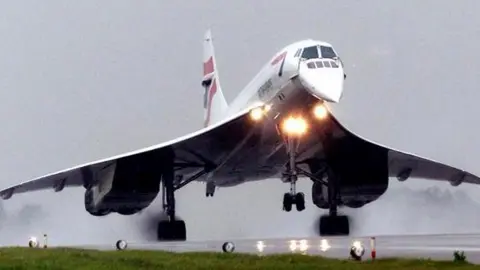
The broadcaster and Concorde biographer Jonathan Glancey said during the 1960s in Britain, it was very much the era of the Cold War. The country was on high alert for espionage, with projects at risk ranging from civil to military - and Concorde was right in the middle of that.
The Soviet Union, he said, had been trying to lift itself out of the post Second World War era and develop quickly.
"It couldn't do that entirely by itself, it needed technology from the West and it would get that one way or another," Mr Glancey added.
 Getty Images
So how important was the information Mr Doyle claimed he handed to the Soviets?
The BBC has spoken to former Concorde pilot John Tye, who said he understood why the Russians had been so keen to find out more about the master warning system.
"It was vital because it brought technical issues on the airplane to the attention of the pilots immediately," he said.
"It also had a filtering system so that the warnings were graded... with only the two most important ones brought to the attention of the pilots by using amber for level two and red for level one. It was very complex."
Mr Doyle was not the only person to potentially sell inside secrets on the development of Concorde.
In 1999, it was revealed a spy codenamed "Agent Ace" had also betrayed Britain.
The agent was an aeronautical engineer recruited in 1967, according to papers smuggled out of Russia by dissident KGB officer Vasili Mitrokhin.
It is thought Ace handed over more than 90,000 pages of detailed technical specifications.
The agent was one of more than a dozen spies operating within Britain and passing commercial and technological secrets to the Russians at the height of the Cold War, the papers revealed.
The secrets that made it out of Filton helped Russia build the Tupolev-144, nicknamed Concordski, and which was strikingly similar to Concorde.
It remains unclear whether Mr Doyledid, in fact, pass on the details he claimed to have done in the interview to the KGB or any other secrets about the Concorde programme.
For one, questions marks remain over why Mr Doyle was never prosecuted - despite admitting spying for Russia.
UK Parliament records seen by the BBC raised that very question on the 18 October 1971.
The Attorney General at the time said he had been consulted about the possibility of a prosecution under the Official Secrets Act, but a prosecution would be unlikely to succeed, based on the evidence, and criminal proceedings should not be started.
And that is where the trail for Jimmy Doyle goes cold.
As far as we have been able to find out, no more is known about him, apart from the fact he may have changed his name and is believed to have carried on living in the Bristol area.
Follow BBC Bristol on Facebook, X and Instagram. Send your story ideas to us on email or via WhatsApp on 0800 313 4630.
