Farmer brings ancient wheat back to the fields

 Simon Furber/BBC
Ancient varieties of wheat are being grown again at a farm in Surrey, as a farmer experiments with heritage grains that fell out of favour with the rise of modern agriculture.
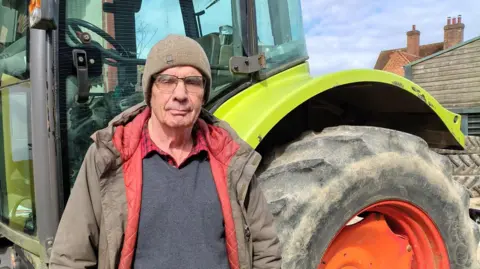
At Lodge Farm in South Godstone, National Trust tenant farmer Mike Pinard has spent about a decade cultivating older wheat varieties, after struggling to grow modern dwarf varieties on the farm's heavy clay soil.
With help from specialists, he started by trialling a number of older strains once common in south-east England.
He described the project as a personal pursuit rather than a commercial one. "This is a hobby, this is fun," he told Secret Surrey. "It's a labour of love more than a profit-making thing."
He said his interest in heritage grains began after a trip to Italy about 10 years ago, where he found himself eating a lot of bread, pasta and pizza.
"After about four days I felt dreadful," he said. "My wife said, 'you've been eating too much flour', so I went on rice and potatoes for a few days and recovered."
When he returned to his farm in Surrey on the National Trust Harewoods estate, he said he began looking more closely at older grains and how they differ from modern wheat varieties bred for industrial farming and baking.
"Heritage grains are inherently different from modern varieties, in the fact that they're bred for completely different things," Pinard said.
"When heritage grain was in its day, the straw was as important as the grain," he said.
"Modern wheats differ because they've been bred specifically for bread-making."
Among the varieties he now grows are Red Lammas, one of England's oldest recorded wheats, along with other strains such as Kent Old Red and Kent Old Hoary, both 18th Century varieties, Chidham Red, a Sussex strain, and Miller's Choice, a modern composite blend created from older wheats.
While some people who eat bread made from heritage wheat say they find it easier to digest, Pinard is careful not to make claims about health benefits.
"I'm not going to sell it and say it's better for you, because I can't do that," he said.
"All I can say is it works for me. A lot of people find it's more gentle on the digestion."
He said flavour was often the most noticeable difference compared with modern flour, adding: "Obviously, the flavour was always there, in the heritage wheats, and it's been bred out by modern standards.
"It's amazing people don't really believe that, but when they taste the heritage wheat, they can tell."
Follow BBC Surrey on Facebook, on X. Send your story ideas to southeasttoday@bbc.co.uk or WhatsApp us on 08081 002250.
