Justice department and Trump ally Michael Flynn reach settlement over wrongful prosecution suit

 Getty Images
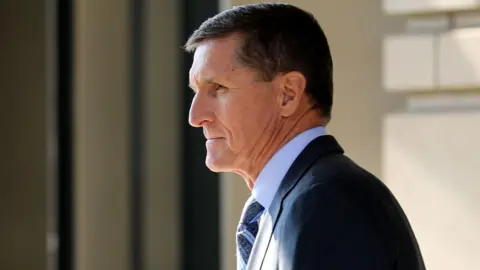
The US justice department has reached a financial settlement with Donald Trump's former national security adviser, Michael Flynn, after he sued the government alleging wrongful prosecution.
In 2023, Flynn sued the department for $50m (£37.4m), accusing it of targeting him because of his association with Trump's 2016 campaign.
The retired Army lieutenant general had pleaded guilty to a charge of lying to the FBI as part of the investigation into Russian interference in the 2016 election. Trump, who repeatedly defended Flynn as an "innocent man", pardoned him in 2020.
A Department of Justice spokesperson said on Wednesday that the settlement had redressed a "historic injustice".
"Those who instigated the Russia Collusion Hoax and Crossfire Hurricane abused their power to mislead the American people and tarnish the reputations of President Trump and his supporters," the DOJ spokesperson said, referring to the FBI's investigation inquiry into Russia's attempts to meddle in the 2016 election.
The DOJ would "continue to pursue accountability at all levels for this wrongdoing".
In a statement, Flynn said that, "No amount of money or formal resolution can erase the pain caused by a prosecution that should never have been brought".
But he added that the settlement demonstrated the DOJ under the Trump administration "is committed to bringing accountability for the bad acts of those partisan actors".
Trump appointed Flynn as national security advisor in his first term. But he asked for Flynn's resignation just weeks into his presidency due to concerns about Flynn's contact with Russia's US ambassador.
In 2017, Flynn agreed to plead guilty for making false statements to the FBI about his conversations with that ambassador, Sergey Kislyak. The charges stemmed from the election interference inquiry led by Special Counsel Robert Mueller.
But Flynn later asked to withdraw his guilty plea and accused the government of "bad faith, vindictiveness, and breach of the plea agreement".
The DOJ, then led by Trump administration's attorney general William Barr, dropped the case in 2020. Trump pardoned Flynn in the final weeks of his first term, ending the matter once and for all.
In his 2023 lawsuit, Flynn alleged the DOJ had "politically targeted" him, and that the FBI improperly conducted the interview that formed the basis of the charges against him.
The terms, including the amount of "settlement funds", were not disclosed in court filings.
The parties agreed that they would file for dismissals with prejudice - meaning they could not bring the case again - and each side would pay its own legal fees.
Flynn's settlement with the government comes on the heels of other demands for large payments from the DOJ.
Notably, Trump himself has filed a $230m claim, the New York Times reported, arguing that he should be compensated for federal investigations into his 2016 campaign and his alleged mishandling of classified documents.
The administration has faced scrutiny for how officials are handling demands for payouts from both the president and his political allies.
