Justice system in crisis, victims' advocate says

 BBC
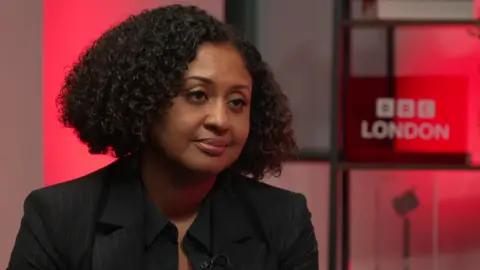
BBCLondon's new victims' commissioner has told BBC London that victims are being left "traumatised" and "in limbo," faced with long court delays and a police force struggling to rebuild public trust.
Andrea Simon is the second person to take up the role, which was created in 2017 to champion victims' rights, after her predecessor Claire Waxman was appointed as commissioner for England and Wales.
"Unfortunately we have a criminal justice system that's currently in crisis, so there are many points of failure and many areas where victims deserve to be treated better," she said.
Simon said 18,500 cases were waiting to be listed in crown courts in London, with some not due to be heard till 2030.
"That is just an incredibly difficult and traumatic process for victims who are held in limbo waiting for their cases to be heard and to get justice. It's an unacceptable delay which is causing many victims actually to withdraw."
Simon welcomed measures set out by the government aimed at tackling unprecedented court backlogs, but said some would need to be "really closely scrutinised" to ensure they did not discriminate against people from minority backgrounds.
She said this included plans to increase sentencing powers for magistrates and to restrict the number of jury trials, with a single judge overseeing those cases instead.
"We currently do have a judiciary with a workforce which isn't reflecting the diversity of London, and I think there are questions that need to be looked at as to whether all of those things will make people feel that they're treated fairly within the system.
"What I've encountered throughout my career is how some people get left behind when it comes to seeing justice," she added.
Simon, who was appointed by Mayor Sir Sadiq Khan in December, was previously director of End Violence Against Women (EVAW), which describes itself as a coalition of women's support organisations, researchers, activists and survivors.
It was recently part of successfully lobbying the government to introduce new guidance to block police from requesting access to counselling notes from victims of sexual violence, unless in exceptional circumstances.
She also advised the Angiolini Inquiry, which was set up after the murder of Sarah Everard by Metropolitan Police officer Wayne Couzens in 2021 and is a member of the London Policing Board.
It was set up as part of recommendations by Baroness Casey, after her 2023 review found the force to be institutionally racist, homophobic and misogynist.
'New frontier of harm'
Simon said many victims still struggled to trust the police.
"I think that three years on from Baroness Casey's report we haven't seen as much progress as is necessary to really instil that trust and confidence in Londoners around how the police do handle police-perpetrated abuse."
The Met has previously said that 1,500 people have been "rooted out" since 2022 in the biggest clear-up in policing history.
Simon acknowledged work had been done to rid the Met of rogue officers, but said reforms would take more time given the size of the organisation, with more problems such as vetting failures coming to light.
"Things will probably get worse before they get better, and so that process of getting to where we need to be will only happen if senior leadership are really committed and drive that cultural change."
She called for more police training in tackling online abuse including the non-consensual sharing of intimate and AI-generated images, which she believes present a "new frontier of harm" for women.
The government is proposing new legislation that requires tech platforms to remove intimate images that have been shared without consent within 48 hours.
"The regulator has a big job to do to make sure that they can investigate effectively where platforms are not providing the right kinds of responses," said Simon. "But I also think that there is accountability for individuals that we're not often seeing."
Simon acknowledged that encouraging victims to come forward amid a justice system "in collapse" was very difficult, but stressed that there were many "fantastic specialist services" that offer support.
"I think one of the major motivators for many victims in reporting is so that the same thing doesn't happen to somebody else and, you know, it's incumbent on all of us to not let those people down, because they deserve better."
Listen to the best of BBC Radio London on Sounds and follow BBC London on Facebook, X and Instagram. Send your story ideas to hello.bbclondon@bbc.co.uk
