The efforts in Cornwall to keep people out of A&E

 BBC
BBCEfforts to relieve pressure on an emergency department in Cornwall are making an impact, according to NHS bosses. BBC reporter Tamsin Melville spent a day with NHS teams as they worked under pressure across the county, giving a behind the scenes look at how staff are keeping people safe and easing the strain on emergency services.
Community services are taking the heat out of the emergency department at the Royal Cornwall Hospital (RCH), health bosses say.
At Kernow Health CIC, teams track pressure across minor injury units and step in early to stop people ending up in hospital when they do not need to be there.
The service runs out-of-hours GPs, a 111 clinical advisory line and a system which lets clinicians speak directly to paramedics during 999 calls.
Kernow Health says in 2025 more than 21,000 111 calls which could have led to a less urgent ambulance call-out were downgraded and patients directed elsewhere.
The latest NHS data suggests the number of patients waiting four hours in A&E has improved slightly year-on-year, but there has been a jump in patients waiting up to 12 hours on a trolley for treatment.
After listening to one call, a Kernow Health clinician advised against sending the patient to A&E.
She said: "I've advised that they went to the urgent treatment centre down at West Cornwall Hospital."
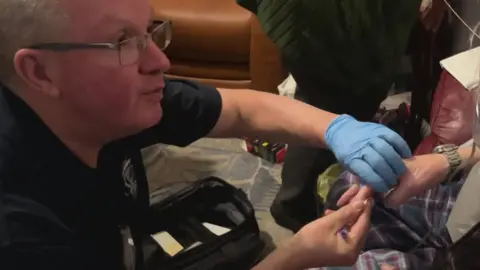
A specialist falls car also helps keep ambulances free - the service sends a paramedic with equipment to people who have fallen and cannot get up. They attend an average of nine callouts a day.
One of those visits was to Tony, in Four Lanes, who could not stay at home but did not need a blue light dash to hospital.
Paramedic Adrian Wood, who called Tony's GP after the visit, said: "He maybe doesn't need to go to Treliske Hospital because there's no immediate reversible cause or nothing that acutely needs to be treated, but he does need a bit of looking after, so that should be able to be done in the community."
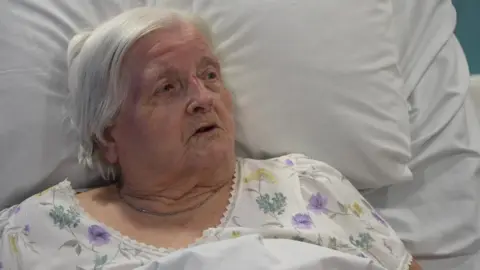
At Bodmin Community Hospital, Janet Chappell, 87, is being treated in the community assessment and treatment unit after a fall at home.
She said: "It's more convenient to stay in your local area, isn't it? I mean, Treliske is fine if it's necessary, but this is much easier for me."
Staff say about 60% of patients seen there can return home.
On this single day, Kernow Health says 45 ambulance call outs and 35 emergency department visits were avoided, easing pressure on a system many rely on when it matters most.
Follow BBC Cornwall on X, Facebook and Instagram. Send your story ideas to spotlight@bbc.co.uk.
