The pharmacist who wants to get us off medication

 Nicola Haseler/BBC
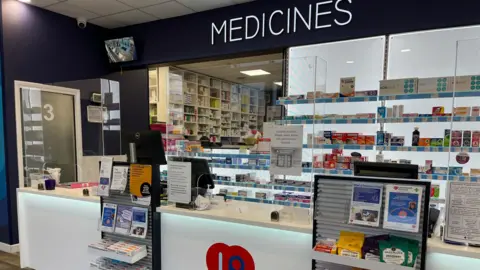
A community pharmacy is encouraging patients to make changes to their diet and lifestyle before turning to medication for many preventable diseases.
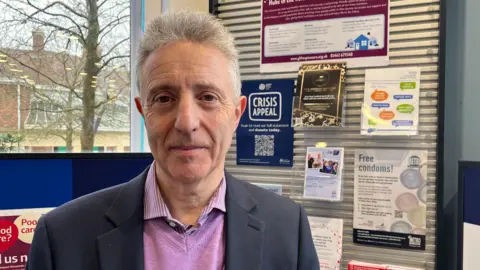
Graham Phillips, who owns the Letchworth Pharmacy in the Hertfordshire garden city, has won several awards for his programme, which helps people prevent or reverse diabetes and obesity.
He said he wants to put an end to what he calls an over-reliance on drugs for conditions such as high blood pressure, obesity and depression.
The independently-owned pharmacy won Community Pharmacy of the Year in 2024 for its innovative ways to support patients.
'All about nutrition'
Phillips said the vision of the NHS set up by Labour health minister Aneurin Bevan in 1948 - to create a healthy population - had been lost and community pharmacies had a role to play.
"We've ended up with a 'national illness service', not a 'national health service', and I want to turn that on its head," he said.
The NHS now spends £20bn on medicine each year, which Phillips said could be reduced.
"The pharmaceutical industry doesn't want you to know that if you ate the right food, you wouldn't need their drugs," he added.
For Phillips, a Fellow of the Royal Pharmaceutical Society, good health starts with nutrition.
"We're eating ultra-processed calories, which are making us fat and sick, and then we're spooning more and more tablets into people, and they're just getting fatter and sicker more slowly," he continued.
He said the wrong food leaves people hungry and dissatisfied, so they eat more of it.
"Then we end up with metabolic dysfunction... which increases your risk of cardiovascular disease, cancer, and neurodegenerative diseases like Parkinson's and dementia," he added.
'Medicines remain essential'
Dr Amit Aggarwal from the Association of the British Pharmaceutical Industry said: "The pharmaceutical industry fully supports measures that reduce the burden of disease wherever possible – prevention is better than cure.
"However, medicines remain an essential part of care for many patients, and it's vital they are used only when needed and for the right duration."
An NHS spokesperson said: "If you are considering stopping a medication, you should consult your GP or the healthcare professional who prescribed it before making any changes."
 Nicola Haseler/BBC
He now explains to patients how they could "eat themselves healthy".
"I tell people 'it's absolutely not your fault – you're hungry because you're putting the wrong fuel in your body'," he said.
About 60% of calories in the average Briton's diet come from ultra-processed foods, which are low in nutrition, he said.
He added that his beliefs were a departure from traditional pharmaceutical practices.
"Too many people are on anti-depressants and anti-hypertensives because their blood pressure's a bit high, and then a diabetes drug, and then coming in over the top is the new weight-loss jabs - you don't even have to change your diet," he continued.
Clinical trials by Cambridge University and University College London have shown that while effective for fat loss, more than 40% of the weight lost on the jabs is muscle and bone.
"What I'm seeing is women's periods are stopping, hair is falling out... and they're now at risk of osteopenia and sarcopenia," said Phillips.
"In other words, if you lose bone and muscle, you're hastening your demise, and you burn fewer calories."
He added: "We get people off a lot of medication and we don't make them feel judged in any way.
"We provide the information, and if that's the path they want to take, we're here to support them... it's an obvious role for community pharmacies to play."
 Nicola Haseler/BBC
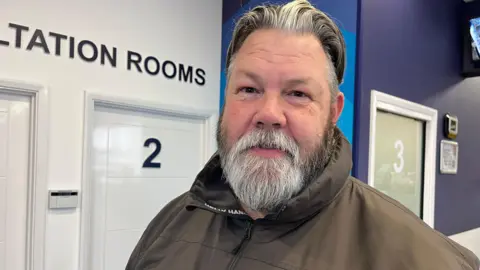
Mark Freer, who collects his pain medication from Letchworth Pharmacy, said he was open to advice on healthy eating.
"I'm 56, I'm a big fat bloke, and I want to live for as long as I possibly can, so I think it's a brilliant idea, and it takes a weight off the NHS," he said.
"It's too easy to go to the fish and chip shop or kebab shop. I've got arthritis in both ankles and if I lost four or five stone I'd be lighter on my feet."
One of the goals of the government's 10-year health plan is a shift from sickness to prevention, it says.
The plan states "people are living too long in ill health; the gap in healthy life expectancy between the rich and poor is growing, and there is an obesity epidemic with nearly one in five children leaving primary school obese".
The plan includes ways the government intends to address these issues.
Follow Beds, Herts and Bucks news on BBC Sounds, Facebook, Instagram and X.
