Bosnia's 'forgotten war' remembered 30 years on

 Stu Mckenzie
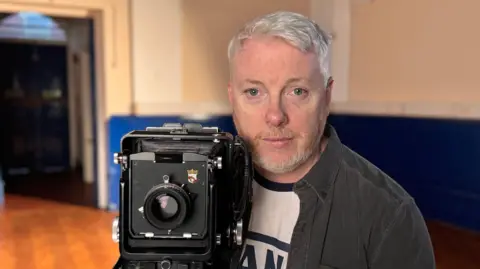
A photographer who served as a military policeman in Bosnia has recalled the war fought there in the 1990s and described it as a "forgotten conflict".
Stu McKenzie from Malvern, who returned to Bosnia this year, said he hoped a project documenting the war, in which more than 100,000 people were killed, will raise awareness of what happened.
Frozen Peace looks at the remnants of war and profiles those affected by the conflict, as well as refugees now living in the West Midlands.
Mr McKenzie said: "If you have been there you will have seen the effects of nationalist tendencies. It's happening again in Ukraine. We should be looking at it and learning those lessons."
The Bosnian war followed the breakup of Yugoslavia in the early 1990s and led to the Srebrenica massacre in July 1995.
Srebrenica, recognised by the UN as a genocide, became known as Europe's worst mass atrocity since World War Two, after Bosnian Serb forces systematically murdered more than 8,000 Bosniak Muslim men and boys.
Serbian leader Slobodan Milosevic was tried for war crimes and genocide, and the massacre led to the US-brokered Dayton Peace Agreement on 14 December 1995.
 Stu McKenzie
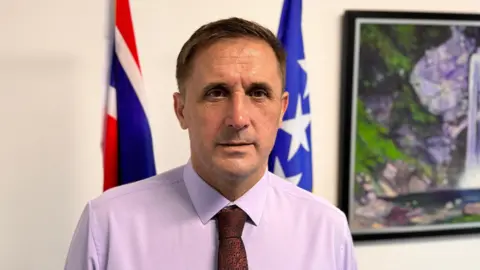
Anes Ceric, who came to the UK under a refugee scheme in 1993 and settled in Birmingham, now runs the Bosnia-Herzegovina UK Network from the city.
He said 20-50,000 women were raped and two million people were displaced.
His uncle was killed and he said he "wasn't aware at all" that genocide was being committed until it was too late.
"If you think it can't happen, it can," he said.
"We are trying to educate the wider public. If there is hatred, let's tackle that at the early stages."
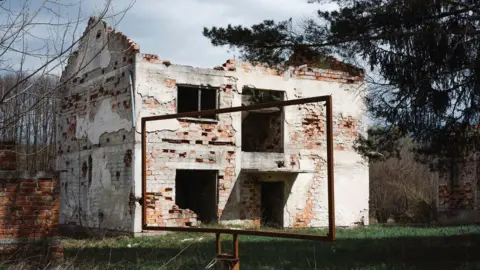
On his return to Bosnia, Mr McKenzie photographed derelict buildings, unmarked mass graves and abandoned concentration camps.
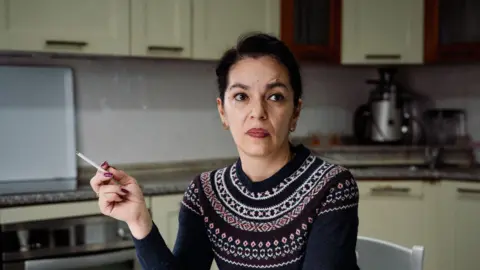
He also profiled people who survived the war, including Enisa Mulic, whose father was shot in front of her in the village of Ahmici by Croatian forces.
"She managed to escape with her mother and her sisters," he said.
"Her uncle, auntie and two of their children, one of them a three-month-old baby, were murdered.
"What is really sad about that is her [Croatian] neighbours are still there but they don't talk to each other anymore.
"There's no progression towards true peace."
A ceremony of remembrance was held on Sunday at the National Memorial Arboretum in Staffordshire to mark 30 years since the end of the war, in memory of British men and women who served during the UN and NATO missions in the country.
Follow BBC Birmingham on BBC Sounds, Facebook, X and Instagram.
