Market pigeons could be fed contraceptives

 Shaun Whitmore/BBC
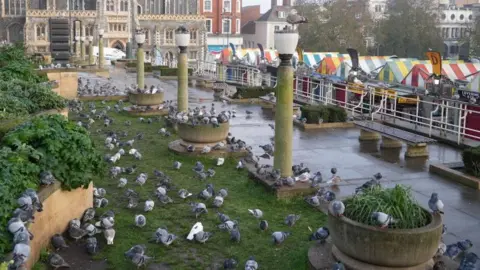
Pigeons at Norwich Market could soon be fed contraceptives in an effort to reduce their numbers and ease tensions over the site's flocks.
Norwich City Council is considering the measure to address mounting concerns about the birds, with many traders and shoppers saying they are a nuisance and a health risk.
However, others support the pigeons and have resisted moves to drive them away – such as by using hawks – and have been encouraging more to stay by feeding them.
Councillors have agreed to explore the possibility of using contraceptives, hidden within food, to provide a "humane and non-lethal" population control method to curb the growing flock.
Successful trials have already taken place elsewhere in the UK and Europe and the tactic is now used in cities like Paris, Brussels and Barcelona, it said.
One trial in Brussels saw bird numbers drop by 50%, reports the Local Democracy Reporting Service.
The contraceptives could be stocked in bird feeders, mixed in with grain, and would make birds temporarily infertile.
 Paul Moseley/BBC
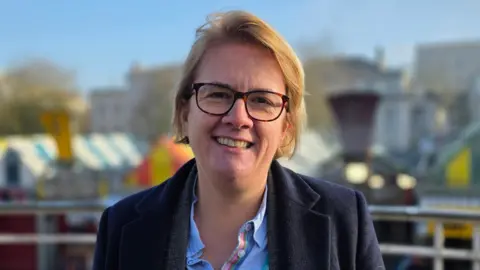
The contraceptive policy was proposed at a City Hall meeting on Tuesday, which was attended by about 30 pigeon supporters – including one man who wore a pigeon mask.
Lucy Galvin, leader of the city council's Green group, called for the scheme to be introduced, arguing it would not be too expensive and had worked elsewhere.
However, there were concerns the contraceptives could be eaten by other birds, particularly endangered species.
There was also the risk that predators would consume them through their prey, while the hormones could also be spread into the environment through bird waste.
 Craig Rackham
Carli Harper, Labour cabinet member for major projects, said the council had been looking at other methods and it would take time to explore this option.
At the meeting, the council also agreed to introduce fines for people who fed the pigeons at the Lutyens War Memorial Gardens at the top of the market.
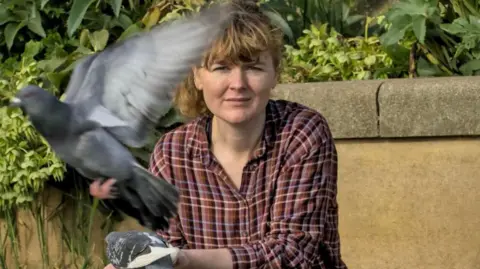
Jenny Coupland, of Peck Savers, a group campaigning to protect the birds, said there would be "great opposition" to the fines and it needed police support.
 Summer Loh
Summer Loh, a university student whose petition to protect the pigeons has gained more than 3,500 signatures, said she had been left "disappointed" by the lack of engagement with the council.
"If they are concerned about the number of pigeons at the market, it seems like a fairly obvious solution to give them somewhere else to live, even if it means investing money into it," Loh said.
Labour councillors also dismissed an idea to create a dovecote in Chapelfield Gardens, arguing taxpayers would not want money diverted to the project.
Follow Norfolk news on BBC Sounds, Facebook, Instagram and X.
