Why is there a plan to close Dorset fire stations?

 Maigheach-gheal
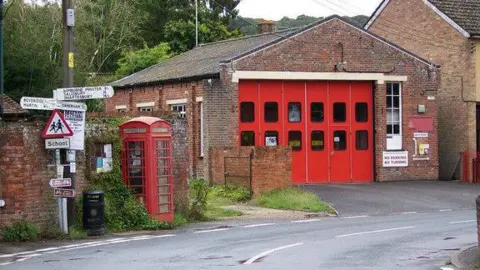
Eight on-call fire stations are at risk of being shut down, following proposals by Dorset and Wiltshire Fire and Rescue Authority.
The four Dorset stations (Charmouth, Cranborne, Hamworthy and Maiden Newton) and four in Wiltshire (Bradford-on-Avon, Mere, Ramsbury and Wilton) will have their fate decided at a meeting in June.
As a public consultation begins, we look at the rationale behind the plan and what it might mean for public safety.
'Financial challenges'
The motive for the closures is to save money.
The fire authority predicts a budget deficit of £1.2m next year and even more in future years. The closures would save £1.5m annually.
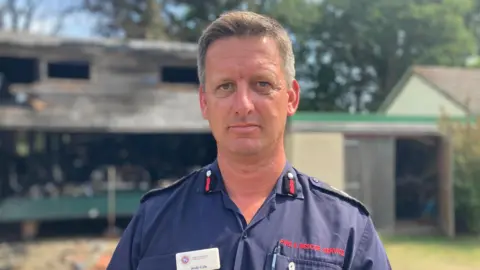
Chief Fire Officer Andy Cole said: "No-one wants to close fire stations.
"As with many public sector organisations, we continue to face significant financial challenges."
He said the problems reflected a "long-term reduction in central government funding... combined with rising costs".
However, the government has said it has given an extra £15m to stand-alone fire authorities, to take effect next year.
That uplift has been welcomed by the National Fire Chiefs Council.
Is it safe to close stations?
"We do recognise that there will be an increase in the response times to some emergencies," the fire authority has said.
Its consultation document spells out the changes to estimated average response times if the stations close:
- Charmouth - 14 mins 58 secs (up from 11 mins 5 secs)
- Cranborne - 19 mins 42 secs (up from 15 mins 23 secs)
- Hamworthy - 9 mins 51 secs (up from 9 mins 1 sec)
- Maiden Newton - 19 mins 58 secs (up from 14 mins 22 secs)
In an article headlined "Cuts kill", the Fire Brigades Union (FBU) has said lives would be put at risk.
However, the stations chosen for closure would have the "lowest corporate impact across our organisation", the authority has said.
Cole said: "We've looked very carefully at all the facts to make sure we're doing the right thing with the money and people we have.
"I truly believe these proposals will help better resource the service and save money, whilst still achieving the level of support our communities expect of us."
Why not find the savings elsewhere?
The authority has previously found extra money in other ways.
It said combining the two counties in 2016 has saved more than £15m.
Over the last three years, it said it took £665,000 from non-operational roles and from restructuring prevention teams.
An additional £750,000 came from non-salary budgets over the same period.
However, it also saved £874,000 from whole-time posts.
The FBU said: "Dorset and Wiltshire Fire and Rescue Service is already stretched to breaking point.
"Since 2010, the service has lost a fifth of its firefighters – and cutting another 96 roles would strip away another 16% of the front line workforce."
Are other counties closing stations?
The FBU is protesting against plans to shut stations in Buckinghamshire and Oxfordshire.
Its other current campaign is in Scotland, where a decision to change or close 30 fire stations has been delayed until June.
However, it said a range of cuts have been averted in Avon and Leicestershire following extra funding.
What happens next?
The public consultation in Dorset and Wiltshire opened on Friday and runs until 15 May.
Public meetings are being held in each of the towns and villages affected, including Cranborne on 11 and 12 March, Hamworthy on the same dates, Charmouth on 14 and 15 April and Maiden Newton on 14 and 16 April.
Dial-in sessions are available for those who are unable to attend in person.
The authority, comprising 18 local councillors, is due to make a final decision at a meeting on 30 June.
