The people holding police officers to account

 BBC
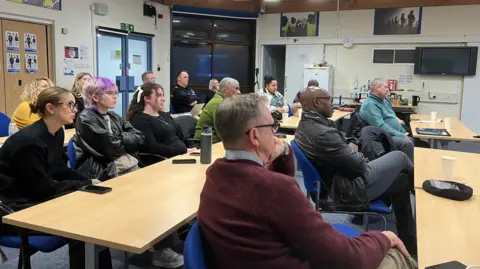
BBCOn a wintry evening at Essex Police's headquarters in Chelmsford about a dozen people aged from their late teens to their seventies arrive to scrutinise officers' actions while on duty.
The members of the public form an independent advisory group who watch footage from body-worn cameras of officers responding to emergency calls or on patrol.
Many police forces in England and Wales have similar panels to provide feedback and Essex Police says they are "invaluable".
Neil Woodbridge, who chairs the panels in Essex, says the police "want ordinary members of the public to come along look at this body-worn footage and go: 'well hang on a minute, why do you that and how come this person has been treated in this way?'"
 Essex Police
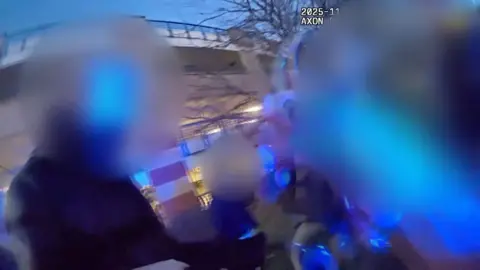
In one video, Essex Police officers arrive outside Lakeside Shopping Centre in West Thurrock.
The footage shows officers carrying out stop-and-searches on several young people, including a 13-year-old boy, after reports of a knife fight.
The detained youths are all wearing black clothes and have masks covering their faces.
A number of younger members of the panel asked the officers why the police waited with the detained teenagers for so long.
The police explained that officers were reviewing CCTV to track down the weapon and to make sure they had detained the right people.
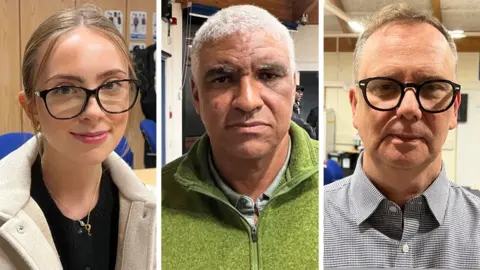
"It was quite thrilling to see real stops and be able to give an opinion in a room full of police officers and have a to and fro," says Des Shillingford, 59, from Hutton.
"Sometimes police officers need to be robust, their language needs to be robust. I was quite pleased to see that people felt that was necessary in the context."
Cosette Martin-Morley, 18, a student in Chelmsford, says: "I had no clue that things like [the panel] happened. I just thought everything was down to the police.
"I felt like they gave me a chance to speak. As one of the youngest people here, it was nice that people listened to me and I was able to voice my opinion."
In England and Wales, Section 1 stop-and-search powers allow police to search an individual or vehicle if they have "reasonable grounds" to suspect the person is carrying illegal drugs, a weapon, stolen property or something that could be used to commit a crime, such as a crowbar.
The use of stop-and-search divides public opinion, but Essex Police says its use has reduced knife crime by 10%.
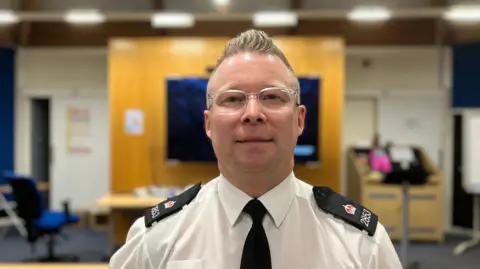
Supt Ian Hughes, who took questions from the panel, says: "Stop and search is really invasive and it is really important that we use that power legitimately."
About two-thirds of stop-and-searches in Essex result in no further action being taken by police.
Essex Police's latest figures suggest people in the county who are black are about four times more likely to be stopped than people who are white.
The difference is similar to averages across police forces in England and Wales, according to figures from the House of Commons Library.
Habib Kadiri, from campaign group StopWatch, says stop-and-search "has its limitations."
"It is one tool," he says. "It might be useful to find drugs or weapons, but it is not really useful for other types of criminal activity."
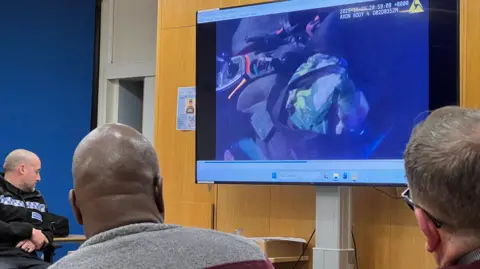
Shillingford says he was stopped by the police multiple times as a young man - once six times in a week.
He believes stop-and-search "absolutely is needed", but wants to provide advice and training to those in their teens on how to react and behave if approached by the police.
"We heard the stats today that a third of the stops are revealing issues like knives. It is definitely needed. Is it fair? It is just a reality, a necessity," he says.
Hughes says there is no suggestion that those from ethnic minority backgrounds commit more crime and disproportionality of stop-and-search is a real concern for the force.
He adds: "When we do get the feedback [from the panel] - be it good or bad - it allows us to then feedback to officers on the street and we make the adjustments when we need to."
Follow Essex news on BBC Sounds, Facebook, Instagram and X.
