Who won the local elections in Merton?

 Getty Images
What happened in Merton in the 2026 council election, and who won?
The Labour Party won the election on 7 May 2026 and retained control of Merton council.
The results were:
Labour: 32 seats (+1)
Lib Dems 19 seats (+2)
Conservatives: 4 seats (-3)
Residents Association: 2 seats (no change)
When were the 2026 local elections in London?
More than six million Londoners were eligible to vote in the council elections on Thursday 7 May 2026.
All 32 London boroughs were up for election.
There were also elections for the mayor in five boroughs: Croydon, Hackney, Lewisham, Newham and Tower Hamlets.
Where is Merton and who lives there?
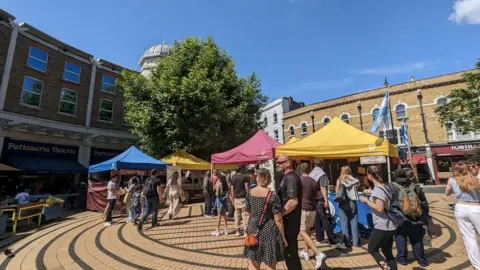
The London Borough of Merton is in south-west London and bordered by Croydon, Sutton, Richmond and Wandsworth.
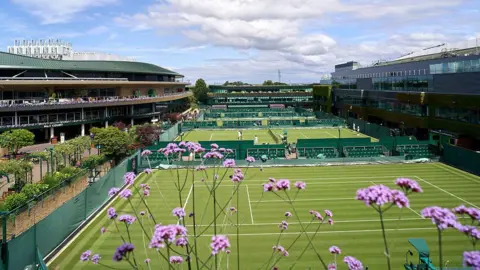
What's it like? Merton is a cultural and sporting hub best known for the world famous Wimbledon Championships at the All England Lawn Tennis Club, which draws about 500,000 visitors each year.
Neighbourhoods: The borough's five main town centres are: Wimbledon including Wimbledon Village, the Broadway and South Wimbledon, Mitcham, Morden, Raynes Park and Colliers Wood.
Places of interest: Merton is home to Morden Hall Park, Wimbledon Common, Merton Abbey Mills - a riverside market and heritage site - Deen City Farm, the Wandle Trail and the Baitul Futuh Mosque.
Pub quiz fact: According to the Roman Catholic Bishops' Conference website, the only English Pope, Adrian IV, attended Merton Priory in around 1125.
Population (2024 estimate): 218,539
Demographics: According to the 2021 census, 60% of people in Merton are from a white ethnic group, almost 19% from and Asian/Asian British ethnic group and 10% from black/black British ethnic groups. Mixed or multiple and other ethnic groups make up just over 10%.
Average property price: According to the Office for National Statistics (ONS), the average house price in Merton in December 2025 was £602,000.
Average monthly rent: The ONS reported that the average monthly rent in January 2026 was £2,080.
Council tax: Band D council tax in the borough in 2026/27 is £2,147.
Transport: Merton has seven train stations, five Tube stations, eight tram stops and around 445 bus stops, Transport for London says.
What is Merton's local history?
Merton evolved from a 10th Century Saxon farmstead into a major medieval centre of religion, law and royal ceremony.
At Merton Priory in 1236, Henry III agreed the Statutes of Merton with his barons, helping shape English common law, and in 1437 it hosted the coronation of Henry VI.
Centuries later, the area became the cherished home of Admiral Lord Nelson, who lived at Merton Place and wrote fondly of leaving his "dear, dear Merton" before departing for the Trafalgar campaign in 1805, where he was killed. His house was demolished in 1823.
In the Victorian era, William Morris transformed Merton Abbey into a celebrated centre of textile printing, stained glass, tapestry and other arts and crafts production, with his company trading until 1940.
What is Merton's electoral history?
Merton switched between Conservative and Labour in the 1960s and early 1970s, was controlled by the Tories from 1974 to 1990, then switched to Labour.
It was in no overall control from 2006 to 2014, with first a Conservative and then a Labour minority administration. However, since 2014, Merton has been Labour controlled.
Listen to the best of BBC Radio London on Sounds and follow BBC London on Facebook, X and Instagram. Send your story ideas to hello.bbclondon@bbc.co.uk
