Year-long waits for NHS Scotland treatment continue to fall

 PA Media
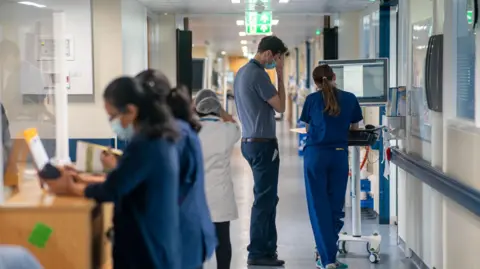
The number of people in Scotland waiting more than a year for an NHS appointment or treatment has continued to fall, new official figures show.
Public Health Scotland's latest statistics show the number of waits of more than 12 months fell from 78,000 at the end of October to just over 70,000 by the end of November.
The Scottish government said long waits had fallen for the sixth consecutive month and there were significant year-on-year increases in procedures and appointments.
However, the Scottish Conservatives said patients were suffering "intolerable delays" and John Swinney's promise to "eradicate" year-long waits by March would be broken.
According to these figures, about one in nine of the population - 605,051 people - continue to be on an NHS waiting list.
Scottish government targets state 95% of new outpatients should wait no longer than 12 weeks from referral to being seen.
However, the new data shows figures of 59.7% for completed waits and 43.3% for ongoing waits.
The Scottish government has put its focus on tackling backlogs in the health service and has allocated more than £100m towards specialities with the longest waits, such as orthopaedics and ophthalmology.
It has also promised that by March next year no-one will wait over a year to see an NHS specialist or to start treatment.
Waits of more than 12 months year were rare before the Covid pandemic but since then health boards have struggled to tackle backlogs and deal with increasing numbers of patients requiring care.
Scottish Conservatives health spokesman Dr Sandesh Gulhane said Scots would not "fall for the boasting from Swinney and Neil Gray".
He said: "John Swinney can spin all he wants but the reality is he is set to break another promise on the NHS.
"Having pledged to eradicate waits of over a year by March, tens of thousands of patients are still suffering these intolerable delays."
He added: "Instead of sticking to their current approach, the nationalists should do the right thing and back our bold plans to cut bureaucracy and get resources to the frontline to ensure patients are seen as quickly as possible."
According to the new figures, on 30 November 2025 there were an estimated 605,051 individuals on at least one new outpatient, inpatient or day case waiting list.
There were 44,363 waits of over a year for outpatients with 5,009 of these exceeding two years, a decrease of 843 from the end of October.
For inpatient or day case waits, the figures dropped from the previous month by 1,199 waits to 25,846, with 4,380 exceeding two years.
Health Secretary Neil Gray said the figures demonstrated "real and sustained progress in reducing waiting times for patients across Scotland, ensuring thousands more people receive the care they need".
"We have delivered record investment of £21bn for health and social care, with £135.5m of additional funding targeted at specialty areas with the longest waits," he said.
"There is still much more to do, but I am encouraged that we are demonstrating consistent month-on-month improvement."
Gray added: "We remain committed to ensuring no patient waits longer than 52 weeks by March 2026."
However, Scottish Labour described the numbers as "deeply troubling" and insisted they "underline the dire state that our health service is in".
The party's health spokesperson Jackie Baillie said: "It is unacceptable that we have over 600,000 people stuck on hospital waiting lists to get treatment, despite this SNP government trying to pretend that all is well, while more than 9,000 waits have been for over two years."
She added: "Patients and staff working in our NHS know the reality on the ground, even if the first minister and Neil Gray try to pull the wool over people's eyes about the crisis our health service is in."
The waiting time figures comes as the Scottish government is trying to avert a strike by medics next week.
Last month, resident doctors voted in favour of a four-day strike, in what could the first national walkout staged by NHS workers in Scotland.
The doctors - who used to be called junior doctors - make up almost half of the medical workforce in Scotland.
They range from newly-qualified doctors to those with 10 years or more experience.
Scotland has been the only part of the UK to have avoided strike action by NHS workers.
A series of strikes by resident doctors in England led to thousands of operations and procedures being cancelled.
A strike in Scotland in the summer of 2023 was called off at the last minute after a deal was agreed.
But now doctors have accused the Scottish government of reneging on a commitment to restore their pay to 2008 levels.
The latest strike ballot had a 58% turnout of the 5,185 resident doctors eligible to vote, with 92% (3,008) voting in favour.
Strike dates have been set for 07:00 on Tuesday 13 January to 07:00 on Saturday 17 January 2026.
With over 600,000 people on a waiting list for planned care - tackling long waits is a key priority for the Scottish government.
Before Covid, waits of over a year were rare but health boards have struggled to clear the backlog and cope with increasing demand.
Today's data shows a reduction in waits over a year for six consecutive months. With waits over two years also coming down.
The government is spending £130m on a commitment to end waits of over 52 weeks by March this year.
That will continue to be an ambitious target with hospitals facing significant winter pressures and the threat of a four day strike by resident doctors next week.
