Runners voice views as Spine Race time tightens

 Clorroe Cam / The Spine Race
Organisers of a gruelling ultramarathon have shortened next year's cut-off time, citing safety reasons.
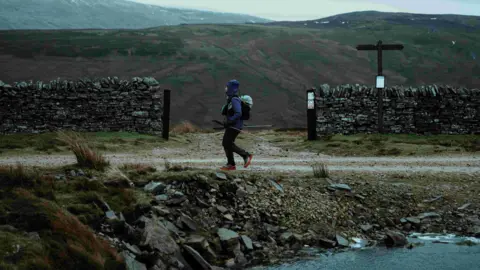
Spine Race runners will have 156 hours - 12 hours less than this year's cut-off time - to finish a single non-stop 268-mile (430km) stage along the Pennine Way.
Veteran ultramarathon runner Kevin Munt said organising the January event was "no mean feat" and taking part was about "life experience" rather than getting to the finish line, but concerns have been raised it could be a "barrier to women" and deter them from entering.
Race director Phil Hayday-Brown said the change was "to reduce exposure at the point where fatigue is highest and winter conditions are often at their most severe".
The route takes in parts of Cumbria, Northumberland National Park, Hadrian's Wall and the Cheviots.
"This change shortens the period in which competitors are most vulnerable, particularly during the final night through the Cheviots," Hayday-Brown said.
He added that "with equipment, fuelling and race strategies improving average finish times have gotten faster, which helps negate this change across the field".
 Peter Rielly
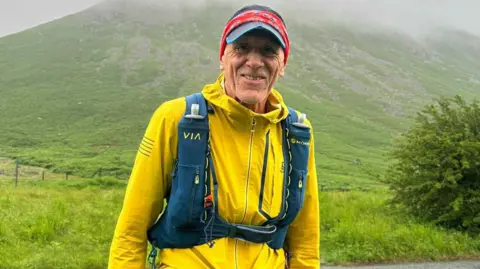
Munt, 68, from Fleet in Hampshire, was one of this year's oldest main race competitors. However, due to navigation errors, he did not finish.
"I've always been interested in it as an adventure rather than a running race and it was the 'big one' in terms of ultramarathons in the UK.
"I'm also running out of time age-wise so I thought I'd give it a go."
Munt said he was "feeling really good" until a navigation error meant he ran five miles (8km) the opposite direction at Hawes.
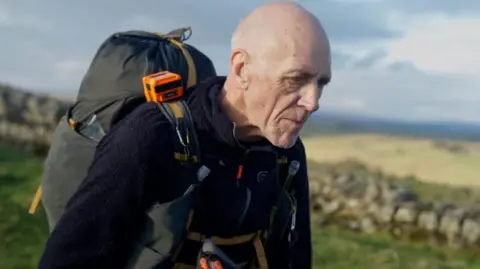
"It became a war of attrition by chasing timings at the checkpoints... eventually I made another navigation error, and I was pulled off the race 212 miles (341km) in near Hadrian's Wall.
"I probably was becoming a danger to myself and a risk to the safety team.
"Obviously it was disappointing, but I had a fantastic time and still got six days on the course."
 The Montane Spine Race
"One of the main benefits was those who were 'dot-watching' me going the wrong way donated to my chosen children's charity, Free to Be Kids, so I raised more than £6,000," he said.
"My view now is that people should consider it's not all about finishing... it's about the life experience you gain from it.
"To get people safely up the Pennine Way in the middle of January is no mean feat.
"People can get themselves into some serious dangers involving sleep-deprivation, with poor navigation and decisions.
"Shortening time would make people - including me - think very seriously about entering," he added.
 Jamie Rutherford / The Spine Race
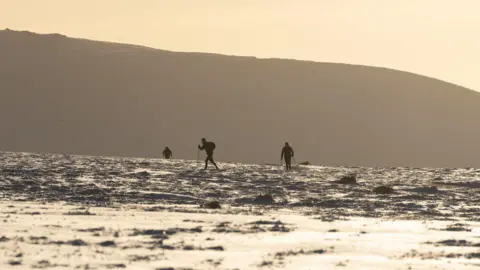
The inaugural Winter Spine Race in 2012 attracted just 11 starters, with only three of them reaching the Border Hotel wall in Kirk Yetholm.
In the following years, the race's reputation grew with more and more athletes from around the world wanting to challenge themselves against some of Britain's toughest terrain and conditions.
Alongside the main race, there are six shorter variants. The cut-off time would only affect the main winter race.
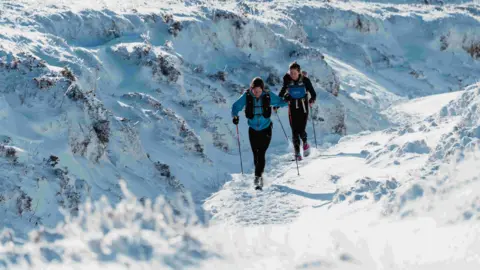 Clorroe Cam / The Spine Race
Hannah Lou, from Darlington, said she had raced in smaller ultramarathons and was "working up the courage to enter the Spine".
The 36-year-old believed women were "more likely to only enter races once they are confident in their ability to finish".
"I imagine a lot of women - myself included - who have maybe had this race on their bucket list for a while will now either remove it from their lists, or further delay entering until they can be absolutely certain they'll meet the new cut-offs," she said.
"I hope I'm proved wrong, but feel this change may lead to fewer women being on the start line in future."
'Confidence matters'
Natalie Crawford, 48, said the full Spine Race was also on her bucket list, but she felt "very unsure now after this change".
"What about the impact on the start line? Who won't attempt it now because the risk of being timed out is too high when you balance it against the financial and time costs of entering?" Crawford, who lives in the Chilterns, said.
She added that tighter cut-off times were a "barrier to women entering races".
Munt said he "totally agreed" with and stood by the women's views.
A spokesperson for the race said: "We recognise that confidence and perception matter, particularly for women considering an event like the Winter Spine.
"The race is open in who it invites to the start line, but uncompromising in the standard it sets once people are there," they continued.
The Spine Race said it reviewed the race data and found no disproportionate impact - the proportion of women affected by the revised cut-off mirror the proportion of women who enter the race.
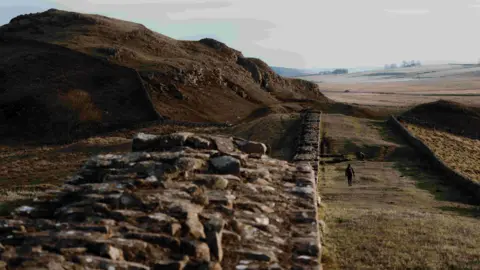 Clorroe Cam / The Spine Race
Meanwhile, Julian Pieters, said the change was "harsh and will definitely put people off entering".
"The Spine - which I have done a few times - is the epitome of the spirit of adventure, open to anyone brave enough, with none of the elitist culture we increasingly see in big trail races," the 54-year-old said.
But he viewed the move as becoming "more of an elite race and less inclusive".
"I would have a lot more sympathy for this if they said actually the race is not financially viable unless we can find ways to be more efficient, and one of those is to shave 12 hours off the race time."
Pieters, from Sheffield, added the decision "feels less in the open collaborative spirit the race has always had".
The Spine Race said it was "not a cost-driven decision".
"The route, checkpoints, safety infrastructure, and staffing requirements remain unchanged, and the financial impact of a shorter race window is negligible," it added.
