Cause of plane crash unknown, says AAIB

 Google
The cause of a plane crash that left a pilot with serious injuries was unable to be determined, an investigation has revealed.
On 7 September 2024, the plane's pilot made a mayday call - a distress signal - shortly after taking off from Damyns Hall Aerodrome, in Essex, due to an engine issue, before crashing into a field at a country park in Aveley.
The pilot was taken to hospital with serious injuries and does not remember the flight or days preceding it.
The engine was recovered and examined by the Air Accidents Investigation Branch (AAIB), which said it was unable to find evidence of an engine issue.
Prior to the incident, the pilot - flying a Jodel D120, G-AYGG - had taken off from their home airfield, Farthing Corner, Kent, travelling to Damyns Hall Aerodrome.
The flight lasted 16 minutes.
The pilot made another flight from the airfield, but the purpose of that flight was unknown.
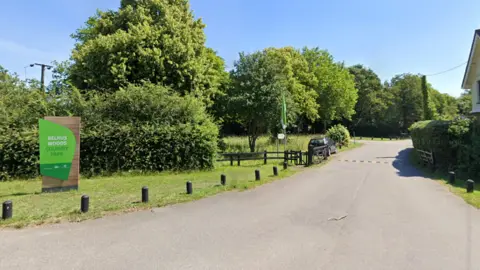
While attempting to return to the airfield, the aircraft lost control and struck the ground in a wooded area of a field in Belhus Woods Country Park about 1km south-east from the airfield.
Flight data showed the aircraft entered a tightening left turn to the west before the data ended, suggesting it may have entered a spin before it struck the ground.
Critical decision-making
The report by the AAIB said as the engine issue became apparent "the pilot was faced with a difficult decision" on whether to land or return to the airfield.
The AAIB outlined the normal engine-failure-after-takeoff procedures advise if there is any doubt in the ability to return to the airfield then it is safer to conduct a forced landing.
It said while the cause of the engine issue was not determined, the event serves as a reminder that "decision making when engine failures occur close to the ground is critical" and pilots were reminded of the importance of maintaining speed and control throughout the flight.
"With the pilot not being able to recall the flight and with no recording devices on the aircraft able to capture what happened during the event and with no findings from the examination of the aircraft, it is not possible to determine with certainty what occurred in this accident," it concluded.
Follow Essex news on BBC Sounds, Facebook, Instagram and X.
