New AI technology to track maritime emissions

 BBC
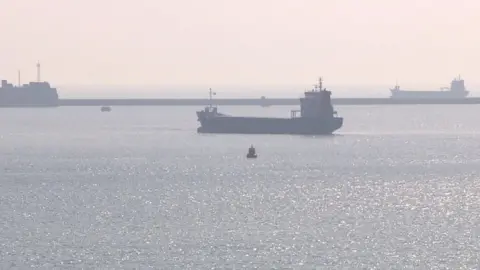
BBCA new system using artificial intelligence (AI) to track the sources and movement of shipping emissions has been launched following extensive testing in Plymouth Sound.
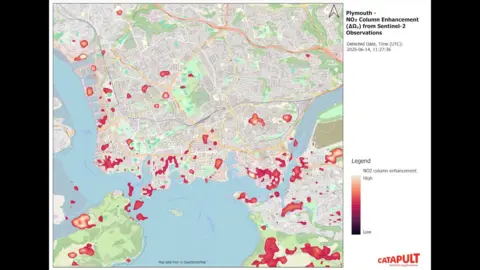
Ocean OS has unveiled EMMA (Environmental Maritime Modelling and Analytics) which gathers data from sensors and satellites and uses AI to visualise emissions in great detail.
The technology will enable ports, regulators and the authorities to understand exactly where emissions go and how they impact air and water quality.
Over the last six months, the company has been testing the system in the waters off Devon and Cornwall to prove the science .
The project is a collaboration between Ocean OS, B4T Group, the University of Plymouth, and Satellite Applications Catapult and is backed financially by the Department of Transport through Innovate UK.
The intention now is to the expand the work further around the coast to improve the data.
It is hoped EMMA can be used in the UK's top 20 ports to support the decarbonising of shipping and improve the sustainability of maritime operations.
 Ocean OS
"We're bringing all of the pieces of the puzzle together to really understand the full picture of where the air pollution is coming from, where it is moving, where is it having an impact, [and] what can we do about it," said Laurens Geffert, CTO of Ocean OS.
"The pollution that you're seeing at your particular sensor - what can you do to intervene, to change it, to improve the local air quality when it is within in your control?
"Or demonstrate that actually it is completely beyond your control. If you can't do anything about it so that you are not being held accountable in terms of emissions reporting and regulation for things that you haven't caused," he added.

The purpose of the technology is to inform decisions to help regulate and reduce emissions in the future.
Initially, the data will be used by the government and local authorities and it is hoped it will eventually also have commercial uses.
"I think it will give whoever's using it, and this case the Brits, the ability to see things that other countries or other companies can't see," said Fred Thomas, MP for Plymouth Moor View.
"So if you think of this in military terms, it's like having night-vision goggles. At night you can see stuff, and if someone else doesn't have that they can't see it so it is a huge advantage," he said.
