Murderer died from cancer and liver cirrhosis, inquiry told

 Peter Jolly Northpix
A man who died less than five months after being convicted of the murders of his lover and their son had cancer and alcoholic liver cirrhosis, an inquiry has heard.
William MacDowell died in February 2023 after being jailed for killing Renee MacRae and their three-year-old boy Andrew almost 50 years ago. Their bodies have never been found.
The 81-year-old, from Penrith, Cumbria, had been receiving end of life care at Glenochil prison in Alloa.
He was transferred to Forth Valley Royal Hospital after his health deteriorated and later died.
The fatal accident inquiry at Stirling Sheriff Court heard his cause of death was cardiac failure, hypertension, alcoholic liver cirrhosis and lymphoma, a cancer affecting part of the immune system.
Sheriff Euan Gosney will give his findings in writing at a later date.
MacDowell was given a life sentence with a minimum 30 years after a jury found him guilty in September 2022.
He denied all the charges against him, but was convicted following a trial at the High Court in Inverness.
Sentencing the killer, judge Lord Armstrong told MacDowell the murders appeared to have been premeditated and planned "in a most calculating way".
The judge added: "These appear to be, in effect, executions. You murdered your victims and disposed of their bodies and you took various steps to avoid detection."
Mrs MacRae, 36, and Andrew disappeared on 12 November 1976. Her car was found that night on fire in a lay-by on the A9 at Dalmagarry, south of Inverness.
The jury was told how MacDowell, who was living near Inverness at the time and better known by the name Bill MacDowell, was company secretary at a building firm owned by Mrs MacRae's estranged husband, Gordon.
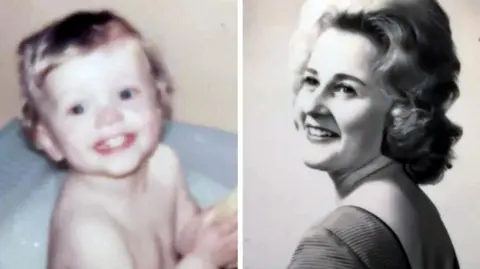 Renee MacRae family
The Crown Office and Procurator Fiscal Service (COPFS) previously said it was obliged to hold a FAI because MacDowell was in legal custody and in the care of the state at the time of his death.
The purpose of a FAI includes determining the cause of death, the circumstances in which the death occurred, and to establish what, if any, reasonable precautions could have been taken.
The inquiries are used to establish facts rather than to apportion blame.
