'Human error' ruled as a factor in 'brave' man's death

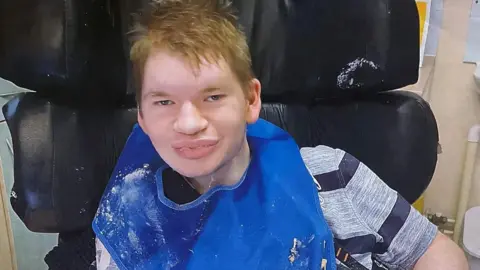 Family handout
"Human error" in changes to a man's medication dosage played a "considerable" factor in his death, a coroner ruled.
Declan Horton, who had learning disabilities and cerebral palsy, died at Great Western Hospital (GWH) in Swindon, Wiltshire, on 6 February 2022.
The 27-year-old's cause of death was ruled to be aspiration pneumonia - an infection caused by inhaling something other than air into the lungs - and epileptic seizures. But the coroner said an error in halving his epilepsy medication played a part.
GWH previously told the inquest a number of its systems and the way medication was recorded had been changed as a result of Declan's death.
In a statement, a spokesperson for GWH said: "We offer our deepest sympathies to Mr Horton's family and are truly sorry the care he received fell below the standards we strive to provide.
"We take the concerns raised about Mr Horton's care very seriously and, as a result of this case, have made a number of improvements which were recognised by the coroner, including increasing staff awareness of anti-epileptic medication."
In a statement, Declan's family said he was a "brave, amazing young man who lived life to the full".
They added they loved, cared and missed him "deeply" and their lives would never be the same again.
Declan, who had been living in a care home for patients with learning disabilities and significant health needs, was admitted to GWH on 19 January after suffering multiple seizures.
Dr Lawrence Anikwe, a medical consultant at GWH, previously told the inquest Declan's seizures were triggered by aspiration pneumonia.
He said Declan's infection could have been caused by his feeding tube or by involuntary drooling.
The diagnosis led to a reduction in his epilepsy medication and Declan was discharged on 26 January as he had not suffered a seizure for three days.
However, Declan's family and the care home staff raised concerns that his release came "too soon" and the lower medicine dosage would result in more seizures.
Other doctors told the inquest Declan should have been monitored longer to prove he was free of seizures.
Declan was readmitted to GWH on 31 January after suffering ongoing seizures.
He also had low blood pressure, a high heart rate and a raised temperature.
His family raised concerns over his care in hospital, including over his feeding routine and the fact it took a few days to perform an X-ray on his second admission.
At the conclusion of the inquest earlier, Ian Singleton, assistant coroner for Wiltshire and Swindon, said Declan's death was "likely caused by a number of factors in which the reduction of medication played a considerable factor".
GWH said it had introduced a number of changes, including alerts being made on patients' profiles and IT systems that transferred community medication prescriptions to the hospital system.
The hospital also swapped the use of paper notes for digital systems.
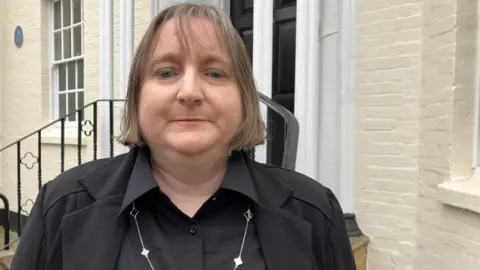
His mother, Grace Horton, said she believes her son would still be alive if mistakes had not been made.
"It has been distressing to hear that even when the pharmacy told the doctors his important epilepsy medication had been reduced in error, the doctors did not increase it and discharged him home where he suffered increasing and worse seizures," she said.
She added she hoped GWH had "learnt proper lessons" so no other family would have to suffer the same "terrible consequences".
GWH has been approached for a comment.
Follow BBC Wiltshire on Facebook, X and Instagram. Send your story ideas to us on email or via WhatsApp on 0800 313 4630.
