Why is it so hard to build new GP surgeries?

 Corstorphine & Wright
More than 10 years after a new doctors' surgery was promised for an Oxfordshire town, plans have again been put on hold, with the local NHS pulling out of the agreement due to increasing costs.
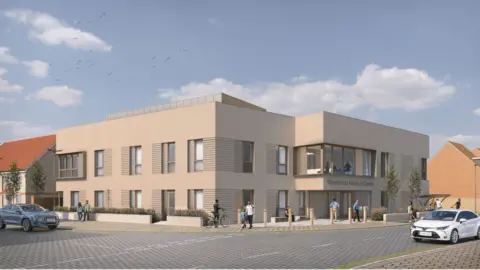
The practice had been due to be built at Great Western Park in Didcot, to support the town's growing population.
But, according to the local integrated care board, the latest cost estimates for the surgery no longer "represent value for money" based on NHS guidance.
It follows similar difficulties to build a new GP hub in Bicester, another growing Oxfordshire town.
But why is it so difficult to make these planned surgeries a reality?
Costs
The ultimate reason is the high initial costs involved in building new GP surgeries.
While the final bill is dependant on where the practice is built, how big it is and any specialist finishes, costs can be anywhere between £500,000 and £1m.
To help fund the initial costs and build the facility, the NHS often turns to private investment in the form of a real estate investment trust (REIT).
In return, the trust will receive rent from the future GP, as well as a contract to maintain the building.
In the Great Western Park development, the original investor was a company called Assura, which has already overseen the development of Didcot Health Centre and Wantage Health Centre.
Buckinghamshire Oxfordshire and Berkshire West Integrated Care Board (BOB ICB) represented the NHS in the agreement.
What can go wrong?
As with most long term developments, costs can rise over time and an initial agreement between the local NHS care board and the REIT might need to change.
This can include the price of the raw materials needed to build the surgery, as well as the estimated future rent.
Since 2024, the NHS has been under strict guidelines to only continue with an agreement if it represents value for money.
So, if the costs get too high, as assessed by NHS England and the district valuer, the agreement cannot go ahead.
For Great Western Park, BOB ICB said: "After careful consideration, both the recent and previous reimbursement proposals have been assessed as not representing value for money and not meeting the requirements of the Premises Costs Directions 2024.
"As a result, the ICB cannot accept the proposals and will no longer be progressing with Assura as the development partner for the GP surgery project."
What are the other options?
For Great Western Park, BOB ICB said it was "fully committed" to delivering a new GP surgery and was "exploring alternative development partners".
But with costs rising, and investment trusts ultimately looking to make a profit, some changes to the development might be needed to bring the build in on budget.
One suggestion is that the government could fund the project outright, but the Department of Health and Social Care (DHSC) has invested £100m in the last year to improve existing surgeries, rather than committing to new projects.
A DHSC spokesperson said the government had invested £100m this year into GP estates across England "to carry out vital upgrades, providing a better service for patients" and was investing more than £1bn into the GP contracts to boost staffing.
You can follow BBC Oxfordshire on Facebook, X (Twitter), or Instagram.
