Several city flood defences deemed below standard

 Getty Images
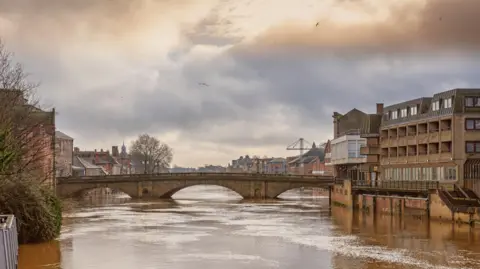
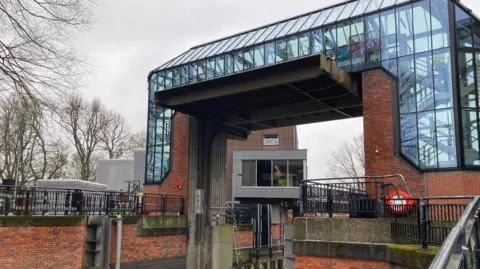
A total of 18 flood defences in York were found not to meet target standards ahead of this winter, according to the Environment Agency (EA).
The EA inspected 312 defences it monitors in the city in October and found 6% of them were below the required condition.
A total of 15 of the city's defences, or 5%, were deemed to be of "high consequence" by the agency as they protected homes and businesses.
The EA said protecting communities from flooding was a top priority and immediate action was taken if the performance of defences was reduced.
The details of the state of defences in York follows research by the BBC's Shared Data Unit which found that 8.6% of the 98,466 flood defences the EA inspected nationally were below the required conditions.
During its routine inspections, flood defences are given a condition score out of five.
That is then measured against a target score that reflects the required condition.
Cracks, fractures or erosion in walls, slumps in earth embankments, broken or blocked drainage systems and overgrown vegetation can all lead to a lower score, according to the Local Democracy Reporting Service.
A defence being deemed below required condition did not necessarily mean it had failed and it could still be fully operational even if part of it was not working as normal, the EA said.
The analysis comes after the six named storms which hit the UK last winter, including Bert and Connall, which led to severe flooding in parts of England in November 2024.
The Met Office has also stated that winters were getting wetter, with six of the 10 wettest recorded half-winters between October and March happening since 2000.
Floods Minister Emma Hardy said the government had redirected £108m into repairs and the maintenance of defences nationally, and would spend £10.5bn in the next decade, including building new ones.
The EA's repair programme for defences it directly manages remains ongoing after it redirected £72m to maintaining flood assets.
An EA spokesperson said protecting communities was more important as climate change brought more extreme weather.
"If the performance of an asset is reduced, then immediate action is taken to ensure that flood risk continues to be effectively managed until the asset is fully repaired or replaced," they added.
Listen to highlights from North Yorkshire on BBC Sounds, catch up with the latest episode of Look North.
