Councils abolished and elections cancelled - why?

 Getty Images
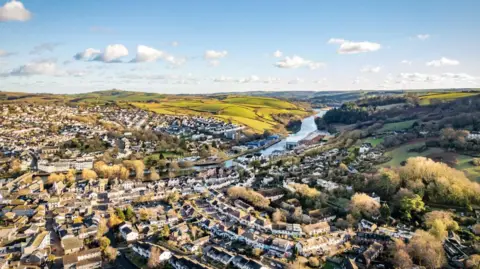
All district and county councils in Devon are being abolished as part of the biggest shake-up of local government across the country for 50 years.
Instead of splitting services like recycling, housing and highways between different levels of council, they will all be taken on by new unitary authorities.
The new unitary authorities are set to be launched in April 2028 and the government says it is because of the preparatory work needed to be done that it has offered councils like Exeter and Plymouth the chance to cancel elections due in May 2026.
So what will the reorganisation of councils, and the decision to cancel the election in Exeter mean for residents?
Will council services change?
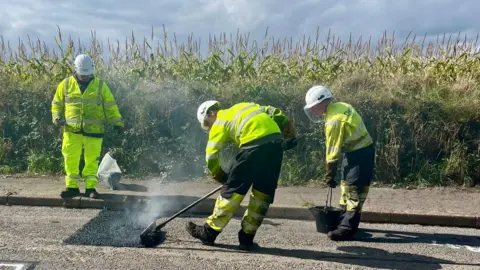
At the moment council services are split up in some parts of Devon so a district council like Teignbridge or Torridge will take care of areas like bin collections and planning applications, while Devon County Council looks after areas such as potholes and care for elderly or disabled people.
The government wants to make the situation simpler so that each area will only have one council - referred to as a unitary authority - that will manage all council services.
Unitary authorities already exist in Plymouth and Torbay that were established in 1998. Cornwall became a unitary authority in April 2009.
The government claims a move to unitary councils everywhere will save money and be easier for everyone to understand who does what while ensuring the same models are in place across England.
It also wants to introduce directly elected mayors in all regions of the country.
Opponents of the reorganisation say it will end up costing more money that could be better spent on improving services under the current system at a time when many councils are struggling financially.
Why are elections being cancelled?
Just before Christmas the government announced it was offering all councils affected by the restructuring plans the chance to postpone elections that were due to take place in May.
The deadline for councils to make any request for postponement was on Thursday and 25 local authorities are now asking the government for elections not to go ahead.
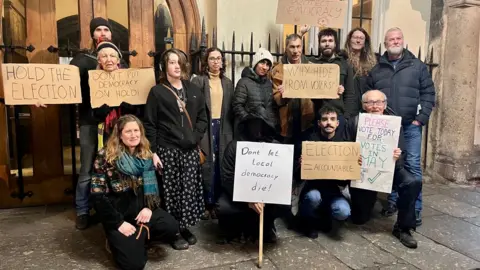
Exeter City council held a four-hour debate on the issue on Tuesday with 28 of the city's 39 councillors making speeches to argue the case for and against holding elections in May.
Labour currently holds 22 seats on the council and its members spoke in favour of postponing - supporting the claim in a council report it would save more than £250,000 and free up council staff to focus on the transition to a new unitary authority.
Opposition members from the Greens, Liberal Democrats, Conservative, Reform and Independent said money for the elections was already budgeted for, the council was fully capable of running elections and providing all services, and that "democracy delayed is democracy denied".
What might have happened?
Opposition councillors believe they would be in a good position to take seats from Labour given the party lost all of its seats in Exeter in last year's Devon County Council elections, and the party's performance in national polls.
Labour denies any allegations of "running scared" and says Exeter is a strong Labour city where the party still has widespread support.
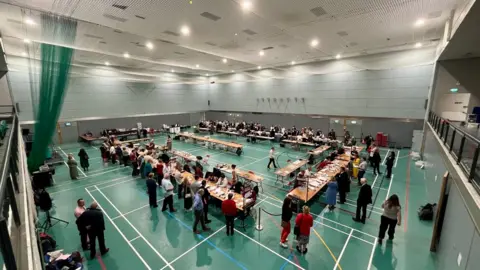
Elections in Plymouth and Exeter are held "in thirds" - with a third of council seats up for election every year and a year off every fourth year.
Of the 13 seats that would have been up for election in Exeter, eight are held by Labour, meaning they could have faced losing control of the council.
The Labour leaders of Plymouth City Council say they are going ahead with elections in May but even if the party was defeated in all of the 19 seats up for grabs, Labour would still be in control there due to its large majority.
What will the new unitary authorities be?
There are several different options for how Devon might look and there was plenty of debate throughout 2025 as different parties and groups came up with their plans to put forward to the government.
One of the reasons put forward for cancelling elections was that Exeter - which currently has district council level powers - is pushing its plan to take over surrounding areas and become a new unitary authority.
The city is working with Plymouth and Torbay on a plan to create four unitary authorities - one for each of their urban areas and one coastal and rural area for the rest of Devon.
Plymouth has its own expansion plan to take over 13 parishes in the South Hams and the south west of Dartmoor including towns like Ivybridge.
Devon County Council wants to keep the boundaries as they are now and says reorganisation threatens the stability of services.
The district councils - with the exception of Exeter City Council - worked together to come up with what has become known as the 4-5-1 plan that would see three unitaries covering the county.
The government is looking at all of the proposals and is expected to come back to councils with a decision in the summer.
The plan is to then hold elections in May 2027 to elect members of the new unitary councils who would work as "shadow authorities" for a year before taking power fully in April 2028.
Where does the money go?
Councils are responsible for taking in and spending hundreds of millions of pounds every year.
Local authorities bring in money from government grants, council tax and business rates and also raise income from offering services like car parking.
Devon County Council's income was almost £2bn this year with more than £1.1bn from government grants and about £580m raised in council tax.
Most of the money is spent on children's services - about £1.1bn - and on adult social care - just more than £500m. Plymouth City Council and Torbay Council also spend the majority of their money on children's services and adult social care.
District councils have far smaller budgets with somewhere like Mid Devon District Council responsible for about £60m.
The county council employs more than 10,000 people including more than 5,000 staff in schools.
Plymouth City Council employs more than 2,500 people and the district councils employ about 500 people on average.
Will we get a directly-elected mayor?
Part of the reason for the government's push for reorganisation was to introduce directly-elected mayors, which already exist in areas like Manchester and Birmingham, for every region across the country.
When she launched the proposals back in December 2024 the then Deputy Prime Minister Angela Rayner said it would help "communities, people and places across England begin to take back control over the things that matter to them".
The model proposed by the government is that unitary councils will band together to form strategic authorities that would be run by directly-elected mayors and get government funding to take control of areas such as housing, regional transport policy and regeneration.
The current council leaders in Devon say they want to see the new unitary authorities join together with Cornwall to form a strategic authority for the two counties with a directly-elected mayor.
But the advances from politicians in Devon have been consistently rebuffed by their counterparts in Cornwall who say they want to retain full independence.
Follow BBC Devon on X, Facebook and Instagram. Send your story ideas to spotlight@bbc.co.uk.
