Hooter to sound to mark 40 year rail anniversary
The man who sounded the hooter for the final time at a closing railway works is to sound it again exactly 40 years on to mark the anniversary of the closure.
Foundryman Ron Johnson sounded shift finish hooter at the Swindon Railworks for the final time on 26 March 1986, as hundreds lost their jobs when the site closed.
Johnson, 75, will sound the hooter again at 16:30 GMT following a day of events, including the opening of a new exhibition, at the Steam Museum in the town to mark the day.
Johnson said that sounding the hooter was "not just a job" and that the closure had been a "really sad day".

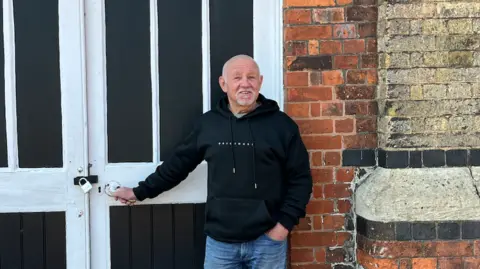
"I didn't [appreciate the significance of the role] until a guy came in one day in his late 60s and said 'do you mind if I blew the hooter?' and you could see he was filling up – now at 75 I get that same feeling. It was a privilege," he added.
He explained the the hooter was powered by machines in the basement and when the time was right, he would turn the wheel allowing steam to escape which would lead to the hooter being heard across the town.
"If you blew it early – I would've got the sack, If I blew it late – I wouldn't have got sacked but I would've been owned by the guys.
"It was not just a job, it was your life. Swindon was the railway and the one the day the job was gone. It was a really sad day."
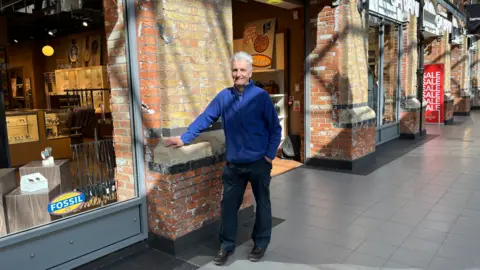
Another former worker, Andy Binks, said on joining the railworks in September 1971, he knew that the industry was winding down.
"There was an eerie feeling, even in 1971, with younger men looking at the redundancy lists.
"Obviously [over time] it became clear these men were going to be sacked – I knew this was not going to be a job for life."
Follow BBC Wiltshire on Facebook, X and Instagram. Send your story ideas to us on email or via WhatsApp on 0800 313 4630.
