Forgot the red phone box? Museum may ring a bell

 BBC
BBCThere was a time you could find them on many street corners.
But 100 years after first being added to pavements, the traditional all-red phone box is a rare sight, as perhaps are most kiosks in the smartphone age.
However, for those looking for telecom nostalgia, you could immerse yourself in The National Telephone Kiosk Collection.
About 30 phone boxes are on show at Avoncroft Museum in Worcestershire, where volunteer Stuart Marks - keen to walk visitors down memory lane - says the iconic red box could have been a different colour altogether.
Architect Sir Giles Gilbert Scott won a design competition and "originally... wanted it to be green with a silver interior".
The provider had other ideas, apparently.
"The GPO [General Post Office] insisted it would be more visible with red."
Marks explained that the longer "story behind it was that the people of London didn't really like" previous telephone boxes put out by the GPO.
"They were made of concrete and looked a little bit unsuitable for the streets I suppose... a bit like putting a shed outside Harrods."
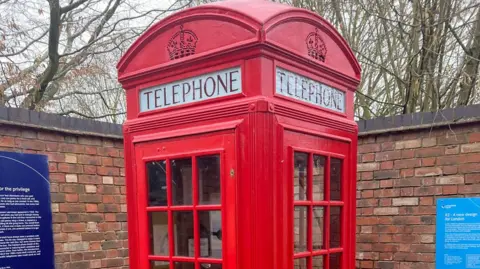
The first all-red, cast iron kiosk, the K2 model, made its debut in 1926, following Sir Giles' competition victory.
"It's got a lovely crown on the top... and that was used as ventilation, but also as decoration," Marks said.
At their height in the 1990s, there were about 100,000 public phone boxes across the UK.
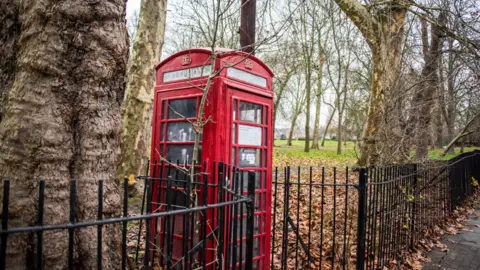
There are now roughly 20,000 working public payphones, but only about 3,000 come by way of a traditional red kiosk like the classic K6, which was introduced in 1935.
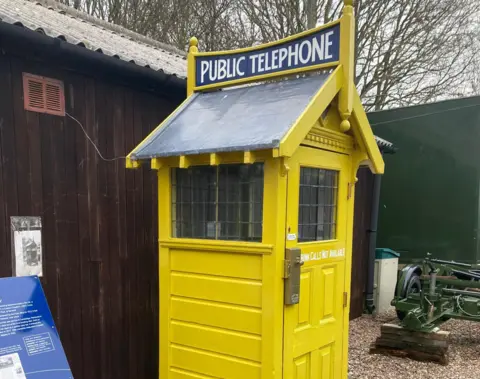
The earliest box at the museum, a yellow one that "possibly sat on a station", dates from when smaller organisations, not the GPO, issued such services, Marks said.
"When we found it, it was [being used as] a garden shed... You've got a toilet door-style lock that you used to have to put a penny in to get in.
"That was the fee for your call effectively, so... you would go in there and the operator would put you through."
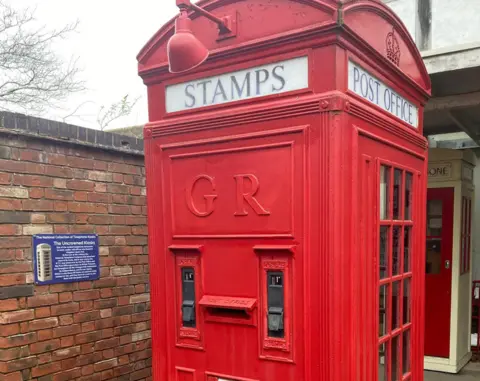
Another curio at the West Midlands venue and "probably one of the rarest" phone box examples comes in the form of a "miniature post office, so there's two stamp machines on the back".
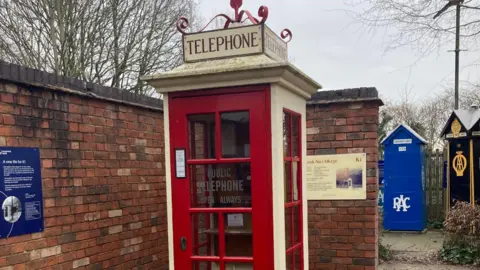
For the living nostalgist, however, it's perhaps the K6 that is the ultimate classic, introduced about a decade after the first all-red kiosk to mark King George V's Silver Jubilee.
"This [K6] is probably the one most of us outside London know as a telephone box, because it's smaller, lighter, a little bit cheaper," Marks said.
In 2008, BT launched the Adopt a Kiosk Scheme, allowing communities to buy old red boxes for £1 and repurpose them as things like mini libraries, defibrillator stations and coffee kiosks.
 Getty Images/Sergio Amiti
The museum's national phone box collection - among its 14,000 objects in total - officially launched in 1994, with its functioning kiosks serviced by three working telephone exchanges.
As well as those issued by the GPO and British Telecom, later BT, there are emergency call boxes provided by the police, RAC and AA.
Talking of police, though, isn't there another UK box of some renown; one of a more azure hue?
The museum has you covered there as well...
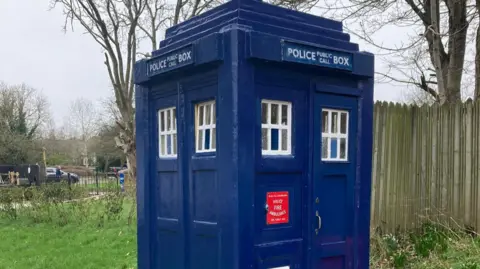
The venue's Doctor Who Tardis-style structure was once a Glasgow police box.
"This would have been a beat bobby's small police station effectively," Marks said.
"The light on the top... that would flash if the sergeant back at the station wanted them.
"[If[ they were too far away from the police box, they could see the light flashing. And it still works as well."
Follow BBC Hereford & Worcester on BBC Sounds, Facebook, X and Instagram.
