'Plastic bedsheet could save mums' lives'

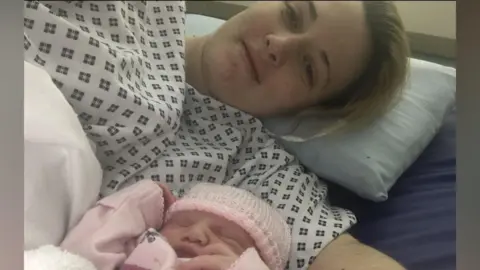 Daisy
DaisyWhile others were partying their way into 2018, new mum Daisy had her own reason to celebrate, with the birth of her daughter, but her family's celebrations abruptly ended when she started losing blood.
Daisy suffered postpartum haemorrhaging and lost up to a litre (1.8 pints) after the birth of Ivy.
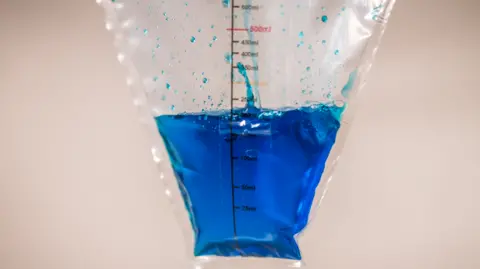
Now she is welcoming a life-saving British innovation - a plastic sheet that collects and measures blood loss during childbirth.
Developed by researchers at the University of Birmingham, it is being recommended by the NHS for wider use across hospitals.
"It was actually a few hours after Ivy was born and obviously the midwives were busy elsewhere when we realised I was bleeding a lot," said Daisy.
"I was later told that I probably lost about a litre of blood and it was a really frightening experience.
"Anything that can alert the midwives and doctors to the dangers of blood loss during labour is brilliant."
 Gates Archive/Brian Otieno
Daisy did not use the sheet herself, but said it was great to think such a simple item could save women's lives.
Described as a "drape", it was designed for use in low-income countries, and has been trialled in several nations across Africa, where studies found that as part of a package of measures it reduced severe bleeding by about 60%, lowering the risk of death.
Recent recommendations published in NHS England's Maternal Care Bundle include use of the drape to help clinicians more easily assess blood loss in childbirth.
The move follows recent data showing maternal death rates in the UK are now about 20% higher than 15 years ago, with post-delivery blood loss among direct treatable causes of death.
'Act quicker'
"It feels like it has come full circle," said Prof Arri Coomarasamy, whose team at the University of Birmingham led the development of the drape.
"Postpartum haemorrhage is one of the world's leading causes of maternal death, with nearly 43,000 women dying every year from excessive bleeding after childbirth.
"We wanted to design a tool that gave an immediate and obvious visual measuring system that would alert healthcare professionals to a life-threatening volume of blood loss, so that they could act quicker and earlier."
He said it was amazing that the "simple design", developed and tested in "low-resource settings" had now been recommended by the NHS.
New guidelines from the World Health Organisation call for earlier action and intervention when a mother loses 300 ml (10oz) or more of blood after birth, with the plastic drape able to give clinicians a clear, visible measure of blood-loss levels.
At present only a handful of English hospitals have been trialling the new sheet, but hospital trusts are expected to implement the NHS recommendations by 2027.
Follow BBC Birmingham on BBC Sounds, Facebook, X and Instagram.
