How much are rates going up in your council area?
 Pacemaker
All of Northern Ireland's councils have reported their district rate increases for the next year.
Ards and North Down has the highest percentage increase at 4.50% followed by both Belfast City Council and Derry City and Strabane at 4.48%, while Fermanagh and Omagh came in the lowest at 1.96%.
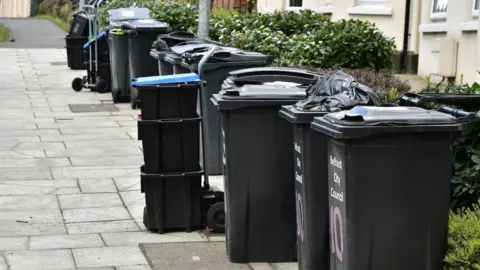
The district rate set by the 11 local councils pays for local services including waste management and leisure and community services and is one of two parts that make up a household's rates bill.
The other part, the regional rate set by Stormont, was agreed by ministers on Thursday.
The executive agreed to raise the regional rate by 5% for households in Northern Ireland for the next financial year.
The Department of Finance said the 5% uplift, the same percentage rise as last year, would add 63p per week to the average household bill.
Finance Minister John O'Dowd said the uplifts will generate an extra £47m in funding in 2026/27, which would support "vital public services".
 PA Media
O'Dowd added: "The executive's decision to keep the domestic uplift at the same level as last year is a recognition of the cost of living pressures felt by households."
The regional rate covers services like hospitals and roads maintenance.
Rates bills are due to be issued to households and businesses in April.
Domestic rates are calculated using both the regional and district rates as set by each council and are set out below.
Antrim and Newtownabbey
District rates in the Antrim and Newtownabbey Borough Council area are to go up by £14.67 over the course of the next year for the average household.
That works out at around 28p more a week for ratepayers after councillors there agreed a 2.99%.
The Mayor of Antrim and Newtownabbey, Leah Kirkpatrick, said the increase "will allow us to maintain our essential services while still driving economic growth and enhancing our services."
Ards and North Down
In the Ards and North Down Borough area, bills for an average household will go up by £27 next year.
Councillors there agreed to increase household rates by 4.50%, meaning bill payers will pay around 52p per week more than this year, or £2.28 per month.
They had originally agreed a slightly higher increase but were able to bring it down after confirmation that a property revaluation exercise, Reval 2026, is now not going ahead
"Following the Minister of Finance's announcement on 29 January that Reval 2026 will not proceed, updated financial factors were applied," a council spokeswoman said.
She added: "As a result, the previously agreed rate increase of 4.74% has been revised down to 4.5%."
Armagh, Banbridge and Craigavon
Rates for the average household in the Armagh City, Banbridge and Craigavon Borough Council area - where councillors agreed to increase rates by 2.79% - are to go up by 31p per week in 2026/27.
For the average household that rise means paying around an extra £16 over the year.
The rise, the council said "represents a measured and responsible approach," adding it balances the need to "protect essential services and invest in local communities" with the challenges faced by households.
Belfast City
Belfast City Councillors have agreed a 4.48% rise in the district rate for the next financial year.
At the lower end of the scale, that means an average increase of 32p per week for an apartment, while those in a four-bedroom detached house will see an increase of £1.11 per week.
For those in a three-bedroom semi-detached house, the increase will be 46p per week, so they will be paying around an additional £24 per year.
The parties had been arguing for weeks over the issue, but finally made a decision at a special council meeting on Friday night by 47 votes to two.
A statement from the council said: "As part of the rate-setting process, members agreed a range of measures to support local communities, develop skills, drive growth and keep the city clean and tidy."
Causeway Coast and Glens
The agreed rates rise in the Causeway Coast and Glens Council area of 3.35% means the average household will pay just over £20 more next year.
The council said the increase works out at an extra 40p each week.
Causeway Coast and Glens mayor Oliver McMullan said the council is "committed to ensuring residents have value for money."
"The small rates increase will help ensure services across our Council area continue to be maintained, including frontline operations and continued investment in the services and facilities that matter to our residents," McMullan said.
Derry City and Strabane
People in the Derry City and Strabane District Council are to see their rates rise by an average of just under £28 a year.
A district rate rise was agreed by councillors of 4.48%, meaning the average rate payer will pay 53p more a week.
The increase balances "the immediate cost-of-living pressures on citizens with the necessity of maintaining critical frontline services, while also delivering a transformative and ambitious capital investment programme," the council said.
Fermanagh and Omagh
In Fermanagh and Omagh, the agreed rates rise of 1.96% means an average household will pay an extra £10 in the coming financial year.
The council said the rise – working out at just under 20p per week extra – is "a below inflation and lower than last year" increase.
"The Council continues to manage its finances prudently," a spokesperson said, adding the local authority "remains focused on delivering services as efficiently and cost effectively as possible."
Lisburn and Castlereagh
Councillors in Lisburn and Castlereagh District Council have agreed to a district rate increase of 4.25% for 2026-2027.
That means the average household will pay an additional 45p per week - around £23 more per year - the council said.
"While inflation and energy costs have started to decline, the cost-of-living challenges remain significant for our ratepayers and we have worked hard to try to keep the rate increase as low as possible," councillor Brian Higginson, chair of the corporate services committee said.
Mid and East Antrim
Average household rates bills for people living in Mid and East Antrim Borough Council will rise by around 90p per week - around £46 over the year - in 2026/27.
That is after councillors agreed a 2.95% rates increase for the next financial year.
The council said the rise reflects a "measured approach in a challenging financial climate."
"Securing a rate below inflation has been a clear priority for members," a council spokesperson said.
Mid Ulster
Mid Ulster District Council has agreed a 3.40% increase to its district rates for 2025-2026.
That will mean average household ratepayers will pay 34p more per week - an extra £17 pounds per year.
"The decision reflects a careful balance between setting a sustainable budget and minimising the impact on ratepayers through continued efficiency savings and prudent financial management," a council spokesperson said.
Newry, Mourne and Down
A 2.80% district rates rise has been agreed by Newry, Mourne and Down councillors.
This equates to an increase of £1.51 per month for the average household, or just over £18 per year.
"The district rate not only pays for services, but helps us invest for the future," council chairperson Philip Campbell said.
He added: "Our investment is a vote of confidence in the district, its people and future potential, paving the way for new opportunities."
