'His loss is massive': Inquests show spread of deadly synthetic drugs

 Family handout
Highly potent synthetic opioid drugs called nitazenes, which experts say can be many times more potent than heroin, have been linked to hundreds of deaths in the UK.
Records show some people are taking them by accident, as they are mixed in with other drugs as cheap substitutes.
So how are nitazenes making their way into the supply chain, and are the authorities doing enough to curb their spread?
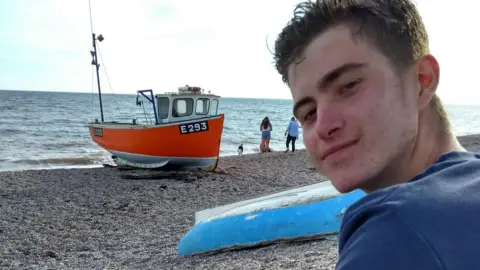
Undecided about what he wanted to do after his A-levels, Gus tried a range of jobs and travelled overseas.
He filmed himself hiking up volcanoes in Mexico and captured the effects of climate change. It made up his mind to apply for a university's journalism course.
A week after he returned home his mother Nicola found he had unintentionally overdosed and died at the age of 21.
"I loved him very much and his loss is massive," she said. "The awful thing is, I think he was at one of the best places in his life."
Gus had sat down to watch a film and eat a takeaway and taken what he believed was a tablet of oxycodone, a strong pain medication which he had bought illicitly.
Three months later, Nicola received a post-mortem report saying the tablet was actually a type of nitazene.
Despite a career spent in medicine as a consultant radiologist, she had never heard of these synthetic opioid drugs.
A coroner later concluded her son's death was drug-related, caused by the "substitution" of a nitazene in place of what he had sought to buy.
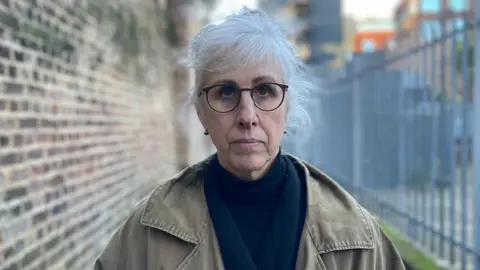
Nicola said: "I can tell you that is the most awful thing to suddenly open an e-mail and read your child's post-mortem.
"It said that there was nitazene in his bloodstream and this was thought to be the cause of death, and I thought 'what the hell is that?'"
Gus is among hundreds of people whose deaths have been linked to nitazenes since they first made news in the UK in 2021.
Professor Michel Kazatchkine, a founding member of the Global Commission on Drugs Policy, said the numbers of deaths meant the UK was "by far outpacing all other countries [in Europe] and it's even outpacing Canada".
The BBC Shared Data Unit has analysed exclusive data from The National Programme on Substance Use Mortality (NPSUM). It is made up of voluntary reports of inquest records from coroners in England, Wales and Northern Ireland.
The records are not exhaustive because not all coroners volunteer them and it takes seven months on average for drug-related deaths to be registered, so some appear in the following year's figures.
The records analysed are for 286 inquests involving deaths linked forensically to nitazenes by the end of March 2025.
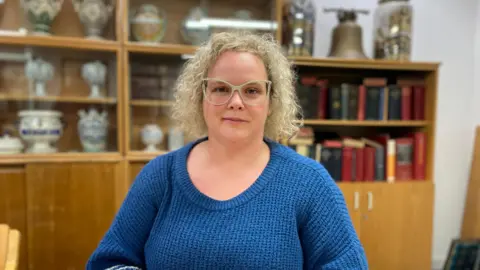
Dr Caroline Copeland, director of NPSUM and senior lecturer in pharmacology and toxicology at King's College London, said the records showed some of those affected were among the "most marginalised".
More than one in five people in the records had "a lack of stable housing, living in the most deprived parts of the country with incredibly high levels of unemployment and with a high burden of mental health disorders," she said.
Our analysis also found:
- Nine in 10 of the inquest records were for men
- Ages ranged from 17 to 66, with many in their 40s
- Most were known to use drugs
- More than half the people died in their homes
- Almost every inquest concluded the death was by accident
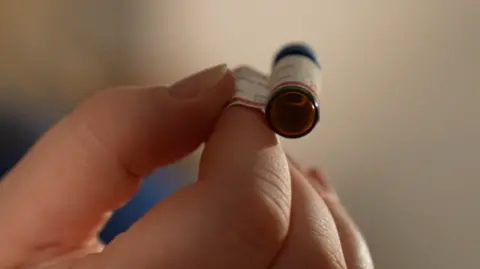
The opioid antidote naxolone is viewed as key to preventing deaths from substances like nitazenes, but was detected in just one in every seven inquest records.
In January 2025, the coroner reviewing the death of Joe Black raised concerns naloxone was only available to take home from some substance misuse services and many people who used drugs were also not engaging with them.
Joe, who had schizophrenia and substance misuse disorder, was found dead aged 39 from an overdose including heroin adulterated with nitazenes at a hostel in Camden, London.
Neither the hostel nor the mental health NHS Trust which were treating Joe were permitted to give naloxone kits to their residents or patients who were known to use drugs.
In December, the Department of Health and Social Care began a 10-week consultation on proposed legislative changes to expand naloxone access in the UK.
His mother Jude said: "Joe was a wonderful, sensitive, caring, intelligent, talented young man. And he, like everybody else, had a right to live.
"He also was carrying this terrible illness and coping as best he could, and was hugely vulnerable to exploitation and accidental overdose."
She said it was "negligent" it had taken nearly a year since the inquest for the consultation to begin.
"I feel it diminishes the value of my son's life and the tragedy of his death.
"People like Joe are still hugely at risk and I'm sure they're still dying."
 Jude Black
In Sandwell, West Midlands, the charity Cranstoun is trialling a new type of outreach service.
Sue McCutcheon goes out proactively to find people on the street who have substance dependence issues and may not be willing or able to use traditional services for help.
She is a nurse with more than 30 years' experience and can prescribe treatments and hand out naloxone, which she describes as "like a duty of care or a moral issue".
She said: "If these people don't come into our buildings to get naloxone, where are they going to get it from?"
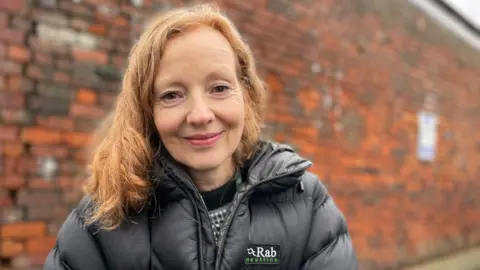
The National Crime Agency (NCA) believes nitazenes are being smuggled into the UK through the post. Due to their strength, they can be secreted in small volumes in parcels.
The ban on harvesting opium poppies in Afghanistan has previously been suggested as the cause. Opium is the key ingredient for heroin.
Adam Thompson, the NCA's head of drugs threat, said while heroin purity had dropped on the streets, there were still no signs of shortage in the UK.
"In most cases, organised criminals' sole motivation for using nitazenes is greed. They buy potent nitazenes cheaply and mix them with other drugs... to strengthen the product being sold and make significant profits," he said.
The government said it would keep enhancing its surveillance and early warning systems to alert people when new drugs emerged.
Analysis of the inquest records showed multiple drugs were being increasingly implicated in people's deaths - called polydrug use.
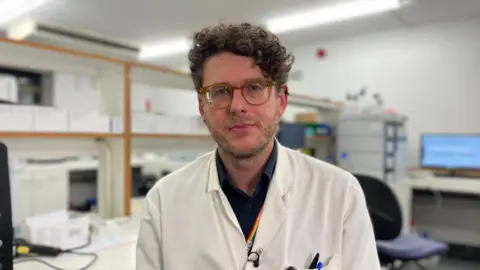
Dr Alex Lawson is a consultant clinical scientist in toxicology for University Hospitals Birmingham NHS Foundation Trust.
After a spike in nitazene-related deaths in the city in summer 2023, lessons have been shared by the city's agencies to inform contingency plans elsewhere if there were a similar outbreak.
One in every seven of the NPSUM records we analysed were from the coroner's area Lawson's team covers.
They routinely tests blood, urine and other tissues for the presence of up to 2,500 different types of drugs - but that level of investigation is not uniform across all coroner areas.
"Things are improving but the nitazenes that people are testing for will vary from lab to lab, and not every laboratory will be able to keep up to date with the newest nitazenes that are on the market," Lawson said.
Copeland has co-authored research published this week which says nitazenes-related deaths may have been under-estimated by up to a third.
The research found the drugs deteriorate in post-mortem blood samples more quickly than most forensic samples are handled in the real world, so they may not be detected.
Concerns over mis-selling
The most recent annual report from the UK's only national drug-testing service, WEDINOS, found more than a third of the samples it tested did not contain what the purchaser had intended to buy, while some contained extra substances.
Copeland said at the start of 2023 nitazenes were mostly found contaminating heroin, but now they are being found as a complete substitute for other drugs.
"The complete mis-selling is something that is very concerning for nitazenes, because people don't know what they're taking, so they're not going to be able to take the necessary precautions," she said.
 Family handout
In October 2025, the government began a new campaign targeting 16 to 24-year-olds and social media users to raise awareness of harms from drugs, including nitazenes.
It said it had guaranteed funding for council public health schemes for the next three years, including £3.4bn protected for drug and alcohol prevention, treatment and recovery.
The BBC's request for an interview was declined, but a spokesperson said its strategy involved strengthening border security to block "these lethal substances from entering the country".
Naloxone was also now being carried by officers in 32 police forces out of the 45 covering the UK, they said.
Nicola said: "You don't want your child to be judged. There's always a stigma with certain types of death and substances is one of them.
"And I didn't want Gus to be tarred with any of that, so at first you don't say anything and then I thought, I have to tell his friends and I have to tell people.
"He wasn't a great sleeper. I think he just thought he would take something, it would relax him and he would just have a nice sleep that night, and it put him to sleep and he never woke up."
Additional reporting: Navtej Johal
Additional data journalism: Paul Bradshaw
- If you have been affected by the issues raised in this report, help and support is available via the BBC Action Line.
More about this story
The Shared Data Unit makes data journalism available to news organisations across the media industry, as part of a partnership between the BBC and the News Media Association.
Read more about the Local News Partnerships here.
