Not enough tar to fix Caithness potholes, says councillor

 BBC
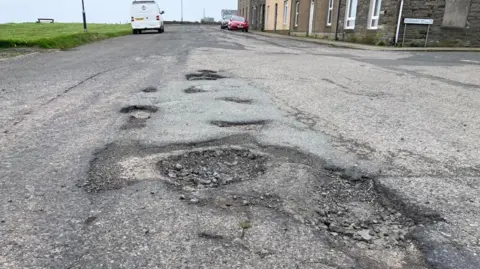
BBCA councillor has claimed Highland Council does not have enough tar to fix all the damaged roads in Caithness.
Andrew Jarvie, chairman of the local authority's Caithness area committee, said the council should build its own tar-making plant to better tackle pothole repairs.
Complaints about the state of the roads got so bad two years ago a joke sign appeared at Ord of Caithness reading: "Welcome to the Moon - caution craters".
Highland Council said it had the materials needed to carry out the work it planned to do.
Monday's Caithness area committee heard that just 51 of 643 road maintenance jobs were on track to be completed, and it could take years to get all the repairs done.
Jarvie told BBC Scotland: "For all the fancy things that can be done it transpired that the major obstacle in doing all of this is there isn't physically more capacity to produce more tar in the county.
"To me it's so elementary that we are talking about new machines and hiring more people and putting more budget in makes no difference if there's not any ability to produce more tar to do these things."
Jarvie said Highland Council's redesign board was looking at the merits of having a tar facility.
He added: "I don't know how we make more of a business case when the case is as simple as this - we cannot fix more roads until there is a new tar plant."
A Highland Council spokesperson said: "The road repairs programme outlined in the Caithness Roads Report has sufficient materials secured to deliver the planned works."
In May 2024, Highland councillors approved a plan to invest £2bn over the next 20 years to upgrade its potholed roads and build new schools.
The local authority said it would pay for the plan by borrowing money and using 2% of the money it collects through council tax.
Highland has the longest road network in the UK with more than 4,200 miles (6,759km) of roads, in excess of 1,000 miles (1,609km) of footpaths and more than 2,200 bridges and culverts.
What is road tar?
Road tar was made from coal tar, a thick liquid by-product of coal gas production, until the 1980s.
It was largely replaced with bitumen. The sticky, waterproof substance is a by-product of crude oil production and is mixed with stones for use as surfacing roads.
