Reviving peatlands and challenging 'bleak' image

 David Clarke
A wildlife trust plans to spend almost £250,000 to revive damaged peatlands and challenge the perception they are "bleak and barren".
Cumbria Wildlife Trust said the county was "lucky to have a significant amount of peat habitats" which are England's biggest carbon store, but most were in a poor condition.
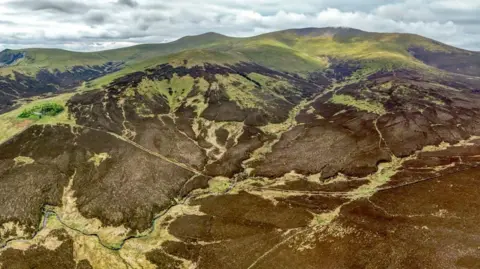
The trust secured funding to restore parts of Foulshaw Moss Nature Reserve and Skiddaw Forest, where old drainage channels have dried out the peat, "releasing carbon that has been locked up in the peat for thousands of years".
Peatland team manager Susie Webb said: "Peatlands are often seen as bleak, barren places - but they are beautiful, so underrated yet so important."
Healthy peat is the country's biggest carbon store but when damaged it releases planet-warming greenhouse gases into the atmosphere.
The trust said the peat at Skiddaw Forest was "much drier than it should be, therefore we will be working to block these ditches and stop water from running off the site, re-wetting the peat and getting it back into a much better condition".
 Colin Aldred
Webb said the funding would also support Foulshaw Moss reserve, which needed further restoration work to help the bog thrive.
"We are lucky to have significant amounts of peat habitats in Cumbria, including large expanses of blanket bog on the upland fells to great swathes of lowland raised bog around Morecambe Bay and the Solway," Webb said.
 Cumbria Wildlife Trust
Webb said Cumbrian peatlands were home to a "wide variety of species, from larger more obvious species such as curlew, short eared owls, frogs and lizards".
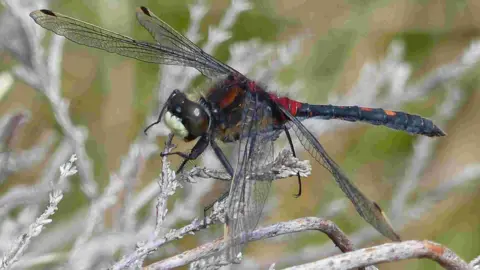
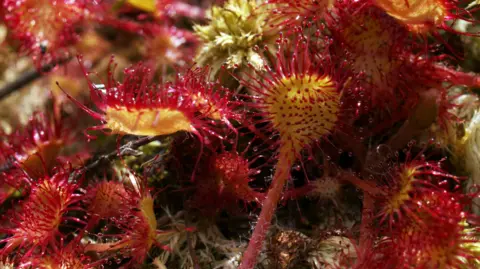
There are also a variety of dragonfly species and plants such as the sundew, which is carnivorous and has sticky leaves to trap small insects and dissolves them to use their nutrients.
'Vitally important'
Webb said peatlands had a "unique special biodiversity" but that not many people knew about them and "even less people care about them".
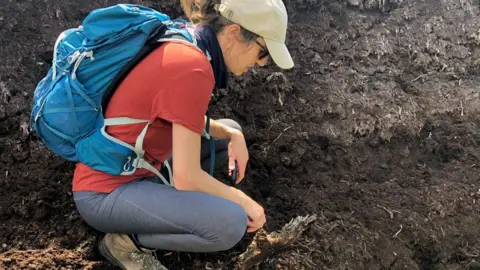
She said they were "vitally important" to fight climate change and despite them sometimes looking "quite monotonous on a large scale, when you crouch down and look at what is below your feet it's fascinating".
 Susie Webb
The trust said it would work with organisations including schools, transport companies and disability groups, to "plan improved access to peatlands and to enthuse and inspire people".
The grant has been provided by the National Lottery Heritage Fund.
