Flu cases in Scotland drop by more than a third

 Getty Images
The number of laboratory-confirmed flu cases in Scotland has dropped by more than a third, new figures show.
Public Health Scotland (PHS) data shows there were 1,297 confirmed cases in the week to 21 December - down from 1,994 in the previous week.
Provisional figures also suggest there were 679 flu-related hospital admissions across the country, down from 950 in the previous week.
PHS said the latest figures were encouraging but warned there could be more than one wave of flu in a season and urged people to take steps to stop the virus spreading over the festive period.
Separate data from the National Records of Scotland also shows the increase in flu-related deaths is slowing down.
There were a total of 73 deaths with flu listed as an underlying cause in the week to 15 December.
This is up from 67 in the week to 8 December, but the number of deaths had more than doubled the previous week.
Scotland's flu season started earlier than usual, with a sharp rise in mid-November.
Experts warned at the start of November that a new variant of flu was spreading more easily across the UK and as a result there would be a long, drawn-out flu season.
Dr Kim Marsh from PHS said: "Following an early start to the season, the latest data suggests that flu cases and hospitalisations in Scotland continue to decrease.
"While each flu season is unique and peaks are not always predictable, we have now seen reassuring declines across a range of age groups and data systems, including reductions in case numbers in younger age groups."
But Dr Marsh warned that flu season is not yet over.
She explained: "In some flu seasons there can be more than one wave of flu because different types of flu circulate at different times.
"At present, flu A is the main strain circulating. However, in Scotland we typically see flu B circulating in the first few months of the new year, and this can cause a second rise in flu cases.
"That's why it's so important to come forward if you're eligible for a flu vaccine this winter and haven't had it yet."
Health Secretary Neil Gray also urged anyone eligible for a flu vaccine to take up the offer.
As of 21 December, more than 1.3 million adult vaccines had been administered - more than 110,000 more than this time last winter, he said.
He added: "Vaccination remains the best protection against the virus and I encourage everyone who is eligible to come forward for theirs if they have not yet done so."
What can you do to help stop the spread of flu?
PHS is urging people with flu symptoms, such as a cough or high temperature, to help reduce the spread of flu by taking the following steps:
- Stay off work and do not visit hospitals or care homes until you are feeling better
- Limit contact with others, especially those at higher risk such as babies, the elderly and those with underlying health conditions
- Cover your mouth and nose with a tissue when you cough or sneeze and bin them right away
- Wash your hands regularly with soap and warm water
- Consider wearing a face covering if you must go out
You can also find out how to get vaccinated at nhsinform.scot/flu
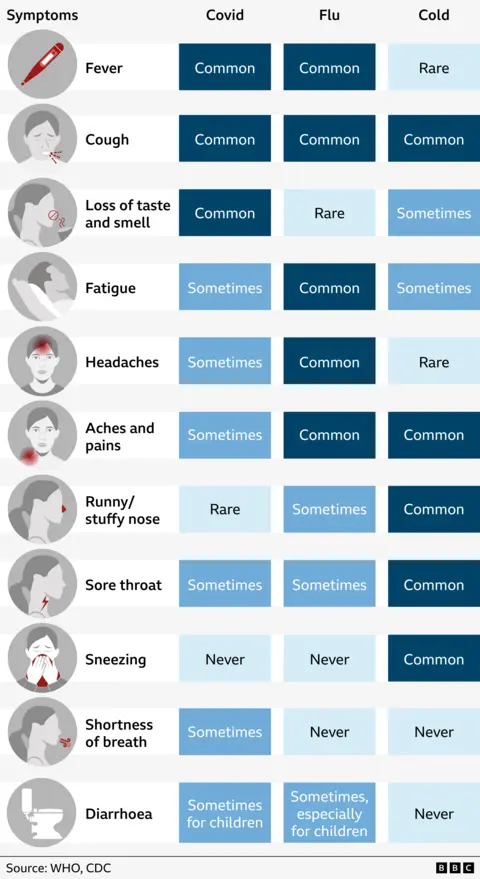
Is it a cold, flu or Covid?