Axing police commissioners 'takes voter oversight'

 BBC
BBCScrapping Police and Crime Commissioners (PCCs) will leave police forces less accountable to the public, according to those who have held the role.
PCCs are elected officials who oversee police forces, but the government said the role had been a "failed experiment" and is set to hand their powers to local mayors or policing boards in 2028.
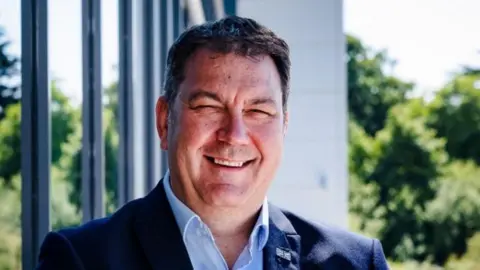
Former Cleveland PCC Steve Turner said the new system would see mayors pass the responsibility to a deputy, meaning areas would "effectively get a PCC by default that isn't elected by the public".
The Home Office said the roles were being scrapped due to low election turnouts, the public's lack of knowledge of their work and to cut costs.
Mr Turner said while mayors were elected by the public, they received votes due to their economic policies rather than their stance on policing.
"The PCC model, for all its flaws, should have been revamped, it should have been streamlined, it should have been made more accountable to the Home Office," he said.
 Office of the Cleveland Police and Crime Commissioner
PCCs were introduced in 2012 with their main responsibilities including setting annual budgets, appointing chief constables and producing a policing plan.
But the Home Office said fewer than 20% of people could name their PCC and axing the role would remove "unnecessary bureaucracy" while saving £100m.
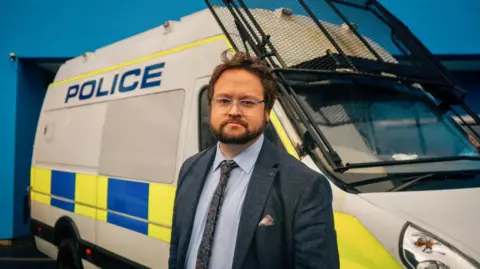
Cleveland's Labour PCC Matt Storey disputed the figures.
He claimed the government's cost saving calculation included £87m it could recoup through election costs, and suggested an alternative solution.
"If you held them on the same day as other elections, as we do in Tees Valley, you can save money on elections through that, you don't have to scrap the entire thing," he said.
 Durham Police and Crime Commissioner
Mr Storey said: "The government has been more than happy to use PCCs to spearhead the delivery of their Safer Streets mission, including ambitious goals to improve neighbourhood policing, halve knife crime and halve violence against women and girls.
"It is not clear who will lead this work after 2028."
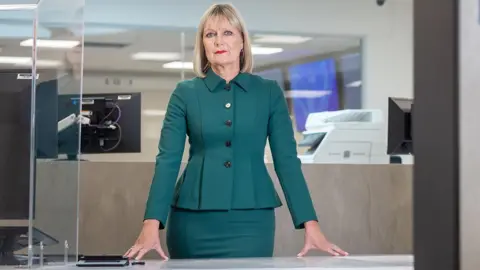
Durham's Labour PCC Joy Allen said commissioners only found out about the government's decision an hour before the wider public.
"It's not in the manifesto, there's been no engagement at all with PCCs or apparently anybody in policing," she said.
"The only people who have apparently come up with this idea are some civil servants working in a back room on the back of a [cigarette] packet by the sounds of it."
'Who takes Durham?'
The transfer of power will be more challenging for forces such as Durham Police, which covers an area overseen by both Labour North East Mayor Kim McGuinness and Conservative Tees Valley Mayor Ben Houchen.
While this initially led to confusion as to who would receive the new powers, the Home Office has since clarified that both mayors would sit on a local policing crime board, alongside council leaders and up to two co-opted members.
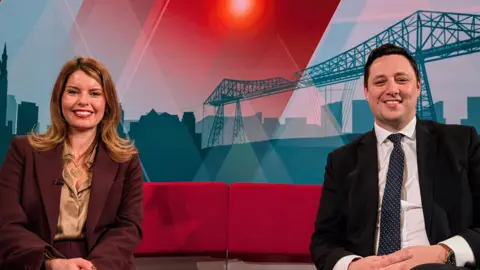
Houchen has previously been outspoken on some issues of local policing and in 2017 suggested merging Cleveland Police with Durham due to the former's poor performance.
Following the news PCCs would be scrapped, he said people did not care about titles but wanted "fewer crimes".
"The priority now has to be cutting bureaucracy and getting more money directly to frontline policing," he said.
"If that's what the government delivers, I'll back them all the way."
A spokesperson for McGuinness, who served as Northumbria PCC from 2019 to 2024, said giving mayors the PCC functions would strengthen local leadership and accountability.
"Bringing Police and Crime Commissioner functions under the mayor will allow for a more joined-up approach to tackling crime and improving public safety, alongside our wider work on safety on public transport, regeneration and skills," the spokesperson said.
