Council tax rise to help police fight phone thefts

 BBC
BBCLondoners could soon be facing an increase in council tax bills to provide "crucial" funding for police to crack down on mobile phone theft.
Mayor of London Sir Sadiq Khan has announced he is planning to increase bills by more than £20 a year on the average Band D bill, meaning if plans are approved, the portion City Hall receives will exceed £500 per bill for the first time.
Conservative London Assembly Member Neil Garratt said the mayor should have "taken action on mobile phone gangs sooner".
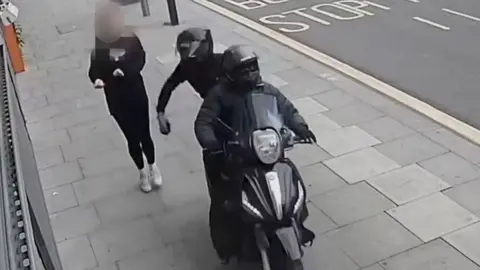
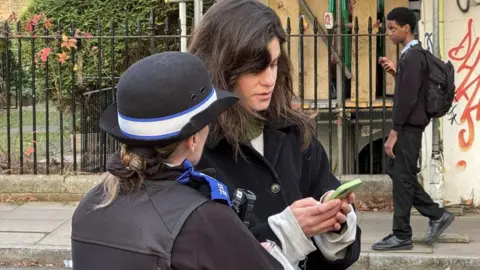
The Met Police has been struggling to combat mobile phone theft, with recent years seeing a sharp rise in the number of phones stolen.
Met figures show 117,211 phones were stolen during 2024. In 2019, 91,481 were - a rise of 25%. Only 1% of these cases led to charges or convictions.
City Hall said if the plans were approved, the move would allow it to offer record investment in policing next year of £1.22bn.
It added £15 of the council tax increase would raise an additional £60m for police to specifically spend on new ways to combat phone theft and to improve neighbourhood policing, while £5 would go towards providing more money for the London Fire Brigade (LFB).
The additional money that the mayor can add to council tax bills is known as the GLA (Greater London Authority) precept.
It goes towards the services that the mayor is responsible for, such as the Metropolitan Police, Transport for London and LFB. It is collected by London's boroughs and the Corporation of London.
'Smash the phone gangs'
Sir Sadiq said he was "taking the difficult decision to increase council tax… to provide crucial funding for the police".
He added: "This will help to implement a major crackdown on phone theft – with more resources to smash the phone gangs," adding it would also help build on the "progress we're making" to reduce homicides and other crimes.
Garratt said phone thefts was an issue he had raised "more than a year ago".
"How many Londoners have had their day ruined and their life turned upside down while the mayor has been idling his way to this decision?" he added.
 Getty Images
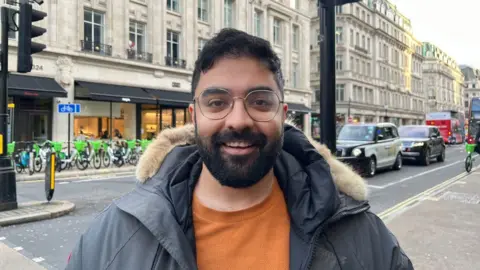
"I think mobile theft is definitely a big problem in London," said Talhaa Ahmed from Wandsworth.
However, he added that "council tax is already at an all-time high" and questioned whether "there is any other way that it could possibly be done".
Dalbir Kaur from Tower Hamlets said: "I don't think [paying to crack down on phone theft] should come out of our pocket because we are already losing phones to thieves, which puts additional pressure."
 BBC/Susana Mendonca
The extra funding for the Met will be welcomed by the force, which has been struggling financially.
Towards the end of last year, Met Commissioner Sir Mark Rowley said the force was facing a £20m budget gap in 2026-27.
Central government remains the Met's main funder, though the mayor has increased City Hall's contribution. As a result, the GLA now covers roughly 25%.
Last year the Met's GLA funding was increased to £1.16bn, and the mayor's budget plans for 2026-27 intend to raise that figure to £1.22bn but additional funding for that and other services the GLA provides has led to a significant rise in the sum Londoners now pay each year to the GLA.
The draft budget also proposes putting £100m towards providing free school meals in state primary schools in London for a fourth year.
City Hall said it would also continue to push for a new West London Orbital rail service. The government has so far not backed the project, despite lobbying from the mayor.
The mayor's office said the draft budget set out that the Old Oak Common and Park Royal Development Corporation would put £400,000 towards making a business case for the scheme.
The draft budget also sets out funding for the newly established Oxford Street Development Corporation, which was set up to pedestrianise the flagship shopping street.
It now goes through a scrutiny process and will have to be approved by the London Assembly towards the end of February before the council tax precepts can be confirmed.
Listen to the best of BBC Radio London on Sounds and follow BBC London on Facebook, X and Instagram. Send your story ideas to hello.bbclondon@bbc.co.uk
