2026: Council tax hikes on the agenda as London votes

 Getty Images
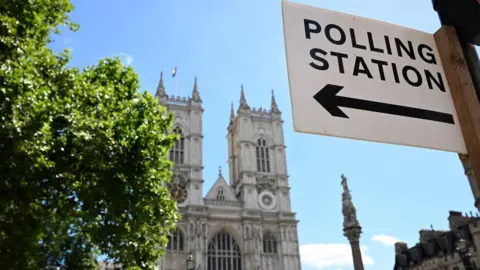
Londoners are set to head to the polls in 2026 to vote in the May local elections.
The capital is now a different city to when it last elected the 32 councils that run much of the city's services in 2022.
At that time London had just shaken off the Covid-19 pandemic, although the effects - from the impact of working from home on transport, to businesses trying to encourage punters back into bars and restaurants - are still being felt.
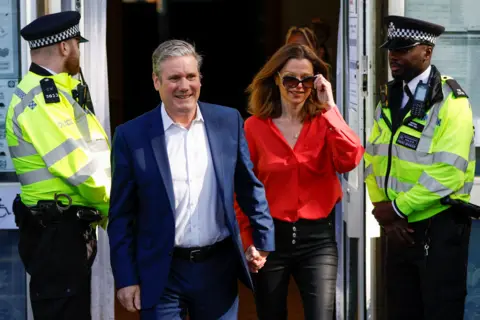
In 2022 the story of the local elections was victory for Labour, which won 1,156 of just over 1,800 seats, with 40.3% of the vote across London.
The party won 21 councils, including taking control of Westminster, Wandsworth and Barnet from the Conservatives.
 PA Media
The Tories won 404 seats with 24.8% of the vote, held on to Kensington and Chelsea, Bexley, Hillingdon and Bromley, and also took control of Harrow from Labour.
The Liberal Democrats won 180 seats with 13.8% of the vote and retained control of Kingston, Sutton and Richmond-upon-Thames.
And the Green Party won 11.4% of the vote and 18 seats across the capital.
Most London councils have a leader elected by the largest party or coalition on the council who then appoints cabinet members responsible for specific services such as housing or finance. In those councils the mayor is a ceremonial role.
In Croydon, Hackney, Lewisham, Newham and Tower Hamlets the mayor is directly elected by local voters and they appoint the cabinet.
 EPA/PA Media
The elections will decide who runs local services such as schools, libraries and bin collections.
While Mayor of London Sir Sadiq Khan, who was re-elected for a third term in 2024, sets an overall vision for the capital, councils spend more than £12bn a year.
This May, a total of 1,817 councillors in 32 London boroughs and the five directly-elected mayors will be elected.
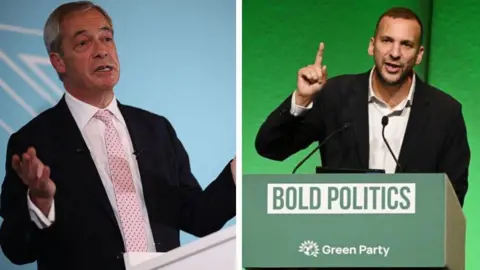
The rise of two insurgent political forces in recent years, Reform UK and the Green Party, will likely continue to impact the way London votes.
The simple - and simplistic - analysis is that the Greens, led by Zack Polanski, take votes from Labour and Reform UK, led by Nigel Farage, take votes from the Tories.
May's council elections will be an opportunity for both parties to prove they are more than protest votes and have their own offer on how best to run council services.
 PA Media
Then there are borough-specific politics.
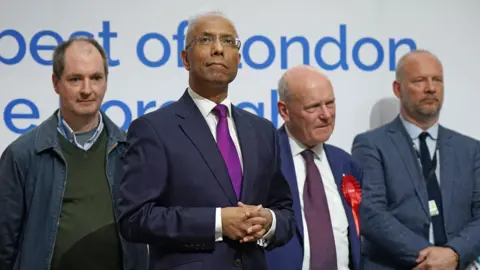
In Tower Hamlets, the Aspire party will be hoping to repeat its upset victory in 2022 when it took the council and won the mayoral election.
And in Havering a residents' group took charge of the borough, first as a coalition of the Havering Residents Association (HRA) and Labour and since 2024 as a minority administration.
Tower Hamlets and Havering apart, some councils may change hands between the two main parties but it will need to be seen if the Greens or Reform UK can win enough seats to take control of a borough.
The Greens will be pushing hard to win one (or more) of the five borough mayoral elections.
Both parties are likely to win some seats on individual councils, with Reform UK's chances higher in the outer London boroughs.
 Getty Images
It can at times be hard to separate national political issues from local elections – is the vote about the council or really a referendum about the government at Westminster?
National politics certainly has an impact on local government, not least when it comes to funding.
London's boroughs have four main income sources: central government grants, retained business rates, council tax, and fees and charges such as parking fines.
They cannot run deficits and must balance their budgets annually.
London has high levels of need, deprivation and the cost of delivering services, yet central government funding per Londoner has fallen by 28% since 2010, according to London Councils, the body that represents the boroughs.
This is despite an 11% population growth and rising service demands.
Some boroughs, like Barking and Dagenham, have reported receiving just 40% of the government funding they did a decade ago.
Correction 5 January: This article originally stated that the Lib Democrats had 152 councillors in 2022. It has been amended to state the correct number which is 182 councillors with 13.8% cent of the vote.
In November the Labour government set out details of its local government finance plan.
It would reduce London boroughs' collective share of government funds even more.
Whoever wins May's council elections will have to deal with an estimated £4.7bn collective shortfall in London's budgets in the four-year period to 2029, according to London Councils.
In 2025/26, seven London boroughs - Croydon, Newham, Barnet, Enfield, Havering, Haringey, and Lambeth - were allowed emergency borrowing enabled by a central government scheme called exceptional financial support (EFS) to take out loans or sell off assets to help address their immediate financial pressures.
London Councils' analysis suggests the number of boroughs requiring EFS could rise to 17 by 2028.
Central government has also changed the rules on council tax rises – as things stand any increase above 5% requires approval via a local referendum.
But now - due to cuts to central government grants - Kensington and Chelsea, Westminster, Wandsworth, Hammersmith and Fulham will be allowed much larger hikes over 2026 to 2029 to make up for central government funding cuts.
Council tax rises will no doubt form part of the campaigns the political parties will mount for the 2026 council elections, along with manifesto commitments about bins, housing and libraries.
Correction 5 January: This article originally stated that the Liberal Democrats won 152 councillors in 2022. It has been amended to state the correct number which is 180 councillors with 13.8% of the vote.
- What are the issues that most concern or interest you in the run up to May's elections? Email us at hello.bbclondon@bbc.co.uk
Listen to the best of BBC Radio London on Sounds and follow BBC London on Facebook, X and Instagram. Send your story ideas to hello.bbclondon@bbc.co.uk
